
Fluids, Additives and Sealants under Performance Parts covers the chemicals that keep a 4×4 running: Lucas Oil DOT 3 and DOT 4 brake fluid, 10W-40 motor oil, Red N Tacky grease, a coolant additive and a diesel fuel treatment, Mishimoto premixed synthetic coolant, Fox suspension fluid for shocks, RTV silicone gasket makers from Crown Automotive and G2 Axle and Gear, and K&N sealing grease for air filters. Subcategories cover brake fluid, fuel additives, gear oil, grease, motor oil, thread sealant and transmission fluid. Match specifications below.
Fluids, Additives and Sealants
Showing 1–12 of 23 resultsSorted by popularity
Shop Fluids, Additives and Sealants by type


-
Brake Fluid
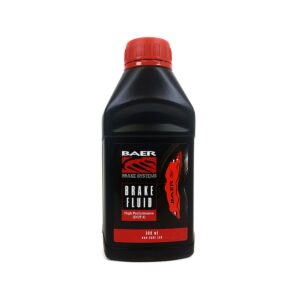
Baer Brakes Dot4 High Performance Brake Fluid 16.9Oz/500Ml Bottle – 6110027
- Baer Brakes 6110027 DOT 4 high performance brake fluid in a 16.9oz (500ML) bottle
- Minimum dry boiling point 608°F (320°C), minimum wet boiling point 383°F (195°C)
- Marked as damaging to painted surfaces
- Universal fluid, not vehicle-specific
SKU: 6110027-BKCZ -
Fluids, Additives and Sealants
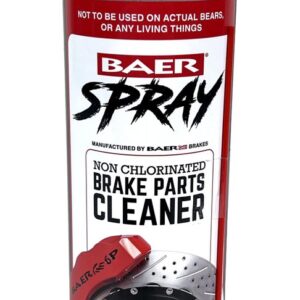
Baer Brakes Spray Brake Cleaner Non-Chlorinated, Technical Grade, 13Oz (369G) Can – 6110028
 Fluids, Additives and Sealants
Baer Brakes Spray Brake Cleaner Non-Chlorinated, Technical Grade, 13Oz (369G) Can – 6110028
- Baer Brakes 6110028 technical grade spray brake cleaner, one 13oz (369g) aerosol can
- Non-chlorinated and 50 state legal
- Universal chemical product, not vehicle-specific
- Spray tube included
SKU: 6110028-BKCZ -
Fluids, Additives and Sealants
Baer Brakes Spray Brake Cleaner Non-Chlorinated, Technical Grade, 13Oz (369G) Case (12) – 6110029
 Fluids, Additives and Sealants
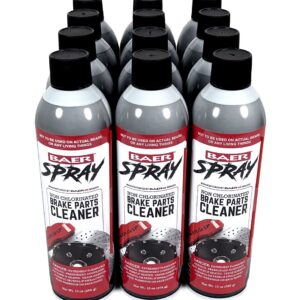
Baer Brakes Spray Brake Cleaner Non-Chlorinated, Technical Grade, 13Oz (369G) Case (12) – 6110029
- Baer Brakes 6110029 technical grade spray brake cleaner for brake system components
- Non-chlorinated, 50 state legal, 13oz (369g) aerosol cans
- Case of 12 cans; spray tube included
- Universal chemical product, not vehicle-specific
SKU: 6110029-BKCZ -
Brake Fluid
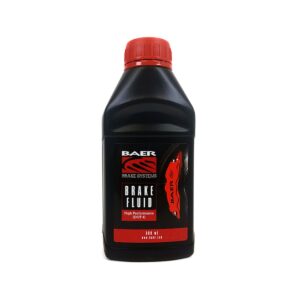
Baer Brakes Dot4 High Performance Brake Fluid (16.9Oz/500Ml Bottle) 3 Pack – 6800245
- Baer Brakes DOT 4 brake fluid, part 6800245, in a 3-pack of 16.9 oz (500 mL) bottles.
- Minimum dry boiling point 608°F (320°C) and minimum wet boiling point 383°F (195°C).
- Contains 3 bottles of fluid; country of origin USA.
- Universal fluid, not specific to one vehicle.
SKU: 6800245-BKCZ -
Brake Fluid
Baer Brakes Dot4 High Performance Brake Fluid (16.9Oz/500Ml Bottle) 10 Pack – 6800246
- Baer Brakes DOT 4 high performance brake fluid, part 6800246, in a 10-pack of 16.9 oz (500 mL) bottles.
- Minimum dry boiling point 608°F (320°C) and minimum wet boiling point 383°F (195°C).
- Contains 10 bottles of fluid; country of origin USA.
- Universal fluid, not specific to one vehicle.
SKU: 6800246-BKCZ -
-
-
Motor Oil
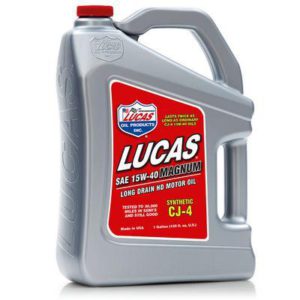
Lucas Oil Synthetic SAE 15W-40 CJ-4 Motor Oil – 10299
- Lucas Oil Synthetic SAE 15W-40 CJ-4 motor oil, part number LUC10299
- Universal fit, suitable for gasoline and diesel engines
- Lucas additives blended in, which the brand says help protect emission control systems
- Can help reduce oil consumption and engine wear
SKU: LUC10299 -
Transmission Fluid
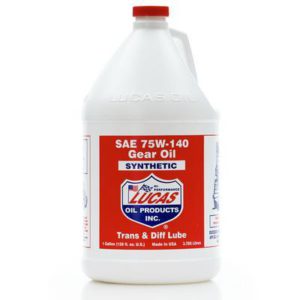
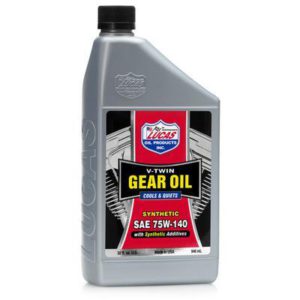
Lucas Oil Snythetic SAE 75W-140 V-Twin Gear Oil – 10791
- Lucas Oil Synthetic SAE 75W-140 V-Twin Gear Oil, part number LUC10791
- Synthetic gear oil designed especially for V-Twin motorcycle transmissions
- Designed to run cool and quiet with minimum wear and drag
- Suited to heavy duty or high performance transmissions
SKU: LUC10791 -
-



Picking fluids by specification, not brand
Every fluid in a vehicle has a specification written by the maker of the component it protects: a DOT number for brake fluid, an SAE grade and API or manufacturer approval for engine oil, an ASTM standard for coolant, an NLGI grade for grease. Brand matters less than meeting that specification. The products here cover the common needs of a truck or Jeep that works hard, and the first step for any of them is to open the owner's manual or the component maker's instructions and write down the specification before comparing.
Brake fluid
Lucas Oil's DOT 3 synthetic brake fluid has a minimum dry boiling point of 401 degrees F; its DOT 4 raises that to 446 degrees F and meets FMVSS 116 and SAE J1704. DOT 4 can be used where DOT 3 is specified and resists fade better on long descents with a loaded truck, but both are glycol based and absorb water from the air, so use fresh fluid from a sealed container and flush the system every two to three years. Never mix either with DOT 5 silicone fluid.
Engine oil, gear oil and grease
- Motor oil: the Lucas 10W-40 listed here is a paraffinic-base oil with anti-wear and anti-seize additives, suited to older engines that call for that grade. Use the viscosity and approval your engine specifies; a modern engine with variable valve timing needs its specific grade.
- Gear oil: differentials and manual transmissions each specify a grade and a GL rating. Limited-slip differentials often need a friction modifier, and transmissions with brass synchronizers need a GL-4 rather than GL-5 oil.
- Grease: Lucas Red N Tacky is a red lithium complex grease with extreme pressure additives and rust inhibitors, a good all-round chassis and wheel bearing grease. Use a grease compatible with what is already in a joint; mixing lithium and polyurea greases can cause separation.
- Sealing grease: K&N's 1 ounce tube is for the sealing edges of air filter elements so the airbox seals without the grease melting.
Coolant, additives and shock oil
Mishimoto's premixed synthetic coolant is ready to pour, protects to -26 degrees F and 265 degrees F with a 15 psi cap, and passes ASTM D3306 and D6210 for gasoline and diesel engines. Lucas Super Coolant is an additive for a 50/50 mix that the maker says lowers temperatures, and it is not for systems that use manufacturer-specific coolants, so check what your engine requires. The Lucas diesel fuel treatment is for diesel engines only and is aimed at keeping particulate filters cleaner. Fox's JM92 suspension fluid is the shock oil for rebuilding Fox shocks; viscosity affects damping, so use the fluid the shock maker specifies. The two-cycle marine oil is for outboards and watercraft, not for vehicle engines.
Sealants
RTV silicone, in black from Crown Automotive and blue from G2 Axle and Gear, forms a gasket on differential covers, transfer case housings and oil pans. Clean both surfaces to bare metal, run a continuous bead inside the bolt holes, finger-tighten, and let it skin before final torque, then wait the cure time before filling with oil. Blue and black RTV are general purpose; use a high-temperature or oil-resistant grade where the component maker calls for it, and never use RTV on a surface designed for a paper gasket unless the manual permits.
Storage and safety
Keep brake fluid sealed and discard a bottle opened more than a year ago. Store chemicals away from heat and children, wear gloves, and dispose of used fluids at a recycling point. Confirm each fluid against your component's specification before choosing.
Popular Fluids, Additives and Sealants brands
- Lucas Oil (13)
- Baer Brakes (5)
- Crown Automotive (1)
- G2 Axle and Gear (1)
- Fox Racing Shox (1)
- Omix-Ada (1)
- Mishimoto (1)
Fluids, Additives and Sealants FAQ
Can I use DOT 4 brake fluid in a system that specifies DOT 3?
Yes. DOT 4 is glycol based like DOT 3 and compatible with the same seals, with a higher boiling point. Going the other way, putting DOT 3 in a DOT 4 system, lowers the boiling margin. Never mix either with DOT 5 silicone fluid, which is a different chemistry.
Is premixed coolant better than concentrate?
Premixed coolant is diluted with deionized water at the factory to the correct ratio, so there is no risk of using hard tap water or getting the mix wrong. Concentrate is more economical for large systems if you have distilled water on hand. Both must meet the specification your engine requires.
Which grease should I use for wheel bearings and chassis joints?
A lithium complex grease with extreme pressure additives, such as a red tacky grease, handles wheel bearings, U-joints, ball joints and tie rod ends on most trucks. Check the component maker's instructions; some sealed hubs and CV joints specify a particular grease, and do not mix grease types in one joint.
How long does RTV need to cure before I add oil?
Most RTV silicones skin over in about an hour and need roughly 24 hours to cure fully at room temperature before the component is filled with fluid and driven. Cold weather extends the time. Follow the cure time on the tube rather than rushing, or the cover will weep.