
Electrical
The electrical category in performance parts covers batteries and battery accessories, upgraded alternators and starters, switch panels, gauges, wiring, and isolators for trail rigs and daily drivers. It suits owners adding winches, lights, compressors, or other accessories. Brands include Odyssey Batteries, Powermaster, Redarc, and Painless Wiring. Open a product page for specifications and part numbers.
Every winch pull, light bar and air compressor runs on your rig's electrical system, and a weak battery or tired alternator is a common reason a trail day ends early. This section covers the parts that store, make and control that power: batteries, alternators, starters, switch panels, harnesses and monitors.
Batteries and battery accessories make up most of the listings, including AGM batteries, hold-downs and voltage gauges. Alternators and starters are the next step when the factory units cannot keep up or crank a modified engine. Electrical components cover the control side: rocker switches, multi-switch panels with power distribution modules, relay harnesses, outlets and circuit breakers, plus factory replacement switches, clocksprings and remote start kits for Jeep and Ram.
Shop electrical parts by type


Popular electrical parts
-
-
Electrical Components

Painless Wiring Trail Rocker Under Dash Accessory Control System (4 Switch) – 57021
 Electrical Components
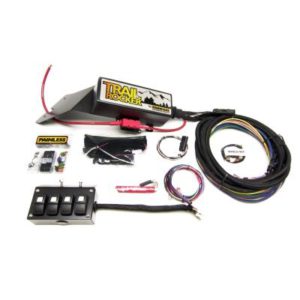
Painless Wiring Trail Rocker Under Dash Accessory Control System (4 Switch) – 57021
- Dash-mounted switch panel and power center for controlling accessories on CJ models
- Fits 1976–1983 CJ5, 1976–1986 CJ7 and 1981–1985 Scrambler
- Weatherproof power center with fuses, relays and prewired switches
- Dedicated winch wires; the Winch Control Add-on Kit 57150 is required for winch operation
SKU: PWP57021 -
Battery & Battery Accessories
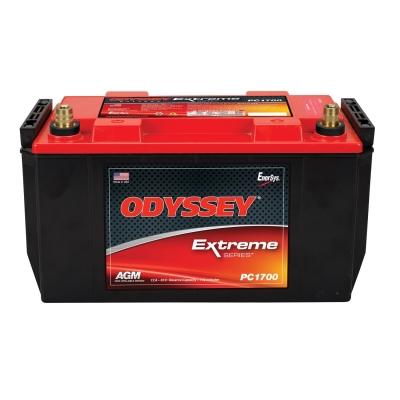
Odyssey Batteries Extreme Series 810 CCA Top Post – PC1700T
- Odyssey Batteries Extreme Series PC1700T top post battery, part number ODYPC1700T
- 810 amperes cold cranking amps (CCA) with top post terminals
- Pure virgin lead plates; up to 400 cycles at 80% depth of discharge.
- Universal fit label; no specific vehicle named.
SKU: ODYPC1700T -
-
Battery & Battery Accessories

REDARC Single Voltage 52Mm Gauge with Optional Current Display – G52-VA
 Battery & Battery Accessories
REDARC Single Voltage 52Mm Gauge with Optional Current Display – G52-VA
- Redarc G52-VA single voltage 52mm gauge, part number RAEG52-VA
- Alerts below 9V and above 16V, with amber or red backlight
- Optional 100A current display with the GS-AMPS sensor, needed separately
- Satin chrome bezel with 13 backlight color options
- Only a 12 volt battery can be monitored
SKU: RAEG52-VA -
Battery & Battery Accessories

Odyssey Batteries Battery Hold Down Kit (Polished aluminum) – HK-PC1500
 Battery & Battery Accessories
Odyssey Batteries Battery Hold Down Kit (Polished aluminum) – HK-PC1500
- Odyssey Batteries polished aluminum hold down kit, model HK-PC1500
- For 1500 Series batteries, mounted on top of the battery
- Includes all components required for an easy install
- Precision-machined for Odyssey batteries
SKU: ODYHK-PC1500


Battery and charging reference
How to read battery ratings and what your voltmeter is telling you. Voltages are typical values for a 12-volt lead-acid system, including AGM.
Battery ratings explained
| Cold cranking amps (CCA) | Amps for 30 s at 0°F while staying above 7.2 V |
|---|---|
| Cranking amps (CA) | Same test at 32°F, so the number is higher |
| Reserve capacity (RC) | Minutes at a 25 A load before dropping to 10.5 V |
| Amp-hours (Ah) | Capacity, usually at a 20-hour discharge rate |
| BCI group size | Case dimensions and terminal layout |
| Terminal type | Top post, side post or both |
Ways to control accessories
| How it works | Good for | |
|---|---|---|
| Single rocker switch and relay | One switch triggers one relay | One or two lights or a locker |
| Switch panel with power module | Panel switches a fused relay block | Four to eight accessories, clean wiring |
| Touchscreen or remote controller | Screen sends signals to the module | Many circuits, minimal dash space |
| Vehicle-specific mounts | A-pillar, overhead or lower dash | No-drill installs in a Wrangler JK |
Battery types compared
| Flooded lead-acid | AGM | |
|---|---|---|
| Construction | Plates in liquid electrolyte | Electrolyte held in glass mats |
| Spill and mounting angle | Can spill; keep upright | Sealed, spill resistant |
| Vibration resistance | Moderate | High |
| Maintenance | May need water topped up | Maintenance free |
| Deep cycling | Limited | Better tolerance |
Reading a voltmeter
| Engine off, rested, full charge | About 12.6–12.8 V |
|---|---|
| Engine off, about half charged | About 12.2 V |
| Engine off, 12.0 V or less | Deeply discharged, recharge soon |
| Engine running, charging normally | About 13.8–14.7 V |
| Running, under 13 V | Charging not keeping up with the load |
| Running, over 15 V | Possible regulator fault |
Figures from listed products
| Odyssey Extreme PC1700T | 810 CCA, top post |
|---|---|
| Powermaster 574011 alternator | 140 A, one-wire |
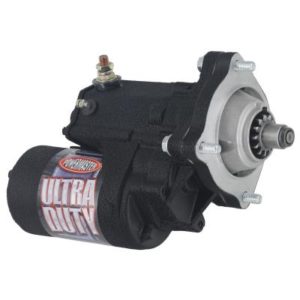
| Powermaster 9182 starter | 160 ft-lbs torque, 4.4:1 gear reduction |
| SPOD BantamX panel | 8 switches, power module included |
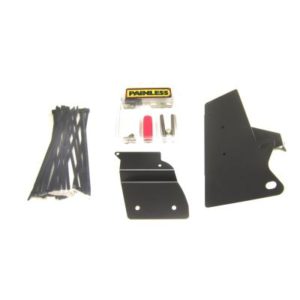
| Painless Trail Rocker | 4 switches, under-dash mount |
| Redarc G52-VA gauge | 52 mm voltage gauge, optional current |
Batteries must match your tray, cable reach and terminal layout, and alternators and starters fit specific engines. Confirm group size and part number before ordering.
All Electrical 128 parts
-
-
-
Battery & Battery Accessories
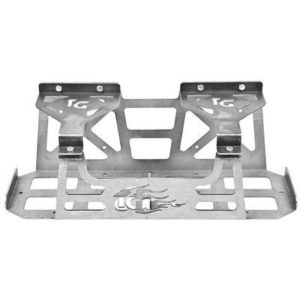
Trail Gear TG Side By Side Battery Box Kit – 300384-KIT
- Trail Gear TG side-by-side battery box kit, part number 300384-KIT
- Holds any Optima 34/78 group battery
- 12 gauge steel, welded or bolted in place
- Two boxes bolt together for a four battery holder
- Flat back design for mounting behind the seat or cab
SKU: TGI300384-KIT -
-
-
Electrical Components

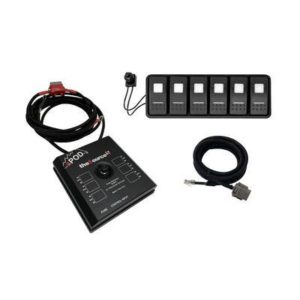
SPOD Modular SourceLT LED 6-Switch Panel with 36″ Battery Cables (Blue) – SL-MOD-84-B
 Electrical Components
SPOD Modular SourceLT LED 6-Switch Panel with 36″ Battery Cables (Blue) – SL-MOD-84-B
- Universal fit SPOD Modular SourceLT LED 6-Switch Panel, part PODSL-MOD-84-B
- 6 circuits rated at 30 amps at 12.5 VDC per circuit, operating on 12VDC
- Six dual lit LED switches installed and pre-wired
- Carling Technologies Contura switches certified to IP66/68
- Includes a 10 foot control cable and battery cables
SKU: PODSL-MOD-84-B -
Electrical Components
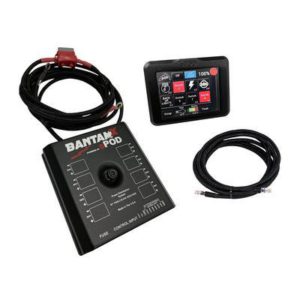
SPOD BantamX Touchscreen and 84″ Battery Cables – BX-TSB-UNI-84
- Universal fit SPOD BantamX Touchscreen and 84 Inch Battery Cables, part PODBX-TSB-UNI-84
- 8-circuit control system rated at 30 amps at 12.5 VDC per circuit, operating on 12VDC or 24VDC
- Touchscreen control with built-in Bluetooth and sPOD Mobile App programming
- Integrated low voltage cutoff battery protection and 50amp auto-resetting circuit breaker
- Air pressure gauge not included
SKU: PODBX-TSB-UNI-84 -
Electrical Components
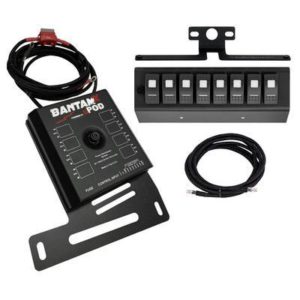
SPOD BantamX LED 8-Switch Panel (Blue) – BX-0708-JK-B
- SPOD BantamX LED 8-switch panel, blue, part PODBX-0708-JK-B
- Fits 2007–2008 Jeep Wrangler (JK) Rubicon, Sahara and X trims
- Eight circuits rated at 30 amps at 12.5 VDC each
- Eight dual lit blue LED switches, installed and pre-wired
SKU: PODBX-0708-JK-B -
Electrical Components
Rugged Ridge 2-Position Rocker Switch (Passenger Eject) – 17235.13
- Rugged Ridge 2-Position Rocker Switch, Passenger Eject, part 17235.13
- Rated 20 amps with amber LED illumination when on
- 3-terminal hook-up for use in Jeeps, trucks, SUVs and cars
- Laser-etched logo; not waterproof
SKU: RUG17235.13 -
Battery & Battery Accessories
REDARC Single Voltage 52Mm Gauge with Optional Current Display – G52-VA
Battery & Battery AccessoriesREDARC Single Voltage 52Mm Gauge with Optional Current Display – G52-VA
- Redarc G52-VA single voltage 52mm gauge, part number RAEG52-VA
- Alerts below 9V and above 16V, with amber or red backlight
- Optional 100A current display with the GS-AMPS sensor, needed separately
- Satin chrome bezel with 13 backlight color options
- Only a 12 volt battery can be monitored
SKU: RAEG52-VA







What this category covers
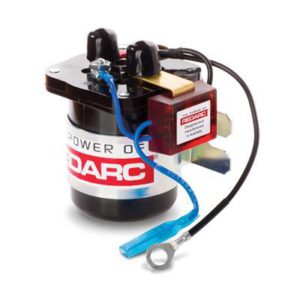
Accessories add electrical load. Winches, light bars, air compressors, fridges, and radios all draw power, and the stock charging system was not sized for them. This category brings together the components that supply, control, and monitor that power: batteries, higher-output alternators and starters, battery isolators, switch panels, gauges, and replacement wiring or switches.
You will also see vehicle-specific items such as Wrangler JK switch panels and A-pillar mounts alongside universal products.
Batteries and charging
- Battery type: AGM batteries resist vibration and do not spill, which suits off-road use.
- Ratings: Compare cold cranking amps, reserve capacity, group size, and terminal type (top post or side post).
- Alternators and starters: Higher-output alternators support heavy accessory loads, and high-torque starters help with large engines or tight compression.
- Isolators: A dual battery isolator charges an auxiliary battery without draining the starting battery.
Switches, gauges, and wiring
Switch panels centralize accessory control, and many accept rocker switches for lights, lockers, and compressors. Check amperage ratings, whether the panel is waterproof, and whether a controller is needed. Gauges add visibility into voltage and current, which is useful with dual batteries.
Use wire gauge and fuses sized for the load and length of the circuit, protect connections from moisture, and fuse near the power source. Undersized wiring is a fire risk.
Fit and installation
Battery group size and terminal layout must match your tray and cables, and alternators and starters are specific to engines. Disconnect the battery before working, follow the manufacturer's instructions, and confirm fitment for your exact year, make, and model. Complex wiring jobs, such as multi-battery systems, may be worth professional installation.
Planning your power budget
Before buying, add up what you plan to run. Note each device's amp draw and how long it runs with the engine off, and compare the total to your alternator output and battery capacity. A fridge, lights, and a compressor may be modest alone but add up together.
Plan for protection too: fuses or circuit breakers, a master disconnect, secure battery hold-downs, and clean, tight ground connections. Corroded terminals and loose grounds cause many electrical gremlins that people blame on parts. Keep a multimeter in the vehicle to check battery voltage, which is typically about 12.6 volts at rest on a healthy battery and higher with the engine running.
Several part types appear in this category and are worth distinguishing. Alternators supply power while the engine runs, starters crank the engine, and batteries store energy. Isolators and relays manage how those pieces share load. Switch panels and harnesses control accessories.
When buying batteries, check the date code, because batteries lose capacity during long storage. Keep terminals clean, use a battery tender if the vehicle sits for weeks, and secure the battery well, since vibration shortens life. When replacing an alternator, check the pulley type, mounting points, and connector, and consider upgrading cables if they are old or corroded.
Never work near a charged battery without eye protection. Remove metal jewelry, disconnect the negative terminal first, and keep sparks away from vented batteries, since they can release hydrogen.
Popular Electrical brands
- Odyssey Batteries (30)
- Powermaster (14)
- Crown Automotive (13)
- Savior Products (9)
- Redarc (8)
- Omix-Ada (7)
- Rugged Ridge (6)
- SPOD (6)
- Painless Wiring (5)
- Mean Green (4)
- Trail Gear (3)
- Advanced Accessory Concepts (3)
Electrical FAQ
Is an AGM battery better for off-roading?
AGM batteries are sealed, resist vibration, and tolerate tilted angles, which makes them a popular choice for trail use. They can cost more, and they need a charging system that suits their voltage requirements. Check the maker's guidance.
What does a battery isolator do?
It lets the alternator charge a second battery while keeping it separate from the starting battery. That way accessories can run the auxiliary battery down without leaving you unable to start the engine.
Do I need a high-output alternator?
Possibly, if you run a winch, large lights, and other heavy accessories together. Add up the continuous loads and compare them to your stock alternator's output. Confirm engine and fitment before choosing.
What wire gauge should I use?
It depends on the current and the length of the run. Use the device's rated amperage and the wire maker's chart, and fuse the circuit near the power source. When unsure, go thicker rather than thinner.