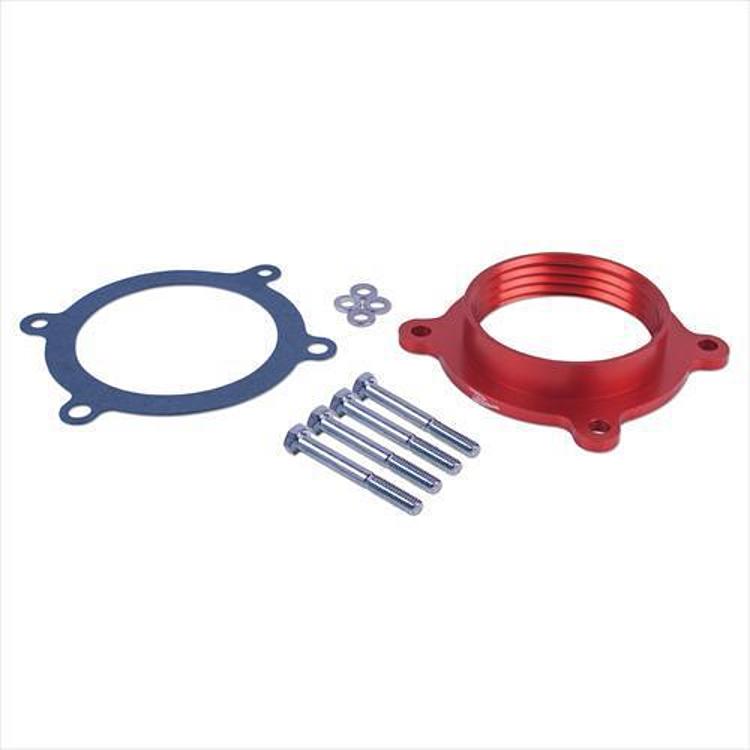

Overview
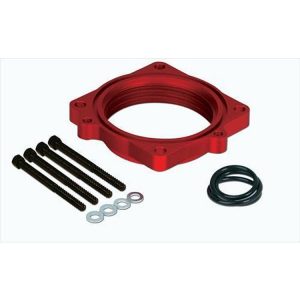
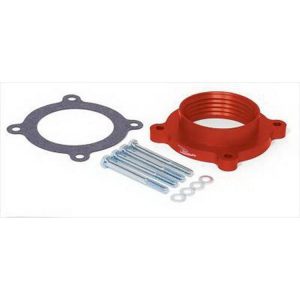
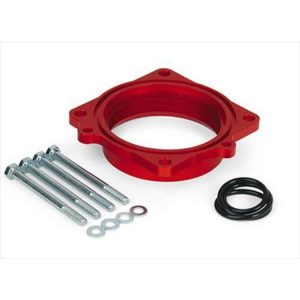
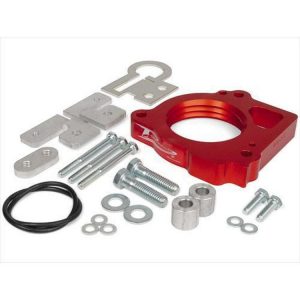
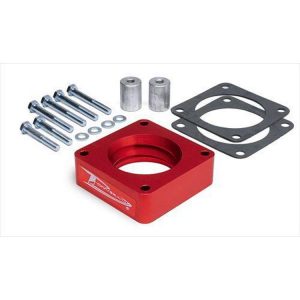
The AIRAID 450-603 is an anodized aluminum throttle body spacer for the 2011–2014 Ford F-150. It sits between the throttle body and the intake and is designed to add mid-range power, torque and fuel efficiency.
The spacer uses a Helix bore and is marked 50 State CARB under Executive Order D-609-10. AIRAID describes its installation as possible with basic hand tools.
Key features
- Anodized aluminum body
- Helix bore designed for mid-range power
- Designed to enhance torque and fuel efficiency
- Installs with basic hand tools, per AIRAID
- 50 State CARB E.O. D-609-10
Choosing and fitting a spacer
A throttle body spacer moves the throttle body farther from the intake opening, which changes how air reaches the throttle plate. On a truck that already runs a stock air intake and a tuned computer, the result is usually subtle, so expectations should match a modest change in how the engine feels under load rather than a dramatic gain. The spacer works best as one part of a set of airflow changes, not as a stand-alone fix.
Before buying, consider what else is on the truck. Intake tubes, air filters and exhaust work all affect airflow, and a spacer does not replace any of them. If the throttle body gasket or intake gasket is worn, replace it when the spacer goes in, since a new seal prevents vacuum leaks at the joints.
- Inspect the throttle body and intake flanges for cracks before reinstalling.
- Re-check the mounting bolts after the first few drives.
- Clean the throttle plate before installing if the throttle body is accessible.
Specifications
| Brand | AIRAID |
|---|---|
| Part number | 450-603 |
| UPC | 642046456030 |
| Product type | Throttle body spacer (PowerAid series) |
| Material | Aluminum |
| Finish | Anodized |
| Bore | Helix |
| Emissions approval | 50 State CARB, Executive Order D-609-10 |
| Fitment type | Direct fit |
Vehicle fitment
It is a direct fit for the 2011–2014 Ford F-150 in the FX2, FX4, King Ranch, Lariat, Limited, Platinum, XL and XLT trims.
The 2009–2010 F-150 and Super Duty trucks are not in this list. Confirm your vehicle’s year, model and trim before ordering.
Installation notes
AIRAID describes installation with basic hand tools, and no specialty tools are named for this model. Check the throttle body and intake connections for a snug, leak-free seal once the spacer is in place.
What’s included
Check the package contents against your installation before starting.