Suspension strut assemblies combine the spring, shock and mounting hardware into one unit and are used on independent front suspensions and many unibody vehicles. This category covers replacement and lift-ready assemblies from Bilstein, Rough Country, Rancho, ARB Old Man Emu and Skyjacker for trucks, Broncos, vans and SUVs. Check each product page for position, lift height and fitment details, then compare the products below.
Suspension Strut Assembly
Showing 1–12 of 38 resultsSorted by popularity
-
Lift Kits, Suspension & Shocks, Shock Absorbers & Shock Accessories, Suspension Strut Assembly

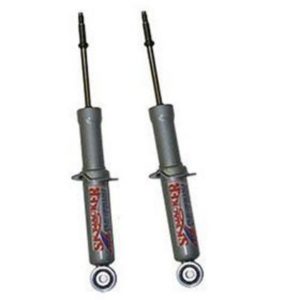
Skyjacker S8000 Series Strut – TC513STS
 Lift Kits, Suspension & Shocks, Shock Absorbers & Shock Accessories, Suspension Strut Assembly
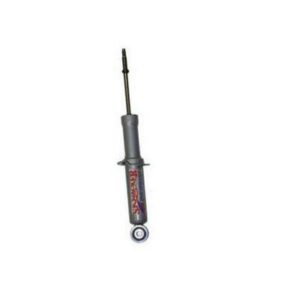
Skyjacker S8000 Series Strut – TC513STS
- S8000 Series leveling strut for the front of Toyota 4Runner and Tacoma
- Sold individually
- Maximum tire size 285 75 16
- Maximum wheel size 16 x 8 with 4.5 backspace
- Factory coil spring retained
SKU: SKYTC513STS -
Lift Kits, Suspension & Shocks, Shock Absorbers & Shock Accessories, Suspension Strut Assembly

Rough Country N3 Loaded Front Struts (3″ Lift) – 501012
 Lift Kits, Suspension & Shocks, Shock Absorbers & Shock Accessories, Suspension Strut Assembly
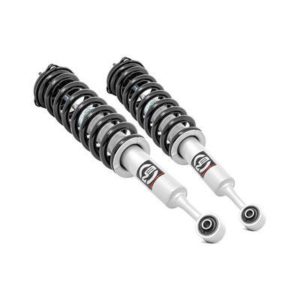
Rough Country N3 Loaded Front Struts (3″ Lift) – 501012
- Fits 2005–2022 Toyota Tacoma models
- Built for a 3 inch lift; not for use with strut spacers
- Pre-loaded coil spring, no strut disassembly needed
- Extended length 23.86 in, compressed length 18.45 in
- Shock type: lift strut, gas charged
- Includes a 3-year limited warranty
SKU: R/C501012 -
Lift Kits, Suspension & Shocks, Shock Absorbers & Shock Accessories, Suspension Strut Assembly
Rough Country Front 2″ Loaded Struts – 501126
 Lift Kits, Suspension & Shocks, Shock Absorbers & Shock Accessories, Suspension Strut Assembly
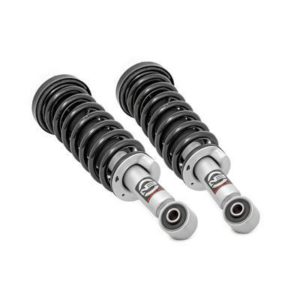
Rough Country Front 2″ Loaded Struts – 501126
- Rough Country front 2 inch N3 loaded strut for the 1995 to 2004 Toyota Tacoma
- Compressed length 14.61 inches and extended length 19.88 inches
- Gas charged with a pre-installed coil spring
- Part number 501126, with a 3-year Limited Warranty
SKU: R/C501126 -
Lift Kits, Suspension & Shocks, Shock Absorbers & Shock Accessories, Suspension Strut Assembly
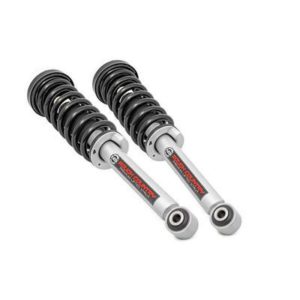
Rough Country 6″ Lifted N3 Struts – 501003
 Lift Kits, Suspension & Shocks, Shock Absorbers & Shock Accessories, Suspension Strut Assembly
Rough Country 6″ Lifted N3 Struts – 501003
- Rough Country 6 inch lifted N3 front strut for the 2004 to 2008 Ford F-150
- Pre-installed coil and nitrogen charged design
- Massive bore and variable dampening system
- Part number 501003, with a 3-year Limited Warranty
SKU: R/C501003 -
Lift Kits, Suspension & Shocks, Shock Absorbers & Shock Accessories, Suspension Strut Assembly
Rough Country 6″ Ford Lifted N3 Struts – 501055
 Lift Kits, Suspension & Shocks, Shock Absorbers & Shock Accessories, Suspension Strut Assembly
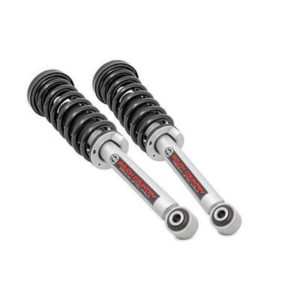
Rough Country 6″ Ford Lifted N3 Struts – 501055
- Rough Country 6 inch Ford lifted N3 front strut for the 2009 to 2013 F-150
- Only fits models with 6 inches of lift
- Cannot be installed together with a strut spacer
- Part number 501055
SKU: R/C501055 -
Lift Kits, Suspension & Shocks, Shock Absorbers & Shock Accessories, Suspension Strut Assembly
Rough Country 6″ Dodge Lifted N3 Struts – 501026
 Lift Kits, Suspension & Shocks, Shock Absorbers & Shock Accessories, Suspension Strut Assembly
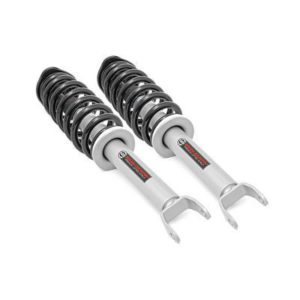
Rough Country 6″ Dodge Lifted N3 Struts – 501026
- Rough Country 6 inch Dodge lifted N3 front strut for the 2012 to 2018 Ram 1500 and 2019 to 2022 Ram 1500 Classic
- Only fits models with 6 inches of lift
- Cannot be installed with a strut spacer
- Part number 501026, with a 3-year Limited Warranty
SKU: R/C501026 -
Lift Kits, Suspension & Shocks, Shock Absorbers & Shock Accessories, Suspension Strut Assembly
Rough Country 3.5″ GM Lifted N3 Struts – 501084
 Lift Kits, Suspension & Shocks, Shock Absorbers & Shock Accessories, Suspension Strut Assembly
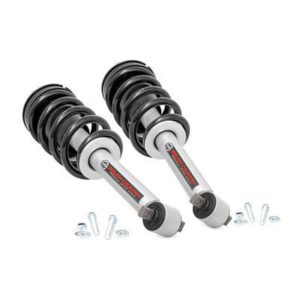
Rough Country 3.5″ GM Lifted N3 Struts – 501084
- Rough Country 3.5 inch GM lifted N3 front strut for 2007 to 2014 Chevrolet and GMC trucks and SUVs
- Only fits models with 3.5 inches of lift; not for 2007 Classic models
- Cannot be installed with a strut spacer
- Part number 501084
SKU: R/C501084 -
Lift Kits, Suspension & Shocks, Shock Absorbers & Shock Accessories, Suspension Strut Assembly
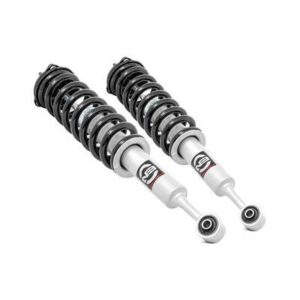
Rough Country 3″ Lifted N3 Front Struts – 501101
 Lift Kits, Suspension & Shocks, Shock Absorbers & Shock Accessories, Suspension Strut Assembly
Rough Country 3″ Lifted N3 Front Struts – 501101
- Rough Country 3 inch lifted N3 front strut for the 2010 to 2020 and 2022 Toyota 4Runner
- Stem top and eyelet bottom mounts, gas charged
- Pre-installed coil spring for installation without strut disassembly
- Part number 501101, with a 3-year Limited Warranty
SKU: R/C501101 -
Lift Kits, Suspension & Shocks, Shock Absorbers & Shock Accessories, Suspension Strut Assembly
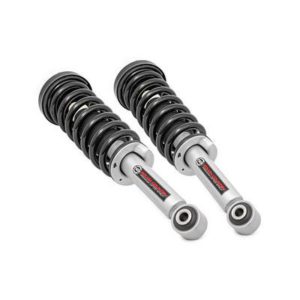
Rough Country 3″ Ford Lifted N3 Struts – 501070
 Lift Kits, Suspension & Shocks, Shock Absorbers & Shock Accessories, Suspension Strut Assembly
Rough Country 3″ Ford Lifted N3 Struts – 501070
- Rough Country 3 inch front N3 lifted strut for the 2009 to 2013 Ford F-150
- Designed only for models with 3 inches of lift, to replace strut spacers on lifted trucks
- Gas charged, with a 3-year Limited Warranty
- Part number 501070
SKU: R/C501070 -
Lift Kits, Suspension & Shocks, Shock Absorbers & Shock Accessories, Suspension Strut Assembly
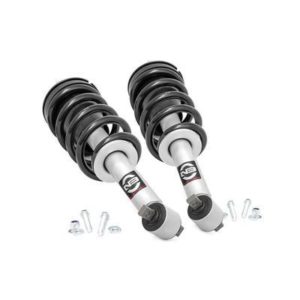
Rough Country 2″ GM Lifted N3 Struts – 501063
 Lift Kits, Suspension & Shocks, Shock Absorbers & Shock Accessories, Suspension Strut Assembly
Rough Country 2″ GM Lifted N3 Struts – 501063
- Rough Country 2 inch lifted N3 strut for the 2014 to 2018 Chevrolet Silverado 1500 and GMC Sierra 1500
- Nitrogen charged with a pre-loaded coil, for installation without strut disassembly
- Cannot be installed together with a strut spacer
- Part number 501063, with a 3-year Limited Warranty
SKU: R/C501063 -
Lift Kits, Suspension & Shocks, Shock Absorbers & Shock Accessories, Suspension Strut Assembly
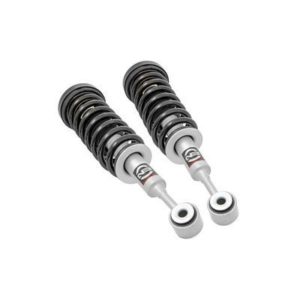
Rough Country 2 Inch Front Leveling Strut Kit – 501083
 Lift Kits, Suspension & Shocks, Shock Absorbers & Shock Accessories, Suspension Strut Assembly
Rough Country 2 Inch Front Leveling Strut Kit – 501083
- Rough Country 2 inch front leveling strut kit for 2004 to 2008 Ford F-150 trucks
- Chrome plated piston rod, leak-proof piston seal and variable dampening
- Replaces the factory strut, with no strut disassembly required
- Part number 501083, unfinished
SKU: R/C501083
Strut assembly basics
A strut is a structural suspension part, not just a damper. It carries load, helps locate the wheel and, in a complete assembly, includes the coil spring, upper mount and often the bump stop and dust boot. Installing a complete unit avoids compressing the old spring and shortens the job compared with replacing only the cartridge. Many late-model trucks and SUVs use front struts, and so do vans and unibody vehicles.
Replacement versus lift struts
- OE replacement: restore factory ride height and handling, such as Bilstein B4 or B6 style assemblies listed for specific vehicles.
- Upgraded damping: adjusted valving for better control, often with a gas-charged design that resists fade.
- Leveling or lift struts: raise the front ride height, in listings such as a 2 inch lift or a taller lifted strut for a given truck.
- Adjustable and tuned units: some designs let you tune ride height or are tuned for a load, such as heavier bumpers or winches.
What to compare
- Position: front or rear, and left or right where the part is side specific.
- Lift height: check the claimed lift and the allowable range for your vehicle.
- Twin-tube versus monotube: twin-tube designs are common and comfortable, while monotube designs resist heat better under heavy use. Check the description to see which applies.
- Travel and bump stops: lifted vehicles need appropriate bump stops and may need limit straps or longer brake lines to prevent damage at full droop.
Fitment
Strut assemblies are highly vehicle specific. Model year, drive type, trim and engine can change the spring rate and mounting, and some listings are for a single side only. Confirm fitment for your exact year, make and model, and check the manufacturer's specifications and any noted limits for weight and accessories.
Installation notes
Struts are a safety-critical suspension part. Professional installation is recommended, especially if the spring has to be compressed, and a wheel alignment is needed afterward. Use correct torque on all fasteners and replace worn mounts, bearings and sway bar links at the same time. Replace in axle pairs so that both sides ride and handle the same.
Common mistakes and upkeep
The most common error is treating a strut like a simple shock. Because it is also a structural part, upper mounts, bearings and bump stops need attention, and a worn mount can cause clunking and steering noise that new struts will not fix. Inspect them when the old strut is out.
- Do not compress springs without the right tool. A coil spring stores significant energy, and a slipping compressor can cause serious injury. A complete assembly avoids this step.
- Match the load. A truck with a winch bumper or a camper needs stronger springs than a stock vehicle. Check the listing for any weight guidance.
- Look for leaks. Oil film along the strut body suggests seal failure.
- Allow for break-in. A new assembly can settle slightly, so confirm ride height after a few hundred miles.
- Check the rest of the corner. Control arm bushings and sway bar links affect handling at least as much.
Popular Suspension Strut Assembly brands
- Bilstein (15)
- Rough Country (10)
- Rancho (7)
- ARB 4x4 Accessories (2)
- Skyjacker (2)
- Pro Comp Suspension (1)
- Fabtech (1)
Suspension Strut Assembly FAQ
What is the difference between a strut and a shock?
A shock only dampens motion. A strut also acts as a structural part of the suspension, supporting the vehicle and the wheel position. Many struts also mount the coil spring, forming a complete assembly.
Should I replace struts in pairs?
Yes, it is recommended to replace both sides of an axle together. Mismatched wear changes damping and ride height, which can affect handling and braking. Check any other worn components at the same time.
Do I need an alignment after installing struts?
Yes. Strut work changes suspension geometry, and a lift or leveling strut changes it even more. An alignment protects your tires and keeps steering accurate and predictable.
Will leveling struts fit my truck?
They are made for specific vehicles and ride heights. Confirm fitment for your exact year, make and model, and follow the maker's notes on tire size, alignment and any extra parts such as longer brake lines.