

Bilstein 5100 vs Fox 2.0 Performance: body, shaft, reservoir, travel and lift ratings from 417 catalog listings, which trucks and Jeeps both fit, how…
Lift Kits, Suspension & Shocks
Showing 73–84 of 3681 resultsSorted by popularity
-
Leveling Kits, Lift Kits, Suspension & Shocks, Torsion Bar Key

Tuff Country 2 Inch Torsion Key Leveling Lift Kit with SX8000 Shocks – 12904KN
 Leveling Kits, Lift Kits, Suspension & Shocks, Torsion Bar Key
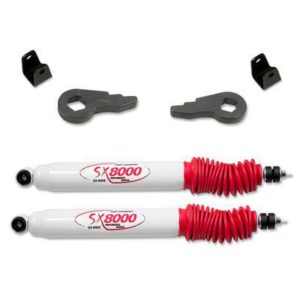
Tuff Country 2 Inch Torsion Key Leveling Lift Kit with SX8000 Shocks – 12904KN
- Two-inch front leveling lift with torsion key design
- Sold with SX8000 shocks (per the title)
- Fits 2001–2010 Silverado and Sierra 2500 HD and 3500 pickups
- Direct fit
SKU: T/C12904KN -
Complete Suspension Systems and Lift Kits, Lift Kits, Suspension & Shocks
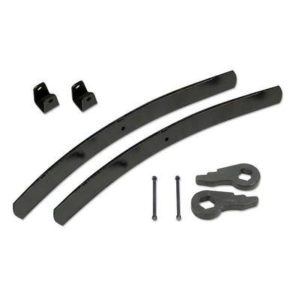
Tuff Country 2 Inch Lift Kit – 12933
 Complete Suspension Systems and Lift Kits, Lift Kits, Suspension & Shocks
Tuff Country 2 Inch Lift Kit – 12933
- 2-inch lift for 1988–1998 Chevrolet and GMC K1500 pickups
- Listed in Base, Cheyenne, Scottsdale, Silverado, Sport and WT versions for Chevrolet
- Limited lifetime warranty on Tuff Country lift kits
SKU: T/C12933 -
Leveling Kits, Lift Kits, Suspension & Shocks, Suspension Leveling Kits
Tuff Country 2 Inch Leveling Lift Kit – 52901
 Leveling Kits, Lift Kits, Suspension & Shocks, Suspension Leveling Kits
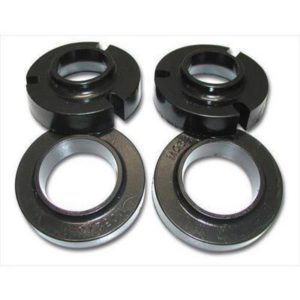
Tuff Country 2 Inch Leveling Lift Kit – 52901
- 2 inch front leveling kit for the 1995-2004 Toyota Tacoma and 2000-2006 Toyota Tundra
- Includes front strut spacers and front strut isolator
- Steel spacers, black finish
- Front lift only
SKU: T/C52901 -
Leveling Kits, Lift Kits, Suspension & Shocks, Suspension Leveling Kits
Tuff Country 2 Inch Leveling Kit – 22105
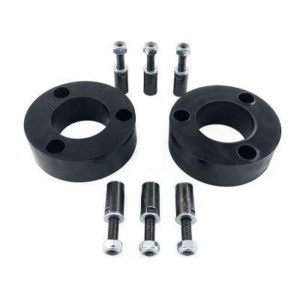 Leveling Kits, Lift Kits, Suspension & Shocks, Suspension Leveling Kits
Tuff Country 2 Inch Leveling Kit – 22105
- 2 inch front leveling kit for 2019–2020 Ford Ranger
- Includes a pair of front spacers and the necessary hardware
- Brackets are laser cut from top grade steel
- Does not require new shocks
- Fits XL, XLT and Lariat trims
SKU: T/C22105 -
Complete Suspension Systems and Lift Kits, Lift Kits, Suspension & Shocks
Tuff Country 2 – 6 Inch Long Arm Suspension Upgrade – 30942
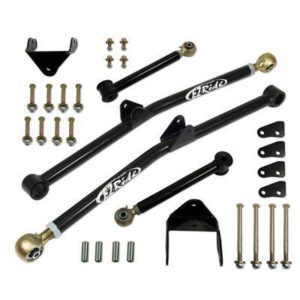 Complete Suspension Systems and Lift Kits, Lift Kits, Suspension & Shocks
Tuff Country 2 – 6 Inch Long Arm Suspension Upgrade – 30942
- Long arm suspension upgrade for Dodge Ram 2500 and 3500 trucks, 2003–2013
- Longer arms reduce the angle on the control arms
- Greaseable, rebuildable flex joints at the upper and lower arms
- Part number 30942
SKU: T/C30942 -
Complete Suspension Systems and Lift Kits, Lift Kits, Suspension & Shocks
Tuff Country 2 – 4 Inch Lift Kit – 14711
 Complete Suspension Systems and Lift Kits, Lift Kits, Suspension & Shocks
Tuff Country 2 – 4 Inch Lift Kit – 14711
- 2 to 4 inch lift for 1973–1987 Chevrolet and GMC K10, K15 and K1500 trucks and Blazers
- U-bolts and brake line extension kit included
- Limited lifetime warranty on Tuff Country lift kits
SKU: T/C14711 -
Lift Kits, Suspension & Shocks, Shock Absorbers, Shock Absorbers & Shock Accessories

Trail Master Nitrogen Gas Twin Tube Shock Absorber – TM73265101
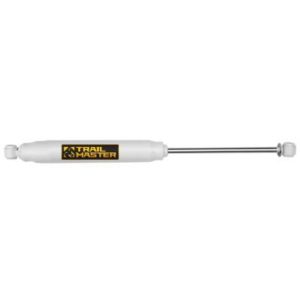 Lift Kits, Suspension & Shocks, Shock Absorbers, Shock Absorbers & Shock Accessories
Trail Master Nitrogen Gas Twin Tube Shock Absorber – TM73265101
- Trail Master TM73265101 rear shock for 3.5 inch lift on 2007-2018 Jeep Wrangler (JK)
- Twin tube nitrogen stabilized
- 5/8 inch chrome hardened piston rod; 10 stage valving
SKU: T/MTM73265101 -
Lift Kits, Suspension & Shocks, Shock Absorbers, Shock Absorbers & Shock Accessories
Trail Master Nitrogen Gas Twin Tube Shock Absorber – TM73265015
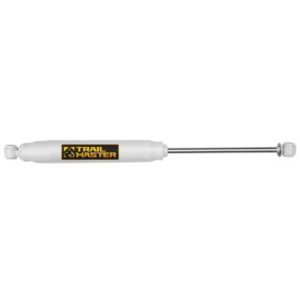 Lift Kits, Suspension & Shocks, Shock Absorbers, Shock Absorbers & Shock Accessories
Trail Master Nitrogen Gas Twin Tube Shock Absorber – TM73265015
- Front shock for the 1984–1990 Jeep Cherokee XJ
- Built for a 4.5 inch lift
- Twin tube, nitrogen stabilized, 10-stage valving
- Optional shock boot sold separately
SKU: T/MTM73265015 -
Lift Kits, Suspension & Shocks, Shock Absorbers, Shock Absorbers & Shock Accessories
Trail Master Nitrogen Gas Twin Tube Shock Absorber – TM73265006
 Lift Kits, Suspension & Shocks, Shock Absorbers, Shock Absorbers & Shock Accessories
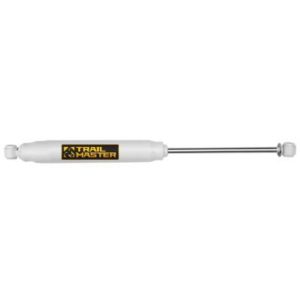
Trail Master Nitrogen Gas Twin Tube Shock Absorber – TM73265006
- Rear nitrogen twin tube shock for Jeep Wrangler JK and Cherokee XJ
- Designed for a 3 to 4 inch lift on JK and 4.5 inch on XJ
- 10-stage velocity sensitive valving
- 5/8 inch chrome hardened piston rod; shock boot a separate part
SKU: T/MTM73265006 -
Lift Kits, Suspension & Shocks, Shock Absorbers, Shock Absorbers & Shock Accessories
Trail Master Nitrogen Gas Twin Tube Shock Absorber – TM73265005
 Lift Kits, Suspension & Shocks, Shock Absorbers, Shock Absorbers & Shock Accessories
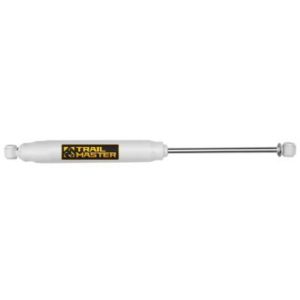
Trail Master Nitrogen Gas Twin Tube Shock Absorber – TM73265005
- Front nitrogen twin tube shock for Jeep Wrangler JK, 2- and 4-door
- Designed for a 3 to 4 inch lift
- 10-stage velocity sensitive valving
- 5/8 inch chrome hardened piston rod; shock boot a separate part
SKU: T/MTM73265005
Start with the goal for the truck
Suspension work is a chain of decisions, and the first one is what the vehicle will do most. A daily driver that sees weekend trails needs a different setup than a dedicated rock crawler or a desert runner. Write down the tire size you want, how much lift you can live with, and whether you tow or carry heavy loads. Those three answers narrow the field quickly.
The catalog is broken into several families that serve different goals:
- Complete lift kits bundle springs, shocks, brackets and hardware sized to one lift height.
- Leveling kits raise the front a modest amount to remove factory rake.
- Body lifts add spacers between body and frame without changing suspension geometry.
- Shocks, stabilizers and bushings refresh or tune an existing setup.
Lift kit versus component upgrade
A complete kit is convenient because the pieces are designed to work together, and many list the lift height range, shock series and rear lift method (add-a-leaf, blocks or springs) right in the title. Buying components separately gives more control but puts the burden of matching spring rates, shock lengths and travel on you. Taller lifts often need extra parts such as drop brackets, longer brake lines, track bars, control arms or driveshaft changes, so read the kit contents carefully for what is and is not included.
Key things to compare
- Lift height range and whether it is measured at the front, rear or both.
- Shock type: twin-tube, monotube or reservoir, and whether shocks are included.
- Spring type and rate, particularly if you carry a winch, bumper or camper.
- Rear lift method, such as blocks, add-a-leaf or new springs.
- Fitment: confirm the exact year, make, model, cab style and drivetrain.
Installation and alignment
Lifting a vehicle changes ride height, driveline angles, brake line length and steering geometry. Professional installation is recommended for most buyers, and every lift should be followed by a wheel alignment. Torque suspension fasteners to the manufacturer's specification, ideally with the vehicle at ride height so bushings are not preloaded. Recheck torque after the first few hundred miles. Bigger tires may also call for re-gearing and a speedometer recalibration.
Compatibility and local rules
Always verify fitment for your exact vehicle and review the manufacturer's specifications before choosing. Height limits for bumpers, headlights and bodies vary by state, so check local regulations before committing to a tall lift.
Common pairings and mistakes
Lift kits rarely work alone. Larger tires often call for wheel offset changes, a steering stabilizer, and sometimes re-gearing. Matching shocks to the actual lift height is important, because a shock that is too short limits travel and one that is too long can hit its internal stops.
- Do not mix a tall lift with stock brake lines or limiting straps.
- Do not skip bushing and ball joint inspection before adding new parts to an old front end.
- Do not assume a leveling kit and a lift kit can be stacked without checking the maker's limits.
Inspection and upkeep
After installation, recheck fasteners after the first 100 miles or so, then at each oil change. Look for torn boots, leaking shock bodies, cracked bushings and loose U-bolts. Suspension that has been lifted needs more regular attention than a stock setup, particularly when used off-road.
Related guides
- Bilstein 5100 vs Fox 2.0 Performance: Which Shock for Your Lifted Truck or Jeep
Popular Lift Kits, Suspension & Shocks brands
- Pro Comp Suspension (682)
- Rubicon Express (250)
- Rough Country (242)
- ARB 4x4 Accessories (242)
- Skyjacker (242)
- Fabtech (208)
- Bilstein (179)
- ICON Vehicle Dynamics (149)
- Energy Suspension (145)
- Daystar (145)
- TeraFlex (132)
- ReadyLift (113)
Shop Lift Kits, Suspension & Shocks by type
- Shock Absorbers & Shock Accessories (933)
- Complete Suspension Systems and Lift Kits (687)
- Suspension Accessories (1,460)
- Leveling Kits (175)
- Body Lifts & Bushings (258)
- Steering Stabilizers (79)
- Air Ride Suspensions (76)
- Lowering & Sport Suspensions (13)
Lift Kits, Suspension & Shocks FAQ
How much lift do I need for 35-inch tires?
It depends on the vehicle and wheel offset. Many trucks need roughly 4 to 6 inches of lift, or a smaller lift paired with trimming, to clear 35s. Check the kit maker's tire-size guidance for your exact vehicle.
Is a leveling kit the same as a lift kit?
No. A leveling kit usually raises only the front to match the rear, giving a small gain. A lift kit raises both ends and often changes shocks and other components. Leveling kits are simpler but give less clearance.
Do I need new shocks with a lift?
Usually yes. Taller ride height needs longer shocks to keep full travel and avoid overextending brake lines and limiting straps. Many complete kits include shocks matched to the lift height; confirm this in the listing.
Do I need an alignment after installing a lift?
Yes. Changing ride height alters alignment angles such as caster and toe. An alignment after installation protects tires and keeps steering predictable. Some larger lifts also need adjustable control arms or track bars to bring angles back in range.