
Suspension Leveling Kits
Showing 61–72 of 103 resultsSorted by popularity
-
Leveling Kits, Lift Kits, Suspension & Shocks, Suspension Leveling Kits
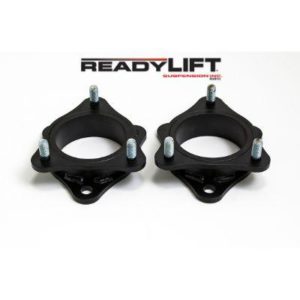
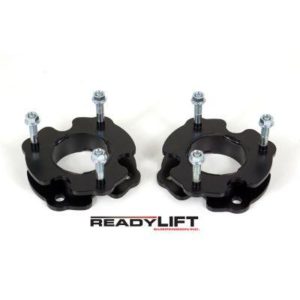
ReadyLift 2.0 Front Leveling Kit – 66-2059
 Leveling Kits, Lift Kits, Suspension & Shocks, Suspension Leveling Kits
ReadyLift 2.0 Front Leveling Kit – 66-2059
- 2-inch front leveling strut extensions for 2004–2014 Ford F-150 and 2006–2008 Lincoln Mark LT
- Steel, black
- Clears 33-inch tires on 2WD and 35-inch tires on 4WD F-150 trucks, per ReadyLift
- Part number 66-2059
SKU: RDY66-2059 -
Leveling Kits, Lift Kits, Suspension & Shocks, Suspension Leveling Kits
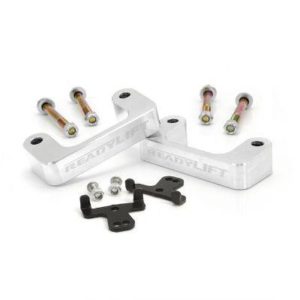
ReadyLift 2 Inch Leveling Kit with Adaptive Ride Control Bracket – 66-3922
 Leveling Kits, Lift Kits, Suspension & Shocks, Suspension Leveling Kits
ReadyLift 2 Inch Leveling Kit with Adaptive Ride Control Bracket – 66-3922
- 2-inch leveling kit with an Adaptive Ride Control lever bracket for 2019–2020 GMC Sierra 1500 Denali
- Lever bracket mounts to the factory upper control arm
- Maximum tire 33×11.50-20 on 20×9 0-offset wheels
- Part number 66-3922
SKU: RDY66-3922 -
Leveling Kits, Lift Kits, Suspension & Shocks, Suspension Leveling Kits
ReadyLift 2 Inch Front Leveling Kit – 66-3920
 Leveling Kits, Lift Kits, Suspension & Shocks, Suspension Leveling Kits
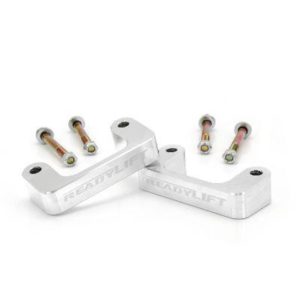
ReadyLift 2 Inch Front Leveling Kit – 66-3920
- 2-inch front leveling strut spacers for 2019 Chevrolet Silverado 1500 and GMC Sierra 1500
- CNC machined 6061-T6 billet aluminum with a 5-degree taper
- Allows up to 285/65-20 tires on 20×9 wheels
- Part number 66-3920
SKU: RDY66-3920 -
Leveling Kits, Lift Kits, Suspension & Shocks, Suspension Leveling Kits
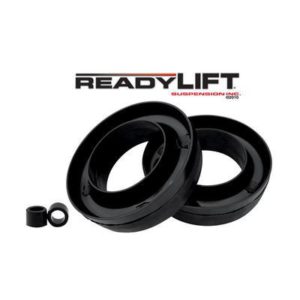
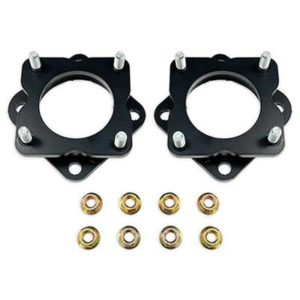
ReadyLift 2 Inch Front Leveling Kit – 66-3025
 Leveling Kits, Lift Kits, Suspension & Shocks, Suspension Leveling Kits
ReadyLift 2 Inch Front Leveling Kit – 66-3025
- 2-inch front coil spring spacers for 1999–2006 Chevrolet Silverado 1500 and GMC Sierra 1500 2WD
- Includes shock relocation brackets
- Steel spacers in a black finish
- Part number 66-3025
SKU: RDY66-3025 -
Leveling Kits, Lift Kits, Suspension & Shocks, Suspension Leveling Kits
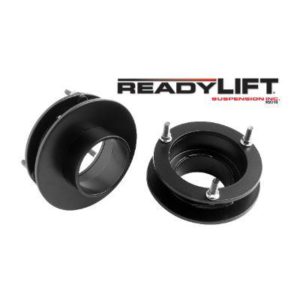
ReadyLift 2 Inch Front Leveling Kit – 66-1090
 Leveling Kits, Lift Kits, Suspension & Shocks, Suspension Leveling Kits
ReadyLift 2 Inch Front Leveling Kit – 66-1090
- 2-inch front coil spring spacers in black e-coated steel
- For 1994–2013 Ram 2500 and 3500 and 1994–2001 Ram 1500 trucks
- Front lift only, no bump stops
- Part number 66-1090
SKU: RDY66-1090 -
Leveling Kits, Lift Kits, Suspension & Shocks, Suspension Leveling Kits
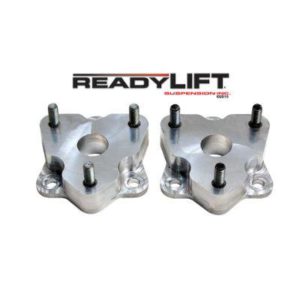
ReadyLift 2 Inch Front Leveling Kit – 66-1030
 Leveling Kits, Lift Kits, Suspension & Shocks, Suspension Leveling Kits
ReadyLift 2 Inch Front Leveling Kit – 66-1030
- 2-inch front leveling strut extensions for 2009–2010 and 2011–2018 Ram 1500
- CNC machined 6061-T6 billet aluminum
- Level stance without over-extending the drivetrain, per ReadyLift
- Part number 66-1030
SKU: RDY66-1030 -
Leveling Kits, Lift Kits, Suspension & Shocks, Suspension Leveling Kits
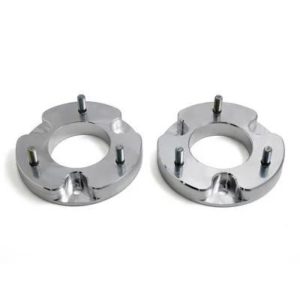
ReadyLift 1.5 Inch Front Leveling Kit – 66-4010
 Leveling Kits, Lift Kits, Suspension & Shocks, Suspension Leveling Kits
ReadyLift 1.5 Inch Front Leveling Kit – 66-4010
- 1.5-inch front leveling strut spacers for 2004–2015 Nissan Titan and 2005–2015 Nissan Armada
- Mount on top of the strut, so the springs are not compressed
- Aluminum, unfinished
- Part number 66-4010
SKU: RDY66-4010 -
Leveling Kits, Lift Kits, Suspension & Shocks, Suspension Leveling Kits

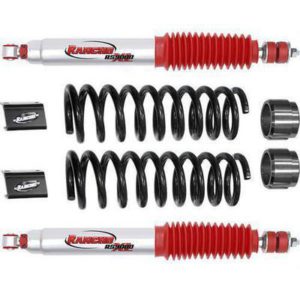
Rancho 2.5 Inch Lift Kit with RS9000XL Shocks – RS66451R9
 Leveling Kits, Lift Kits, Suspension & Shocks, Suspension Leveling Kits
Rancho 2.5 Inch Lift Kit with RS9000XL Shocks – RS66451R9
- Rancho 2.5 inch lift kit with RS9000XL shocks, part number RS66451R9
- Fits 2014 and 2018–2019 Ram 2500 and 2014 Ram 3500
- Shocks included, listed tire size 35 inches
- Classed as a leveling kit
SKU: RANRS66451R9 -
Leveling Kits, Lift Kits, Suspension & Shocks, Suspension Leveling Kits
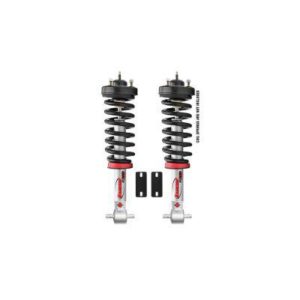
Rancho 2 Inch Level It System – RS66504R9
 Leveling Kits, Lift Kits, Suspension & Shocks, Suspension Leveling Kits
Rancho 2 Inch Level It System – RS66504R9
- Front leveling kit with two Rancho RS9000XL leveling struts
- Lifts the front 2 inches with two sway bar spacers
- Fits 2014–2020 Ford F-150 in several trims
- Shocks included, front lift only
SKU: RANRS66504R9 -
Leveling Kits, Lift Kits, Suspension & Shocks, Suspension Leveling Kits
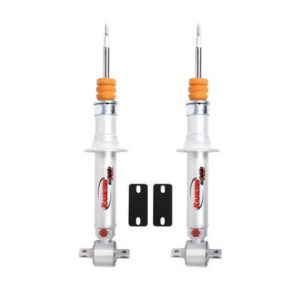
Rancho 2 Inch Level It System – RS66304R9
 Leveling Kits, Lift Kits, Suspension & Shocks, Suspension Leveling Kits
Rancho 2 Inch Level It System – RS66304R9
- Front leveling kit with two Rancho RS9000XL leveling struts
- Lifts the front 2 inch and includes two sway bar spacers
- Fits 2007–2018 Chevrolet Silverado 1500 and GMC Sierra 1500
- Fits the 2019 Silverado 1500 LD
- Shocks included, front lift only
SKU: RANRS66304R9
What a leveling kit does
Many pickups and SUVs sit lower in front than in back from the factory. The difference, called rake, lets the vehicle carry a load without squatting. A leveling kit raises the front to bring the stance closer to even. It is the lowest-cost, simplest route to a taller look and to clearance for a modest tire increase.
Types of front leveling kits
How the kit works depends on the front suspension design.
- Spacers: Metal or polyurethane spacers sit above the coil spring or strut. They are simple, but they do not change spring rate.
- Strut extensions and complete strut assemblies: Used on strut-style front ends, and the latter replace the whole strut for a matched ride.
- Torsion bar keys: On torsion bar trucks, replacement keys change the bar's preload to lift the front, and some are adjustable.
- Coil springs: Replacement springs with a different height can level the front while setting a new rate.
Limits to understand
Leveling changes only the front, so it does not add rear lift or additional wheel travel. Raising the front alters alignment angles, which can mean faster tire wear if you skip the alignment. Stretching the front suspension, especially with spacers that rely on stock shocks, can push CV axles and ball joints to steeper angles. For those reasons, most makers set a maximum recommended lift height, and larger numbers often require longer shocks or a complete lift kit.
What to compare
- Lift height range and whether it is adjustable.
- Whether the kit includes shocks or struts, or reuses stock ones.
- Material: steel, aluminum or polyurethane spacers.
- Which trim levels, drive types and cab styles are covered.
- Any note about suspension packages such as off-road or tow options.
Installation notes
Installation needs spring compressors on many vehicles, which is dangerous without proper tools, so professional installation is recommended. Follow the maker's torque specifications, and have the alignment checked right afterward. After installation, headlight aim should be rechecked because a raised front end points the beams higher.
Fitment and rules
Always confirm fitment for your exact year, make, model and drivetrain, and check the manufacturer's specifications. Rules about vehicle height and tire size vary by state, so check local regulations.
Measuring before you buy
Measure from the center of the front wheel to the fender edge, and do the same at the rear, to see the actual rake. Recording this before installation gives you a baseline. Note that fender-to-ground measurements change with fuel load, cargo and tire pressure, so compare under similar conditions.
Common mistakes
- Choosing the highest setting on an adjustable torsion bar kit without checking the CV axle angles.
- Forgetting to re-aim the headlights.
- Mixing very different tire sizes after leveling, which affects the speedometer and gearing.
- Expecting a leveling kit to improve off-road travel, when its main job is changing stance.
Check for the manufacturer's note on whether the kit works with factory off-road packages.
Also confirm the lift fits the tire size you want by checking the wheel's backspacing, since a taller front with a wider tire can rub the control arms or fender liner. Test by turning the wheels lock to lock at full height before trusting the setup on the highway.
Popular Suspension Leveling Kits brands
- Rough Country (28)
- ReadyLift (25)
- Bilstein (10)
- Tuff Country (9)
- Pro Comp Suspension (8)
- Fabtech (4)
- Trail Master (4)
- Daystar (3)
- 4 Wheel Parts (3)
- Rancho (3)
- TeraFlex (2)
- Icon Suspension (1)
Suspension Leveling Kits FAQ
How much will a leveling kit lift my truck?
Typical kits raise the front roughly 1 to 3 inches, though the exact amount depends on the design and the vehicle. Check the manufacturer's stated range and the effect on your tire size.
Can I put bigger tires on after leveling?
Often a slightly larger tire fits, but wheel offset, fender trim and steering stops all matter. Check the kit maker's tire guidance for your vehicle and test for rubbing before heavy use.
Will a leveling kit hurt my ride quality?
A well-designed kit changes the ride only a little. Spacers keep the stock spring rate, so ride feel stays close to factory, though stretched shocks may reach their limits. Larger tires typically change the ride more.
Do I need an alignment after leveling?
Yes. Raising the front shifts alignment angles, and driving without correction can wear tires unevenly. Schedule an alignment immediately after installation, and recheck it if you change tire size or wheel offset later.