
Tire Carriers
Showing 61–71 of 71 resultsSorted by popularity
-
-
Tire Carriers
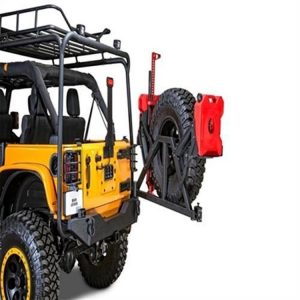
Body Armor Toyota Tacoma Tire/Can Swing Arm Carrier in Textured Black – TC-5293
- Body Armor 4×4 TC-5293 tire and can swing arm carrier
- Textured black finish; carries a spare up to 37 inches tall
- Swings open for full bed access with the tailgate down
- Bolts on with no drilling, cutting or welding
SKU: B/ATC-5293 -
-
Tire Carriers
Smittybilt Slant Back Tire Mount – 76857-05
- Slant back tire mount in two-stage matte black, part number 76857-05
- Converts between straight and slant configurations
- Accommodates tires up to 37 inches
- Rotopax gas or water can mount and off-road jack mount
- Fits Smittybilt XRC/SRC Gen2 or Pivot HD tire carriers
SKU: S/B76857-05 -
-
Tire Carriers
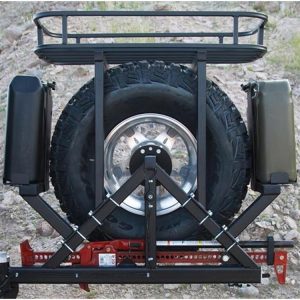
Fab Fours Rear Bumper Tire Carrier in Black Powder Coat – JP-Y1251T-1
- Fab Fours rear bumper tire carrier, part number JP-Y1251T-1, in black powder coat
- Holds up to a 40 inch tire and adjusts for different wheel heights and offsets
- Accommodates 4 different bolt patterns and includes a CB antenna mount
- Needs the separate base rear bumper, #JP97-Y1051-1; confirm vehicle fit before ordering
SKU: FFIJP-Y1251T-1 -
-






Why add a tire carrier
A larger tire than stock often will not fit on the factory spare mount, and a heavy spare can strain the tailgate. A dedicated carrier moves that load to the frame or bumper, frees cargo space and can double as a platform for accessories. Many owners also fit a carrier when they build a custom rear bumper.
Carrier styles
- Tailgate-mounted: Bolts to the tailgate, often with a reinforcement plate. It is simple, but heavy tires can stress hinges, so check the recommended tire size.
- Bumper-mounted swing-out: Attaches to the rear bumper or frame and swings on a hinge, which takes the weight off the tailgate.
- Base plates and tabs: Welded or bolted brackets that let a fabricator or kit add a carrier to a bumper.
- Bed-mounted: Found on pickups, using bed rails or a cross member as the anchor point.
What to compare
Look at the maximum tire diameter and weight the carrier is designed for, the material and thickness of the steel, and the finish. Bare steel needs paint or powder coat before use. Check whether the carrier works with the factory backup camera, a third brake light or a license plate relocation, since some designs need a separate bracket. Many accessories in this category, such as camera brackets and rapid straps, are made for particular models and body styles.
Fitment and installation
Vehicle details such as body lift height, two-door or four-door body style and model year change bolt patterns and clearances, so confirm fitment for your exact year, make and model and check the manufacturer's specifications. A loaded carrier adds a lot of weight at the rear, so torque all fasteners to specification, use thread locker where called for, and recheck them after trail use. Rattles and cracked welds usually start at loose mounts. If you need to weld or drill structural parts, use a qualified shop.
Think about how the carrier will be used on the trail. A spare mounted high and far back changes how the vehicle behaves on steep departures, and a very heavy tire can make the rear feel top-heavy. Securing the spare with a locking hardware or a lug nut lock deters theft, and a cover protects the tire from sun damage.
Common pairings and mistakes
Carriers often pair with a heavy-duty rear bumper, a backup camera bracket, a third brake light relocation and a latch or hinge upgrade. If you build the combination in stages, confirm that each piece uses the same mounting points, because two accessories sometimes want the same bolt holes.
- Do not mount a very large tire on a stock tailgate without reinforcement.
- Do not forget to check the swing clearance against walls, trees and tow hitch accessories.
- Do not skip lug-nut or spare-wheel securing hardware, since a spare can loosen over rough roads.
Weigh the finished spare and wheel if you can. A 35 inch tire on a steel wheel can weigh well over 80 pounds, which strains hinges and latches designed for far less.
Popular Tire Carriers brands
- Smittybilt (9)
- Rock Hard 4x4 Parts (7)
- Wilco Offroad (7)
- JcrOffroad (6)
- Rugged Ridge (6)
- Nfab (5)
- ARB 4x4 Accessories (5)
- Fab Fours (4)
- Body Armor 4x4 (3)
- Crown Automotive (3)
- Poison Spyder Customs (3)
- Warn (3)
Tire Carriers FAQ
Will a tire carrier fit my wheel and tire size?
Each carrier lists a maximum tire diameter and weight. Check these against your actual tire and wheel, including any wheel cover, and confirm fitment for your vehicle with the manufacturer's specifications.
Is a bumper-mounted carrier better than a tailgate carrier?
A bumper or frame mount carries the weight on structural parts, which is easier on hinges, especially with big tires. A tailgate mount can be simpler and lighter, but it depends on the tailgate's strength.
Do I need to powder coat a bare steel carrier?
Yes, if it ships as bare steel. Raw steel rusts quickly, so paint or powder coat it before installation, and touch up any chips. Pre-finished carriers still benefit from occasional inspection.
Can a tire carrier block my backup camera?
It can. Many carriers are designed to keep the factory camera usable, and some need a separate relocation bracket. Check the product details for camera compatibility before choosing.