Skid plates shield vulnerable underbody parts such as the fuel tank, transfer case, engine and transmission from rocks, stumps and ruts. This category covers steel and aluminum plates for Jeeps and trucks, including gas tank and transfer case designs from Rubicon Express, Rough Country, Artec Industries and Poison Spyder. Compare coverage, thickness and fit, then compare the products below.
Skid Plates
Showing 1–12 of 41 resultsSorted by popularity
-
Armor & Protection, Skid Plates
Trail Gear Rock Assault Pinion Guard – 301081-KIT
- Trail Gear Rock Assault 9 pinion guard kit, part number TGI301081-KIT
- CNC laser cut from 3/8 inch thick A36 steel
- Designed for factory Ford 9 inch housings and aftermarket replacements
- Requires 3/8 inch longer fastening hardware
SKU: TGI301081-KIT -
Armor & Protection, Skid Plates
Tomken Machine Transfer Case Skid Plate (Black) – TMS-1332-PA
- Transfer case skid plate for the Jeep Cherokee (XJ) with the NP231
- Black powder coat, no cutting or drilling
- 14″ fit check measurement from the control arm mount to the cross member
- Tomken Machine part number TOMTMS-1332-PA
SKU: TOMTMS-1332-PA -
Armor & Protection, Skid Plates

TeraFlex RockGuard Transmission Skid Plate & Long Arm Crossmember Reinforcement – 4609100
 Armor & Protection, Skid Plates
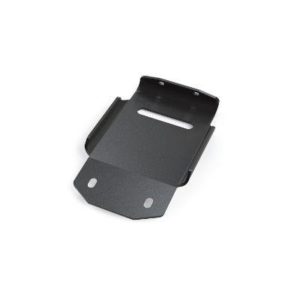
TeraFlex RockGuard Transmission Skid Plate & Long Arm Crossmember Reinforcement – 4609100
- Transmission skid plate for the 2018–2022 Wrangler (JL), 2-door and 4-door
- 1/4″-thick heat treated 6061-T6 aluminum
- Requires a TeraFlex Alpine long arm kit or bracket kit
- Includes hardware, TeraFlex part number TER4609100
SKU: TER4609100 -
Armor & Protection, Skid Plates
Teraflex HD Skid Plate for Rear Falcon Shocks – 36-07-01-300
- Heavy-duty rear shock skid plates for the 2007–2018 Wrangler JK and JKU
- 1/4″ cold rolled steel, for TeraFlex Falcon rear shocks
- Welding optional, not required
- TeraFlex part number TER36-07-01-300
SKU: TER36-07-01-300 -
Armor & Protection, Skid Plates
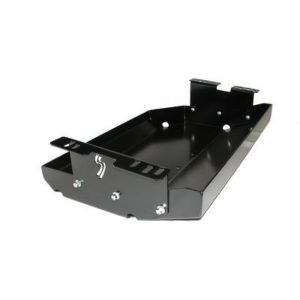
Skid Row Off Road Gas Tank Skid Plate (Black) – JP-3001
- Gas tank skid plate for the 1993–1998 Grand Cherokee (ZJ) and 1997–2001 Cherokee (XJ)
- 3/16″ steel bottom and sides, black powder coat
- Bolt-on and works with virtually any hitch
- Skid Row Off Road part number SFKJP-3001
SKU: SFKJP-3001 -
-
-
Armor & Protection, Skid Plates
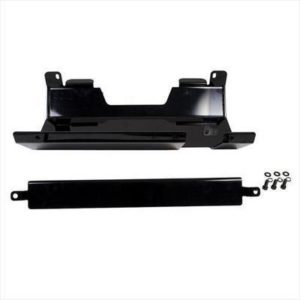
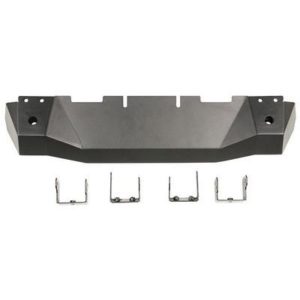
Rugged Ridge Front Bumper Skid Plate – 18003.61
- Front bumper skid plate for the 2018–2022 Wrangler (JL) and 2020–2022 Gladiator (JT)
- 4mm thick steel, fold-and-weld construction
- Works with Rugged Ridge Arcus, Spartacus and HD Series bumpers
- Black powder coat, no drilling, part number RUG18003.61
SKU: RUG18003.61 -
Armor & Protection, Skid Plates
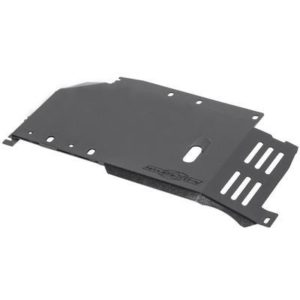
Rubicon Express Transmission Skid Plate – REA1021
- Transmission skid plate for the 2018-2022 Jeep Wrangler (JL) and 2020-2022 Jeep Gladiator
- CNC laser cut from 3/16″ steel
- Designed to mount tight to the drivetrain for ground clearance
- Part of a modular skid plate system
SKU: R/EREA1021 -
Armor & Protection, Skid Plates
Rubicon Express Transfer Case Skid Plate – REA1022
- Transfer case skid plate for the 2018–2022 Wrangler (JL) and 2020–2022 Gladiator (JT)
- 3.6L engine models only, per the manufacturer
- 3/16″ CNC laser cut steel with black powder coat
- Fluid can be changed without removal, part number REA1022
SKU: R/EREA1022 -








What skid plates protect
Underbody components are exposed when you climb or drag across rocks. A dent in an oil pan, a punctured fuel tank or a cracked transfer case housing can end a trip or cause costly repairs. A skid plate gives these parts a sacrificial shield that also helps the vehicle slide over obstacles instead of catching on them. Common plates include the engine and transmission, transfer case, fuel tank, differential and control-arm skids.
Material and thickness
- Steel: Stronger and generally lower cost, but heavier. Thicknesses such as 1/8 inch or 3/16 inch plate are common, and thicker steel resists deformation better.
- Aluminum: Lighter, which lowers unsprung and total weight, but it generally needs more thickness for the same protection and can gouge on rocks.
- Finish: Powder coat helps protect against rust, and bare steel needs paint before use.
Design details that matter
Look at the coverage area, the shape and any dimples, ribs or formed edges that add stiffness. A plate that is flat and has few fasteners may slide well but offers less rigidity. Check whether the design leaves room to service the oil drain, filter and plugs, and whether it includes crossmember or frame mounts. For a transfer case plate, note the transfer case model and whether the plate positions the skid higher for better clearance.
Fitment and installation
Skid plates are very model-specific, because they bolt to particular frame and crossmember points. Identify your engine, transmission, transfer case and fuel tank configuration and confirm fitment for your exact year, make and model. Check the manufacturer's specifications. Support heavy plates with a jack while you install them, use all supplied hardware and torque it to the specified values. Heavy plates add weight and can trap mud or reduce airflow, so inspect and clean them after trail use. Some fuel tank and transfer case installations are best handled by a professional.
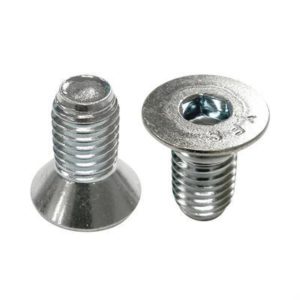
Plan clearance in advance. Fasteners that sit proud of the plate can catch on rocks, so many owners choose flush or low-profile hardware where the design allows. Check bolts after every rough trip, because a loose plate can rattle, bend or tear free, and repair dents promptly to keep the plate's shape and strength.
Choosing coverage and avoiding mistakes
Decide which components are most at risk for your driving. A fuel tank and transfer case are expensive and exposed on many models, so they are often the first priority. Then consider the engine and transmission, followed by differential covers and control arms. Pick the plate whose shape follows the part closely but keeps a gap for airflow and service access.
- Do not use thinner plate than the application needs just to save weight.
- Do not reuse stretched or bent bolts.
- Do not forget to check clearance with the exhaust, driveshaft and any lift kit crossmember.
After a hard impact, look underneath for cracked mounts or a bent plate pressing on the part it is meant to protect. Replacing a bent plate promptly prevents it from causing damage during the next hit.
Popular Skid Plates brands
- Rubicon Express (6)
- Artec Industries (5)
- Rough Country (5)
- Poison Spyder Customs (4)
- Titan Tanks (2)
- TeraFlex (2)
- DV8 Offroad (2)
- ARB 4x4 Accessories (2)
- Mountain Off Road Enterprises (2)
- Skid Row Off Road (2)
- Rugged Ridge (2)
- JcrOffroad (1)
Skid Plates FAQ
Are steel or aluminum skid plates better?
Steel is stronger for its price but heavier, and aluminum is lighter but must be thicker for similar protection. The right choice depends on your terrain, weight limits and budget.
Do skid plates affect cooling?
They can restrict airflow around the engine, transmission or exhaust if the design is closed. Look for vented designs where appropriate, and check temperatures after you install one.
How do I know which skid plate fits my vehicle?
Identify your model, year, engine, transmission and transfer case. Compare those against the product details and the manufacturer's fitment guide, since small differences can change the bolt locations.
Can I install a skid plate myself?
Many owners do, using basic tools and a jack. Plates are heavy and awkward, so have a helper, and consider a shop if the installation needs drilling or tank removal.