Overview
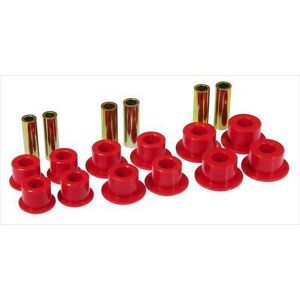
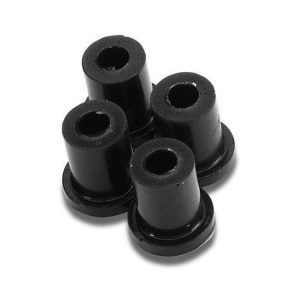
The Prothane D/I6-810 is a red polyurethane frame shackle bushing kit for the rear of the 1991–1994 Ford Explorer and Explorer Sport. It replaces the rubber bushings at the frame end of the rear shackles.
The bushings are non-greaseable, so they don’t need lubrication. Prothane says polyurethane resists oil, road salt and chemicals, which means it should not soften the way rubber does.
Key features
- Red polyurethane construction
- Rear frame shackle position
- Non-greaseable design
- Polyurethane is designed to resist oil, road salt and chemicals.
Signs of frame shackle wear
The frame end of a rear shackle carries the spring’s fore-aft movement, so the bushing there is worked constantly. As it wears, the axle can shift under braking or acceleration and the rear end may feel loose on uneven roads. Polyurethane holds its shape better than rubber against oil and salt, but it is firmer, so there is less give at the joint and any play in the pivot shows up more clearly.
Because the bushing is non-greaseable, most of the maintenance is inspection. Check the shackle bolts, the spring eye and the frame bracket for cracks and rust while the old bushing is out. Replacing the shackle bolts at the same time keeps the new bushing seated correctly.
- Clunking from the rear when starting or stopping
- Rear axle that moves side to side over bumps
- Shackle bolts that are loose or a spring that sits off-center
Specifications
| Brand | Prothane |
|---|---|
| Part number | D/I6-810 |
| Type | Frame shackle bushing kit |
| Position | Rear |
| Service | Non-greaseable |
| Color | Red |
| Material | Polyurethane |
| Fitment type | Direct fit |
Vehicle fitment
It fits the 1991–1994 Ford Explorer, including the Eddie Bauer, Limited, XL and XLT trims, and the 1991–1994 Ford Explorer Sport.
The list does not cover Explorer years outside 1991–1994 or the Ford Ranger. Confirm your vehicle’s year, model and trim before ordering.
What’s included
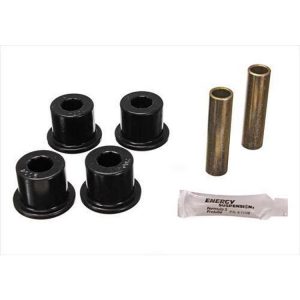
Frame shackle bushings for the rear position. Check the package contents against your installation before starting.