
Body Mount Kit covers the bushings that sit between the body or cab and the frame: polyurethane sets from Energy Suspension, Prothane and Daystar, factory-style rubber kits from Crown Automotive and Omix-Ada for the CJ, and billet aluminum spacers from Artec Industries. Coverage spans Jeep CJ and Wrangler JK, Chevrolet and GMC Suburban and C10, Ford Bronco and Super Duty, and Mitsubishi Montero.Pick by vehicle and material, then compare the products below.
Body Mount Kit
Showing 1–12 of 77 resultsSorted by popularity
-
Body Lifts & Bushings, Body Mount Kit, Lift Kits, Suspension & Shocks

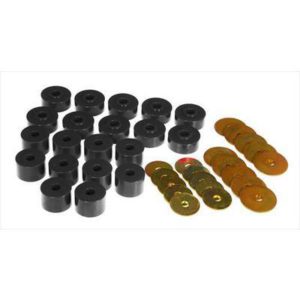
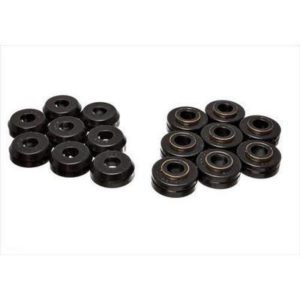
Prothane Body Mount Kit (Black) – 13-103-BL
 Body Lifts & Bushings, Body Mount Kit, Lift Kits, Suspension & Shocks
Prothane Body Mount Kit (Black) – 13-103-BL
- Black polyurethane body bushing kit, 18 pieces
- Fits 1985–1989 Mitsubishi Montero (Base and SP) and 1987–1989 Montero Sport
- Body bushings only; bolts are not included
- Part number D/I13-103-BL
SKU: D/I13-103-BL -
Body Lifts & Bushings, Body Mount Kit, Lift Kits, Suspension & Shocks

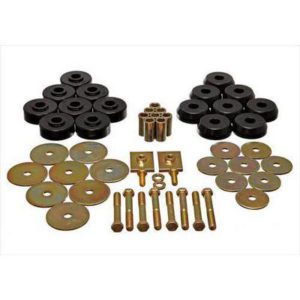
Energy Suspension Body Mount Set (Black) – 3.4166G
 Body Lifts & Bushings, Body Mount Kit, Lift Kits, Suspension & Shocks
Energy Suspension Body Mount Set (Black) – 3.4166G
- Black polyurethane body mount set from Energy Suspension
- Fits the 1959–1960 Chevrolet El Camino Base
- Direct fit replacement for worn rubber body mounts
- Part number ENE3.4166G
SKU: ENE3.4166G -
Body Lifts & Bushings, Body Mount Kit, Lift Kits, Suspension & Shocks
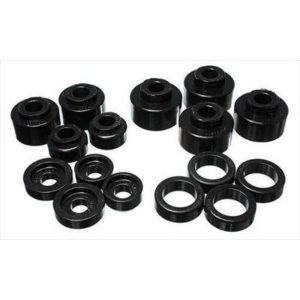
Energy Suspension Body Mount Set – 4.4120G
 Body Lifts & Bushings, Body Mount Kit, Lift Kits, Suspension & Shocks
Energy Suspension Body Mount Set – 4.4120G
- Direct fit for 1999–2007 Ford F-250 Super Duty and F-350 Super Duty trucks
- HYPER-FLEX polyurethane cab and body mounts replace worn rubber mounts
- Soft enough for a smooth street ride, rugged enough for off-road use
- Part number ENE4.4120G
SKU: ENE4.4120G -
Body Lifts & Bushings, Body Mount Kit, Lift Kits, Suspension & Shocks
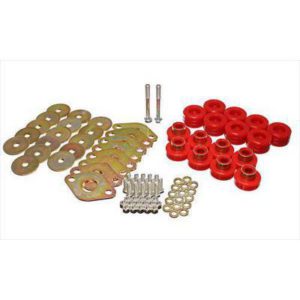
Energy Suspension Body Mount Bushing Set – 2.4111R
 Body Lifts & Bushings, Body Mount Kit, Lift Kits, Suspension & Shocks
Energy Suspension Body Mount Bushing Set – 2.4111R
- Polyurethane body mount bushing set for 2-door Wrangler JK
- Replaces worn rubber cab and body mounts, per Energy
- HYPER-FLEX formulation for smooth ride and off-road durability
- Fits 2007–2018 Jeep Wrangler JK two-door models
- Part number ENE2.4111R
SKU: ENE2.4111R -
Body Lifts & Bushings, Body Mount Kit, Lift Kits, Suspension & Shocks
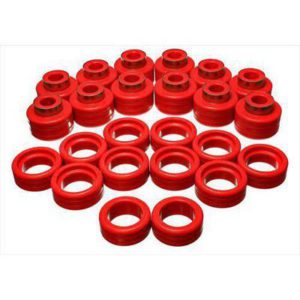
Energy Suspension Body Mount Bushing (Red) – 3.4148R
 Body Lifts & Bushings, Body Mount Kit, Lift Kits, Suspension & Shocks
Energy Suspension Body Mount Bushing (Red) – 3.4148R
- Red polyurethane body cab mount set for Suburbans
- Stronger than original rubber mounts, per Energy
- Fits 1992–1999 Chevrolet and GMC C and K Suburbans
- Part number ENE3.4148R
SKU: ENE3.4148R -
Body Lifts & Bushings, Body Mount Kit, Lift Kits, Suspension & Shocks
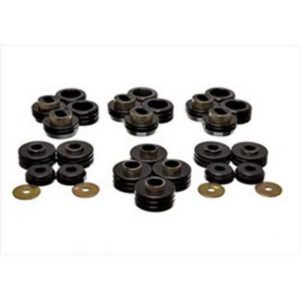
Energy Suspension Body Mount Bushing (Black) – 3.4124G
 Body Lifts & Bushings, Body Mount Kit, Lift Kits, Suspension & Shocks
Energy Suspension Body Mount Bushing (Black) – 3.4124G
- Black polyurethane body cab mount set for Suburbans
- Restores ride height and adds durability, per Energy
- Fits 1981–1991 Chevrolet and GMC Suburbans in C, K, R and V series
- Part number ENE3.4124G
SKU: ENE3.4124G -
Body Lifts & Bushings, Body Mount Kit, Lift Kits, Suspension & Shocks
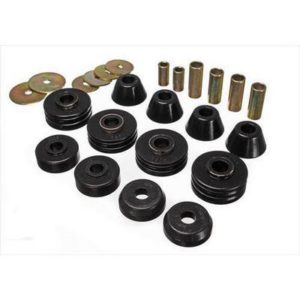
Energy Suspension Body Mount Bushing (Black) – 3.4108G
 Body Lifts & Bushings, Body Mount Kit, Lift Kits, Suspension & Shocks
Energy Suspension Body Mount Bushing (Black) – 3.4108G
- Black polyurethane body cab mount bushing set
- Stronger than original rubber mounts, per Energy
- Most mounts have a steel ring molded into the end
- Fits 1967–1972 Chevrolet C10 and GMC C15 pickups and 1968 GMC K15 pickup
- Part number ENE3.4108G
SKU: ENE3.4108G -
Body Lifts & Bushings, Body Mount Kit, Lift Kits, Suspension & Shocks
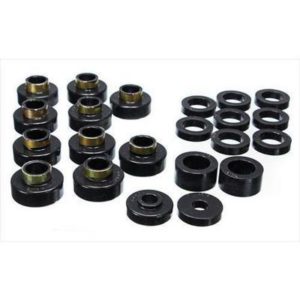
Energy Suspension Body Cab Mount Set (Black) – 2.4102G
 Body Lifts & Bushings, Body Mount Kit, Lift Kits, Suspension & Shocks
Energy Suspension Body Cab Mount Set (Black) – 2.4102G
- Black polyurethane cab and body mount set
- Replaces distorted and worn rubber cab mounts
- HYPER-FLEX polyurethane for a smooth ride and off-road durability
- Fits 1980–1983 Jeep CJ5 and 1980–1986 Jeep CJ7
- Part number ENE2.4102G
SKU: ENE2.4102G -
Body Mount Kit
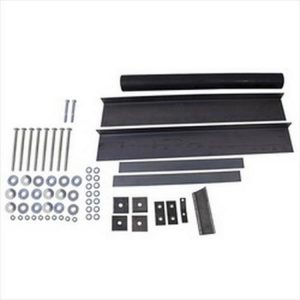
Omix-ADA Fiberglass Body Mounting Kit (Black) – 12201.03
- Omix-Ada 12201.03 black fiberglass body mounting kit for 1976–1986 Jeep CJ7
- Includes a 24 inch roll of mounting rubber and two body mounting plates
- Includes fender reinforcement straps, a clutch mount bracket and emergency brake pedal bracket
- Some parts require welding; mounting bolts, washers and locknuts included
SKU: OAI12201.03 -
Body Mount Kit
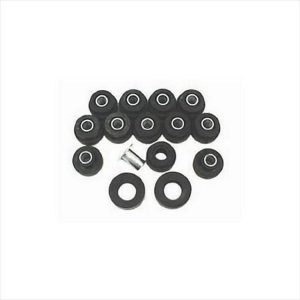
Omix-ADA Rubber Body Mounting Kit (Black) – 12201.02
- Omix-Ada 12201.02 black rubber body mounting kit
- Fits 1976–1983 Jeep CJ5, 1976–1986 Jeep CJ7 and 1981–1985 Jeep Scrambler
- Includes 12 upper rubber body mounts, 12 lower rubber bushings and 12 steel sleeve spacers
- Steel bodies only; bolts and grille mount not included
SKU: OAI12201.02


What body mounts do
On any body-on-frame truck or Jeep, the body does not bolt directly to the frame. A dozen or more rubber mounts cushion it, isolate road noise and vibration, and let the frame flex slightly without cracking the body. Over decades the rubber compresses, cracks and finally crumbles, which shows up as doors that no longer line up, a cab that creaks over bumps, body bolts sitting in a puddle of rust, and a rattle from the bed. On older Jeeps the mounts rot and the tub starts to rust at the mount points, so a body mount job is often paired with floor and frame repair.
Rubber or polyurethane
Factory-style rubber, such as the Omix-Ada CJ kits with upper mounts, lower bushings and steel sleeve spacers, gives the quietest ride and the original feel. It is the right call for a restoration or a daily driver where comfort matters most. Polyurethane, the Energy Suspension HYPER-FLEX and Prothane kits, is firmer and far more resistant to oil, ozone and salt, so it holds its shape for many years and tightens the connection between body and frame. The side effect is slightly more road noise and vibration transmitted into the cab, which most off-road owners accept.
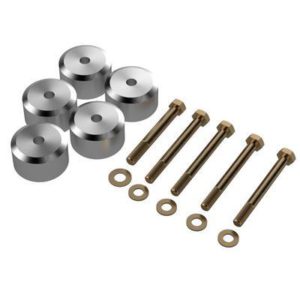
Billet aluminum spacers, like the Artec 1.25 inch TJ set, are a different product. They do not cushion anything; they raise the body a fixed amount and are a precise alternative to plastic body lift blocks. Use them with new rubber or urethane pads, not instead of them.
What a kit includes
- Count the pieces. A Montero kit has 18 pieces, a Bronco set 16, a CJ rubber kit 36. Compare to the number of mount points on your vehicle so you are not short two bushings on a Saturday afternoon.
- Most kits are bushings only. Body bolts, washers, nuts and the radiator support or grille mount are usually not included, and 30 year old bolts rarely come out reusable. Order a bolt kit at the same time.
- Some mounts have a steel ring molded into the end to keep the bolt from crushing the material. Check that the kit matches the mount style at each position; front, mid and rear mounts often differ.
- Fiberglass bodies on CJs use a different mounting kit than steel tubs, with mounting plates and a roll of rubber strip rather than individual pads.
Installation notes
Expect seized bolts. Soak them for a day with penetrating oil, and plan to cut or drill a few. Support the body at several points and lift it only an inch or two at a time, watching the steering shaft, brake lines, fuel filler, wiring and shifters. Replace mounts one side at a time so the body never floats free of the frame. Clean the frame perches to bare metal and treat rust before installing new mounts, because trapped moisture at the mount is what killed the old ones.
Torque the new bolts to the factory figure, then drive a few hundred miles and recheck. Polyurethane benefits from a smear of the silicone grease supplied with the kit on any surface that moves against metal, which prevents the squeak that gives urethane a bad name. Afterward, check door, hood and tailgate alignment; fresh mounts raise a sagging body enough to change the gaps.
Pairing with a body lift
If you are already dropping the body for a lift, replacing the mounts at the same time costs almost nothing extra in labor. Many owners run new urethane pads under aluminum or nylon lift spacers to get both a quiet mount and the extra tire clearance in one job.
Popular Body Mount Kit brands
- Energy Suspension (32)
- Crown Automotive (20)
- Prothane Motion Control (10)
- Daystar (7)
- Omix-Ada (4)
- Artec Industries (2)
- Prothane (2)
Body Mount Kit FAQ
How do I know my body mounts are worn out?
Look for cracked or missing rubber at the mount points, body bolts that have sunk into the frame bracket, doors that no longer line up, creaking over uneven ground or a cab that shifts under braking. On old Jeeps, rust blooming around the mount holes is another sign.
Are polyurethane body mounts too stiff for a daily driver?
They transmit a bit more road noise and vibration than rubber, but far less than many expect, and the body feels tighter. People who want the original quiet ride should stay with rubber; those who want long life in salt, oil and heat usually prefer urethane.
Do body mount kits come with bolts?
Most do not. Kits from Energy Suspension, Prothane and Omix-Ada generally include the bushings and sleeves only. Old body bolts are usually rusted and often break on removal, so plan to order a hardware kit with new grade 8 bolts, washers and nuts.
Can I replace body mounts one at a time?
Yes, and it is the safer method. Loosen all the bolts, then raise one side of the body an inch or two, swap the mounts on that side, snug the bolts and move to the other side. Keep an eye on the steering shaft, brake lines and fuel filler as the body moves.