
Towing Accessories
Showing 49–49 of 49 resultsSorted by popularity
-
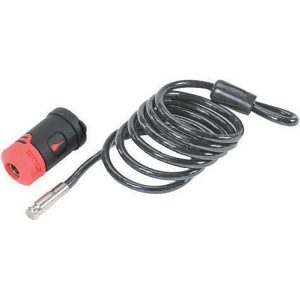
Cable Lock
Bolt Lock Cable Lock – 7023721
- BOLT Lock 6′ cable lock, part number 7023721
- Opens with your car key
- Solid zinc core, automotive grade cylinder, 6 plate-tumbler sidebar
- Stainless steel lock shutter and Santoprene jacket
- Universal fit, made in the USA, limited lifetime warranty
SKU: SSC7023721

Parts that complete a towing setup
A hitch alone does not make a safe tow. The trailer needs a coupler that latches to the ball, a jack to raise and lower the tongue, safety chains for backup, and a way to deter theft. This category covers those supporting parts, along with specialty items for gooseneck and pintle setups.
Couplers and pintle hooks
A coupler must match the ball diameter, commonly 1-7/8, 2 or 2-5/16 inches, and its rating should meet or exceed the trailer's gross weight. Pintle hooks and lunette rings are a different system, often used for heavy or off-road trailers because they allow more articulation. Make sure the hook and ring are rated for the trailer's load and sized to each other. Gooseneck hitch components must be matched to the truck bed hardware and the trailer.
Jacks, chains and links
- Trailer jacks vary in lift capacity, travel and mounting style, such as bolt-on, weld-on or swivel.
- Safety chains should have a working load limit that meets or exceeds the trailer weight, and should be crossed under the tongue so they can catch the tongue if the coupling fails.
- Chain links and hooks should have a rating, and ideally a latch to keep them closed.
Locks and safe practice
Coupler and receiver locks deter theft but do not carry load. Compare the pin diameter, the length and the material. Hardened steel and weather-resistant barrels hold up better in rain and road salt, and a little lubricant keeps the lock working smoothly.
Every towing part has a rating, and the lowest rated link is the working limit. Check ratings from the manufacturer, not guesses based on appearance. Inspect hardware for rust, cracks, bent parts and worn latches before each trip, and replace anything damaged. Confirm that safety chain length allows full turns without dragging on the road. Grease the coupler latch and jack gear lightly each season, since corrosion and grit are the usual causes of sticking latches. Check local regulations, since rules for towing equipment and lighting vary by state.
Compatibility
Confirm that parts fit your hitch class, trailer tongue and ball size. Where a vehicle-specific fit matters, check your year, make and model and the manufacturer's specifications.
Inspection and common mistakes
Look at every towing part before every trip. Check couplers for a worn latch or a ball seat that is egg-shaped, jacks for bent tubes or a stiff gear, and chains for stretched or twisted links. A common mistake is mixing parts with different ratings, such as a high-capacity pintle with a light-duty safety chain. Another is using a padlock as a hitch pin, which is not rated to carry load. Replace missing clips, and do not use makeshift fasteners such as bolts that were not designed for towing. Finally, practice coupling and uncoupling on level ground so that the sequence is familiar before you tow on a trail.
For long-term storage, wipe chains, hooks and couplers with a light oil, and keep locks in a dry place. A bit of lubricant on the lock cylinder prevents seizing in cold or wet weather.
Popular Towing Accessories brands
- Curt Manufacturing (21)
- BOLT Lock (10)
- Trimax Locks (6)
- Pro Series (4)
- B&W Hitch (3)
- Fastway Trailer Products (3)
- DrawTite (1)
- Reese (1)
- RockJock 4x4 (1)
- Safe Jack (1)
Shop Towing Accessories by type
- Trailer Jack (6)
- Cable Lock (8)
- Safety Chain Hook (4)
- Pintle Hook (4)
- Trailer Hitch Coupler (4)
- Safety Chain Link (3)
- Wheel Chock (3)
- Fifth Wheel Trailer Hitch King Pin Lock (2)
- Trailer Hitch Ball Shank Mount (2)
- Fifth Wheel Trailer Hitch Lube Plate (1)
- Trailer Jack Lock Pin (1)
- Pintle Mount (1)
- Trailer Hitch Ball Mount Holder Lock Kit (1)
Towing Accessories FAQ
What ball size do I need for my coupler?
Couplers are built for a specific ball diameter, usually stamped on the coupler body. Common sizes are 1-7/8, 2 and 2-5/16 inches. Using the wrong size can cause the trailer to detach, so match them exactly.
How should safety chains be attached?
Cross them under the trailer tongue and attach them to the hitch or vehicle frame points, not to the ball mount. Leave enough slack for turns but not enough to drag. Use chains rated for the full trailer weight.
Is a pintle hook better than a ball hitch?
They suit different jobs. A pintle hook offers more articulation and high capacity, which helps with heavy or off-road trailers, but it needs a matching lunette ring and can be noisy. Ball hitches are quieter and common for lighter loads.