
Motor mounts and engine mounts for Jeeps and other 4x4s, including factory-style rubber replacements, polyurethane mounts, motor mount lifts and engine conversion mounts for Chevy V8 swaps. Brands include Crown Automotive, Energy Suspension, Mountain Off Road Enterprises, Omix-Ada and Daystar. Check each product page for engine type and part number, then compare the products below.
Motor Mount
Showing 1–12 of 50 resultsSorted by popularity
-
-
-
-
-
-
Motor Mount
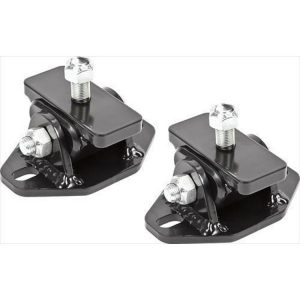
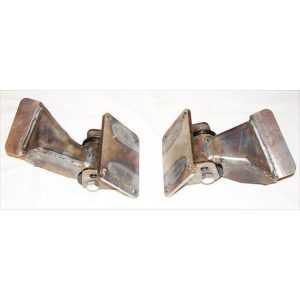
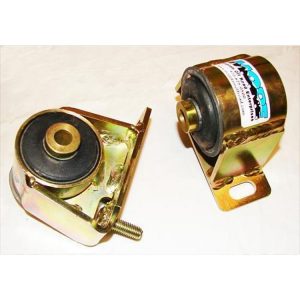
Mountain Off Road Enterprises Torsion Rubber Bomb Proof Motor Mount – JM700
- Mountain Off Road Enterprises JM700 torsion rubber BombProof conversion mount
- Built for Gen III Chevy small block engine conversions
- Bare steel construction with black polyurethane bushings
- Fits 2004–2006 Wrangler LJ and 1997–2006 Wrangler TJ models
SKU: MREJM700 -
-
Motor Mount
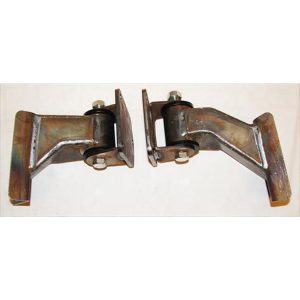
Mountain Off Road Enterprises Bomb Proof Conversion Motor Mount – JM200
- Mountain Off Road Enterprises JM200 BombProof conversion motor mount
- Built for Chevy small and big block engine conversions in Jeeps
- Bare steel mount with black polyurethane bushings
- Fits 1972–1983 CJ5, 1976–1986 CJ7 and 1981–1985 Scrambler models
SKU: MREJM200 -




What motor mounts do
Motor mounts hold the engine to the frame or crossmember, absorb vibration and control how the engine moves under torque. When rubber hardens, cracks or separates, the engine shifts more than it should. Symptoms include clunking on acceleration or when shifting between drive and reverse, vibration through the floor, and in severe cases stress on hoses, wiring and the exhaust.
Rubber versus polyurethane versus solid designs
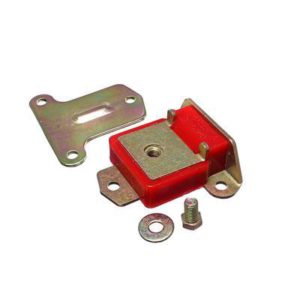
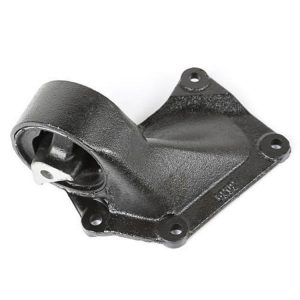
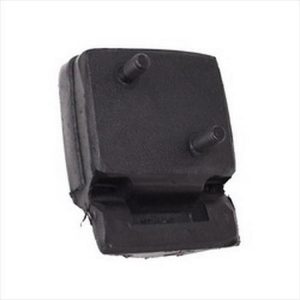
- Rubber (OE style): best vibration isolation and the closest to factory feel. Suitable for most replacement jobs.
- Polyurethane: firmer and more resistant to oil and heat, which reduces engine movement but transmits more vibration into the cab.
- Heavy-duty steel designs: fully welded steel with bushings or torsion rubber suit hard use, trail abuse and added power.
Pick the type that suits how the vehicle is driven. A daily driver usually benefits from softer mounts, while a rock crawler may prefer firmer ones.
Matching engine and position
Mounts are specific to the engine family and often to the side of the vehicle, so sample listings call out details like a 2.5L four-cylinder, 6-cylinder engines or driver versus passenger side. Conversion mounts adapt a different engine, such as a Chevy small or big block, into a chassis that was designed for another motor. These typically require matching transmission and crossmember work. A motor mount lift raises the engine slightly, often used to gain clearance for a fan, oil pan or driveline angle.
Installation tips
The engine must be supported by a jack or hoist while mounts are removed, and a block of wood protects the oil pan. Replace mounts one at a time when possible so the engine stays aligned, use thread locker where specified, and torque to the factory specification. Check the condition of the transmission mount at the same time, since a worn one will put extra load on the new engine mount.
Confirm fitment for your exact year, make, model and engine, and compare part numbers against the manufacturer's specifications before ordering.
If you are swapping engines, plan the whole mounting package: motor mounts, transmission mount, crossmember and any required brackets must all work together. Check exhaust and steering clearance after the engine settles, and recheck bolt torque after the first few hundred miles.
Materials and how mounts differ
Factory-style mounts bond rubber to steel plates, and the rubber is formulated to damp engine vibration at idle and under load. Fluid-filled mounts exist on some vehicles, but most classic Jeep mounts are solid rubber. Polyurethane mounts use a harder compound and often come with steel sleeves and grease fittings or lubricant to reduce squeaks. Bomb-proof or torsion style mounts add steel structure around a rubber element, which resists tearing during hard off-road use or with extra engine torque.
Confirming fitment
Engine mounts differ by cylinder count, displacement and whether the vehicle has a manual or automatic transmission, and by body generation. Check the mount's location, such as driver or passenger side, and the number of bolt holes. Compare the part number on the old mount if it is readable. Conversion mounts often need frame brackets to be welded or bolted, so confirm what hardware is included and what else is required.
Mistakes to avoid
Do not raise the engine without checking the radiator fan, hood and throttle linkage clearance. Do not tighten engine mounts while the engine is hanging off a hoist at an odd angle, because it can bind them. Check exhaust alignment after installation.
Popular Motor Mount brands
- Crown Automotive (19)
- Energy Suspension (8)
- Mountain Off Road Enterprises (6)
- Omix-Ada (5)
- Advance Adapters (4)
- Daystar (4)
- Currie (2)
- Rubicon Express (1)
- Trail Gear (1)
Motor Mount FAQ
What are the signs of a bad motor mount?
Typical signs are clunks when accelerating, shifting or stopping, increased vibration, and visible cracks or separation in the rubber. A mount may also let the engine sit at an odd angle.
Are polyurethane motor mounts better than rubber?
They are firmer and last well, but transmit more vibration and noise. Rubber gives a smoother ride. The better choice depends on whether comfort or reduced engine movement matters more.
Do I need to replace all motor mounts at once?
Not necessarily, but a failed mount puts extra load on the others. Inspect all of them, including the transmission mount, and replace worn ones together where practical.
What is a motor mount lift?
It is a mount or spacer that raises the engine a small amount, often about an inch, to gain clearance or adjust driveline angle. Check hose, fan and exhaust clearance after installing.