



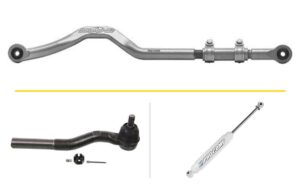
Death wobble explained: why solid front axles shake after a bump, which worn parts cause it, how to find the loose joint with a…
Steering Stabilizer
Showing 85–96 of 202 resultsSorted by popularity
-
Steering Stabilizer
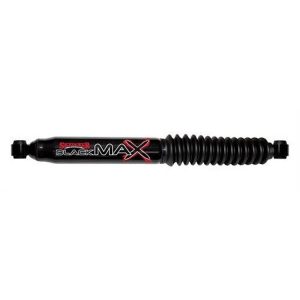
Skyjacker Black MAX HD OEM Steering Stabilizer Replacement Kit – 8008
- Skyjacker Black MAX HD OEM steering stabilizer replacement kit, part number 8008
- Direct fit front stabilizer for the 2018 Jeep Wrangler JL, two and four-door
- Listed trims include Rubicon, Sport, Sport S and Unlimited versions
- UPC 803696256672, black body and black shock boot
SKU: SKY8008 -
Steering Stabilizer
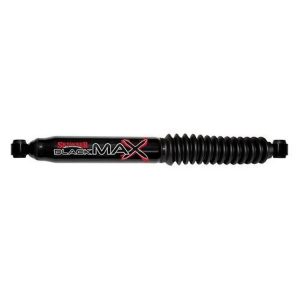
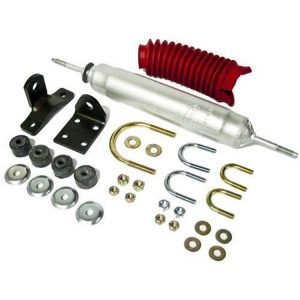
Skyjacker Black MAX Steering Stabilizer – 8000
- Skyjacker Black MAX steering stabilizer, part number 8000, single replacement cylinder
- Stated fit: 1974 to 1988 J-series truck and 1974 to 1991 SJ Cherokee
- UPC 803696241050, black body with black shock boot
- Brackets and hardware not included
SKU: SKY8000 -
-
Steering Stabilizer
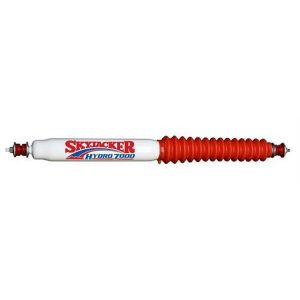
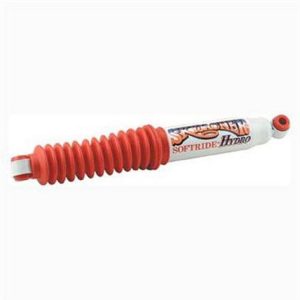
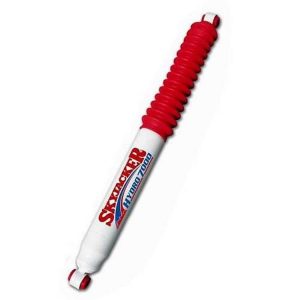
Skyjacker Hydro 7000 Steering Stabilizer – 7500
- Skyjacker Hydro Series single steering stabilizer, part number 7500
- Direct fit, front position, stabilizer only
- Red shock boot included, brackets not included
- Fitment lists Chevrolet, GMC, Cadillac, Ford and Jeep Wrangler JK models
SKU: SKY7500 -
-
-
-
Steering Stabilizer
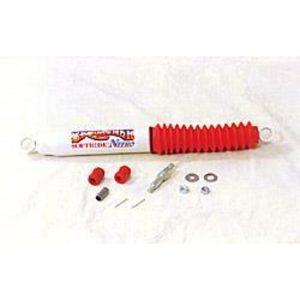
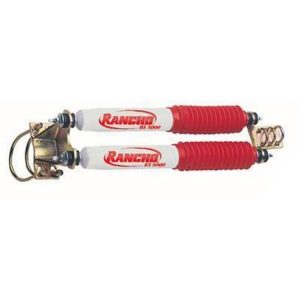
Rancho RS5000 Steering Stabilizer Dual Kit – RS98510
- Rancho RS98510 dual steering stabilizer complete kit, RS5000 Series
- Brackets, hardware and stabilizer shocks included
- Red shock boot included
- Specifications pair it with the RS6510 and RS6511 system
- No vehicle named for fitment
SKU: RANRS98510 -
Steering Stabilizer
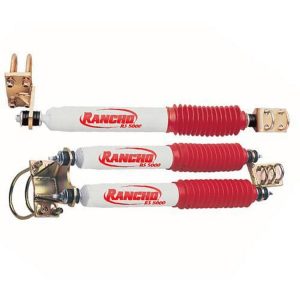
Rancho RS5000 Steering Stabilizer Dual Kit – RS98501
- Rancho RS98501 dual steering stabilizer complete kit, RS5000 Series
- Includes stabilizer shocks, brackets and hardware
- Red shock boot included
- Dual setup suited to 35-inch or larger tires
- No year, make or model named
SKU: RANRS98501 -
-
Steering Stabilizer
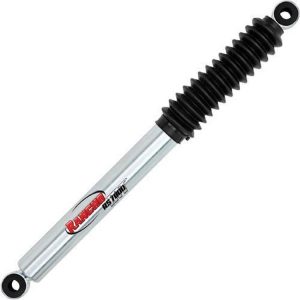
Rancho RS7000MT Monotube Steering Stabilizer – RS7411
- Rancho RS7411 front RS7000MT monotube steering stabilizer
- Fits 2000–2010 Chevrolet and GMC 2500, 3500 and HD pickups and SUVs
- Red shock boot included
- Part number RS7411, UPC 10039703005507
- Limited lifetime warranty
SKU: RANRS7411
What a steering stabilizer does
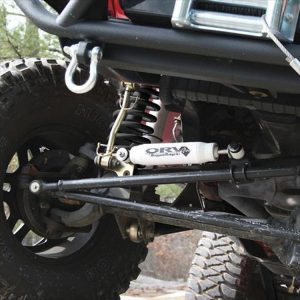
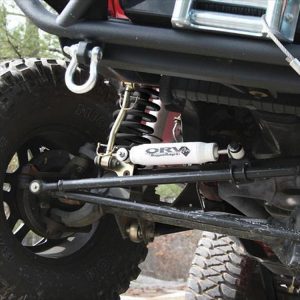
A steering stabilizer is a hydraulic damper, shaped like a small shock absorber, that connects the steering linkage (the tie rod or drag link) to a fixed point on the axle or frame. It does not add power and it does not fix a worn front end. Its job is to damp the sudden steering movements that occur when a tire hits a rock, a rut or a pothole, so that the impact is not transmitted all the way to the steering wheel.
Stabilizer or underlying problem
Death wobble and steering shimmy are usually caused by worn or loose parts, incorrect caster, a bent component or unbalanced tires. A stabilizer can mask these symptoms for a while, but it is not a cure. Before installing one, inspect ball joints, tie rod ends, track bar bushings and bolts, wheel bearings and alignment. Replacing a worn cylinder with a fresh one is a common maintenance item, particularly if you see oil leaking down the body or the steering feels loose.
Choosing the right setup
- Single stabilizer: the usual choice for stock-height and mild lift vehicles with moderate tires.
- Dual stabilizer kits: add a second damper for heavier, larger tires and harder off-road use, and some kits include two cylinders and the brackets together.
- Cylinder only: a replacement when the original brackets and hardware are still sound.
- Gas-charged versus hydraulic: gas-charged units resist foaming and fade, which helps in extended rough driving. Reservoir designs add oil volume.
Fitment and compatibility
Stabilizers are matched to the stroke needed for the vehicle's steering travel, so compare the extended and collapsed lengths with the manufacturer's data for your vehicle. A lifted truck may need a different bracket or cylinder than a stock one. Confirm fitment for your exact year, make and model and your lift height before choosing a part.
Installation notes
Mount the stabilizer so it can travel through its full stroke without hitting the steering, the axle or the exhaust, and check clearance at full lock in both directions. Torque the bolts to the manufacturer's values and use thread locker where specified. Steering is a safety system, so have a professional alignment shop or mechanic inspect the work if you are not sure of the installation.
Part selection becomes easier once you know what you are replacing. Measure the installed stabilizer from mounting eye to mounting eye with the steering centered, and note the extended and collapsed lengths of the new part against that figure. Many replacement cylinders are sized for a range of vehicles, but the stroke needed depends on the steering travel and the axle design, so a unit that works on one truck may bottom out on another. Look at the mounting style too, because some use eyelets with bushings and others use stud ends.
Maintenance is simple. Inspect the stabilizer whenever you rotate tires, look for fluid weeping from the seal and check that the bushings and bolts are tight. Replace bushings when they are cracked or oval-shaped. Stabilizers that are mounted low are exposed to rocks, so a bent body or rod after a hard trail day is a reason for replacement. If steering feels heavy or uneven after a new unit goes in, check whether it is binding at one end of its stroke or mounted at an angle.
Related guides
- Death Wobble: The Parts That Cause It and How to Fix It
Popular Steering Stabilizer brands
- Pro Comp Suspension (43)
- Rancho (31)
- Skyjacker (29)
- Fabtech (18)
- Rough Country (15)
- Fox Racing Shox (15)
- ARB 4x4 Accessories (12)
- Bilstein (11)
- Rubicon Express (6)
- TeraFlex (6)
- Crown Automotive (5)
- California Super Trucks (3)
Steering Stabilizer FAQ
Will a steering stabilizer fix death wobble?
Usually not by itself. Death wobble typically comes from worn or loose steering and suspension parts, alignment or tire balance. A stabilizer may reduce the symptom, but the cause should be found and repaired.
How do I know my stabilizer is worn out?
Look for oil leaking from the body, a bent rod, and a damper that moves freely with no resistance. Loose-feeling steering and added vibration after bumps are also signs. A weak stabilizer is a cheap thing to replace.
Do I need a dual stabilizer?
Often only if you run larger, heavier tires or drive hard off-road, where one damper may not control the steering. Many stock and mild-lift vehicles are fine with one. Check the manufacturer's guidance for your setup.
Can I install a stabilizer myself?
Many owners do, since it is a bolt-on job. Check that nothing binds through full steering lock and torque the hardware correctly. Because steering is safety-critical, a professional check is sensible if you are unsure.