
Steering Shaft
Showing 13–20 of 20 resultsSorted by popularity





The link between column and box
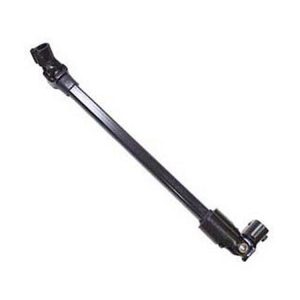
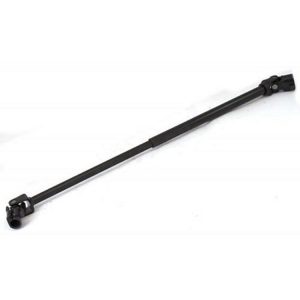
The intermediate steering shaft carries the driver's input from the bottom of the steering column through the firewall to the steering box. On most Jeeps and older trucks it has a universal joint or rag joint at each end and a slip section so it can collapse in a crash and absorb engine movement. The factory shaft wears at the joints, which shows up as a dead spot on center and a clunk when you reverse the wheel, and the rag joint's rubber disc tears. The parts here replace or upgrade that shaft: Borgeson heavy-duty shafts with needle-bearing U-joints, factory-style lower shaft assemblies from Crown Automotive for the 1984 to 1994 XJ and 1995 to 1998 ZJ, and the individual steering U-joints that let you build a shaft for a column or box swap.
Direct replacement shafts
Borgeson's bolt-in shafts are listed by vehicle. The adjustable power steering shaft for the 1976 to 1986 CJ collapses to 26 inches and extends to 33 with a slip shaft and needle-bearing joints. The telescopic shaft for 1979 to 1993 Dodge full-size trucks includes a rag joint flange and a billet steel U-joint and connects the factory column to the box. The upper shaft with vibration damper for the 1997 to 2006 TJ has zero radial play joints, an airtight firewall seal and clears up to a 3 inch body lift. The Crown lower shaft assemblies for the XJ and ZJ are complete factory-style units with end knuckles. Each listing names its vehicle; choose the one for yours and confirm power versus manual steering.
Building a shaft with universal joints
When you swap a steering box, a column or an engine, the stock shaft no longer reaches or the ends no longer match. Borgeson's single and double steering U-joints solve that. They are specified by the two ends they connect, and the sizes you will see are:
- 3/4 inch 36 spline: the common GM and Jeep column output.
- 13/16 inch 36 spline: the input on many Saginaw power steering boxes.
- 1 inch 48 spline: a larger box input used on some trucks.
- 3/4 inch double-D: a flat-sided shaft end used on many columns and intermediate shafts.
- 5/8 inch smooth bore: clamps to a plain round shaft with set screws.
Measure the spline count and the diameter of each end with calipers, because 36 and 48 splines look alike. A single U-joint handles up to about 30 degrees of misalignment; a double joint handles sharper angles or a short run that would otherwise bind. Vibration reducer joints, available in steel or polished stainless, add a rubber element that isolates road shake from the wheel. The telescopic shaft assembly listed with 3/4 inch 36 spline on the column end and 13/16 inch 36 spline on the box end, with two billet U-joints, is a ready-made shaft for the common Saginaw conversion.
Installation and safety
A steering shaft must have a slip or collapsible section for crash safety and engine movement; never build a rigid one-piece shaft. Use the set screws with thread locker and the maker's torque, and on double-D shafts, dimple the shaft so the set screw cannot walk. Keep U-joint angles within the maker's limits and phase double joints correctly, or the wheel will speed up and slow down through a turn. Check that nothing can contact the shaft at full engine rock and full suspension travel. Steering is safety critical; have a professional check any custom shaft before driving. Confirm the vehicle or the exact end sizes before choosing.
Popular Steering Shaft brands
- Borgeson Steering (31)
- Crown Automotive (8)
- Omix-Ada (3)
- Flaming River (3)
- RT Off-Road (2)
- Trail Gear (1)
Steering Shaft FAQ
How do I measure the spline size on my steering shaft?
Measure the outside diameter of the splined end with calipers and count the splines; 3/4 inch 36 spline and 1 inch 48 spline are the common sizes, with 13/16 inch 36 spline on many Saginaw boxes. For a double-D end, measure the diameter across the round sides. Match both ends of the joint to the shafts it connects.
What are the symptoms of a worn steering shaft?
A clunk felt in the wheel when changing direction, a dead spot on center, and sometimes a squeak from a dry rag joint or U-joint. With the engine off, have a helper rock the wheel while you watch the shaft joints; any movement at a joint that does not turn the box means wear.
Can I use a single U-joint for any angle?
No. A single steering U-joint works smoothly up to roughly 30 degrees of operating angle. Steeper angles cause speed variation and binding and need a double U-joint or a support bearing with two joints. Lay the shaft out and measure the angle before choosing.
Does a body lift require a new steering shaft?
Often. Raising the body moves the column away from the steering box and the stock shaft may run out of slip travel. Some upgraded shafts, like the Borgeson TJ upper shaft, are designed to accommodate up to a 3 inch body lift; otherwise an extension or longer shaft is needed.