
Leaf Spring
Showing 25–28 of 28 resultsSorted by popularity
-
Leaf Spring, Lift Kits, Suspension & Shocks, Suspension Accessories

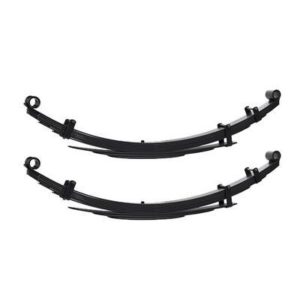
ARB Old Man Emu Leaf Spring – CS042R
 Leaf Spring, Lift Kits, Suspension & Shocks, Suspension Accessories
ARB Old Man Emu Leaf Spring – CS042R
- ARB Old Man Emu CS042R leaf spring
- Fits 1991–2016 Ford Explorer and 1991–2000 and 2013–2016 Explorer Sport
- Tapered and diamond cut leaves with a two-stage pack
- Military wrap, graphite coating and shot peened tension side
SKU: ARBCS042R -
Leaf Spring, Lift Kits, Suspension & Shocks, Suspension Accessories
ARB Leaf Spring – CS012FB
- ARB CS012FB right leaf spring
- Fits 1986–1993 Suzuki Samurai in Base, JA, JL, JS, JX and JX SE trims
- Tapered and diamond cut leaves, fully scragged and load tested
- Two-stage leaf pack with anti-friction pads
SKU: ARBCS012FB -
Leaf Spring, Lift Kits, Suspension & Shocks, Suspension Accessories
ARB 2 Inch Front Leaf Spring – Heavy Duty – CS009FB
 Leaf Spring, Lift Kits, Suspension & Shocks, Suspension Accessories
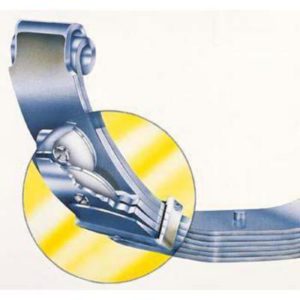
ARB 2 Inch Front Leaf Spring – Heavy Duty – CS009FB
- ARB CS009FB heavy duty front leaf spring with 2-inch lift, sold each
- Fits 1984–2014 Toyota 4Runner in Base, DLX, Limited, SR5, Sport and Trail trims
- Military wrap, graphite coating, anti-friction pads and anti-squeak clamp liners
- Lift height range 0 to 4.99 inches, bushings not included
SKU: ARBCS009FB -
Leaf Spring
Rubicon Express Add-A-Leaf XJ 2.5 Inch /Pair – RE1410
- Rubicon Express RE1410 add-a-leaf for the rear springs of a Jeep Cherokee XJ
- Lifts about 2.5 inches and is sold as a pair
- Designed to keep good flex and ride quality
- Use with stock springs, extended shackles and block kits to reach the height you want
SKU: R/ERE1410

What leaf springs do
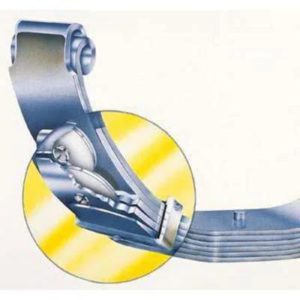
A leaf spring is a stack of curved steel leaves, bolted to the axle and mounted to the frame at each end. It supports the load, locates the axle and controls how the axle moves. Because leaf springs are both the spring and a locating link, they strongly influence ride quality, load capacity and handling. They sag over time, especially on trucks that haul or tow, and a tired spring is a common reason for a drooping rear end or a sloppy feel.
Types of replacement springs
- OE replacement springs: restore original ride height and capacity for a worn vehicle.
- Softride or comfort-tuned springs: use fewer leaves or a different curve for a smoother ride at a rated load.
- Lift springs: built with extra arch for added height, in listings such as 3, 4, 5 or 8 inches, often for specific vehicles.
- Flex-oriented springs: engineered for added articulation on trail vehicles.
What to compare
- Position: front or rear, and driver or passenger side if indicated.
- Spring quantity: some listings are single springs, while others are sold as a pair or a kit.
- Bushings: rubber is quieter, polyurethane is firmer. Check whether bushings are included, and whether the eye diameter matches your hardware.
- Lift and rate: the lift number depends on load, so a loaded truck sits lower than an empty one. Confirm the spring rate suits your payload.
Fitment
Leaf springs are vehicle specific. Axle width, eye size, spring perch and frame mounting differ between model years, cab and bed configurations, and between front and rear. Confirm fitment for your exact year, make and model, and review the maker's specifications on lift height, shackle length and recommended accessories.
Installation notes
Lifting a vehicle changes steering, brake line, driveshaft and shock requirements. Longer shocks, brake lines, shackles or driveshaft angle corrections may be needed. Support the frame on rated jack stands, never rely on a jack alone, and torque U-bolts and shackle bolts to the specified values after the vehicle is sitting at ride height. Re-torque after a short drive. Because springs are a safety part, professional installation and an alignment are recommended.
Replace springs in axle pairs so that both sides sit at the same height.
Inspection and common mistakes
Leaf springs usually give warning before failing. Look for a cracked main leaf, shifted leaves, worn wear pads, a loose center bolt and rust between leaves. Sagging can be measured by comparing the distance from the axle to the frame side to side.
- Do not ignore U-bolts. They stretch under load. New U-bolts are typically recommended whenever springs are replaced, and they should be torqued in a crisscross pattern.
- Check the shackles and hangers. Worn shackle bushings and cracked hangers can cause rear-end wander even with new springs.
- Consider a add-a-leaf only as a stopgap. It can restore some height or capacity, but it will not fix a worn spring pack.
- Watch axle wrap. Lifted or high-torque vehicles may need traction bars or similar parts to control axle wrap under hard acceleration.
- Allow time to settle. New springs often settle in the first weeks, so check height afterward.
Popular Leaf Spring brands
- Skyjacker (12)
- Tuff Country (6)
- Trail Gear (3)
- ARB 4x4 Accessories (3)
- Fabtech (2)
- Belltech (1)
- Rubicon Express (1)
Leaf Spring FAQ
How do I know if my leaf springs are worn?
Signs include a sagging rear end, flattened or cracked leaves, broken center bolts, a harsh or bouncy ride and uneven ride height side to side. A shop can inspect them and measure arch against specifications.
Should I replace leaf springs in pairs?
Yes. Replacing both sides of the axle gives equal height and spring rate, which keeps handling predictable. Replacing only one side can leave the vehicle leaning or handling unevenly.
What do bushings do in a leaf spring?
Bushings isolate the spring eye from the frame hanger. Rubber bushings reduce noise and harshness, while polyurethane is stiffer. Check whether they are included and that the size matches the eyes.
Do lift leaf springs require other parts?
Often. A lift may need longer shocks, brake lines, shackles or driveshaft adjustments, plus an alignment. Review the maker's specifications for your vehicle and have the work done professionally.