
License Plate Frames and Covers
Showing 13–24 of 59 resultsSorted by popularity
-
License Plate Frames and Covers
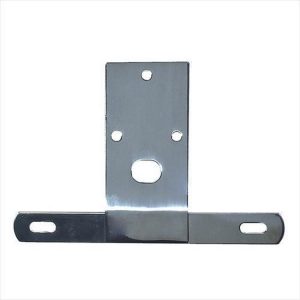
Rugged Ridge License Plate Bracket – 11136.01
- Factory-style license plate bracket in 304 stainless steel with a polished finish
- Fits 1976-1983 Jeep CJ5, 1976-1986 CJ7 and 1981-1985 Scrambler
- No drilling required; mounting hardware included
- Part number 11136.01, UPC 804314038410
SKU: RUG11136.01 -
-
-
License Plate Frames and Covers
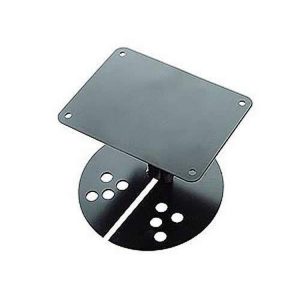
License Plate Bracket Delete
- Delete bracket that fills the gap left after removing the factory license plate bracket
- Fits 2007-2018 Jeep Wrangler JK, including Unlimited models
- Replaces OE part 55397112AA
- Omix-Ada part number 11233.08, UPC 804314290214
SKU: OAI11233.08 -
License Plate Frames and Covers
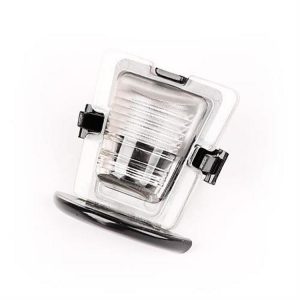
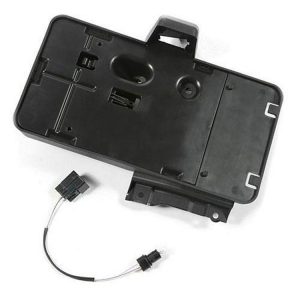
Omix-ADA License Plate Bracket – 11233.07
- Omix-Ada 11233.07 rear license plate bracket in black plastic
- Factory OE replacement that matches OE form, fit and function
- Fits 2007–2018 Jeep Wrangler JK, 2 and 4-door models
- Light is included
- Drilling is not required
SKU: OAI11233.07 -
-
License Plate Frames and Covers
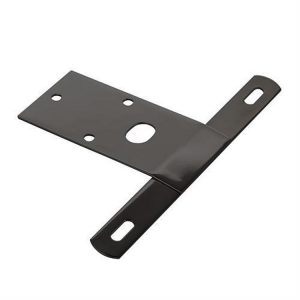
Kentrol License Plate Bracket – 50472
- Kentrol 50472 license plate bracket in high gloss black powder coated T-304 stainless steel
- Mounts to the location of the factory license plate bracket
- Fits 1976–1983 Jeep CJ5 and 1976–1986 Jeep CJ7 models
- Complete with all hardware needed for installation, per Kentrol
- Backed by a limited lifetime warranty
SKU: KEN50472 -
License Plate Frames and Covers
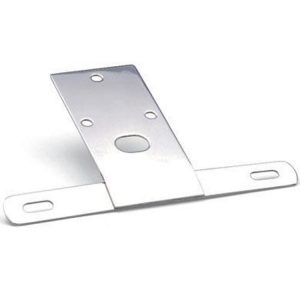
Kentrol License Plate Bracket – 30472
- Kentrol 30472 stainless steel license plate bracket
- Mounts to the location of the factory license plate bracket
- Fits 1976–1983 Jeep CJ5, 1976–1986 Jeep CJ7 and 1981–1985 Jeep Scrambler
- 304 stainless steel with a mirror-like shine
- Kit has a mounting bracket; the short description says no mounting hardware
SKU: KEN30472 -
-
License Plate Frames and Covers
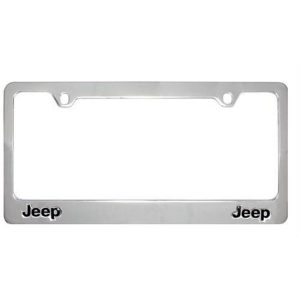
Jeep License Plate Frame (Polished) – 82213251AB
- Jeep polished license plate frame, part number 82213251AB
- 20 gauge 304 stainless steel with a polished finish
- Jeep logo and open corner design for visible registration tags
- Includes one-piece hardware hider and mounting spacers
SKU: JEP82213251AB -
License Plate Frames and Covers
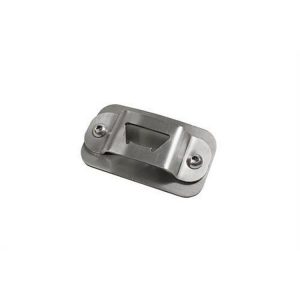
JCROffroad License Plate Delete Bottle Opener – JKBO
- License plate delete bottle opener for 2007–2017 Jeep Wrangler JK
- Stainless steel, CNC cut and formed from 1/8-inch stock
- Bolt-on installation, no drilling required
- Does not include a light; hand built in the USA
SKU: JCRJKBO






What this category covers
There are two groups of products. The first is decorative: frames and covers that surround the plate and can be polished or black. The second is functional: brackets and mounts that hold the plate in a legal spot after a bumper swap, winch install or accessory change. Typical items include hawse fairlead mounts, tube bumper clamps, shackle mounts, flip-up brackets and OE-style replacement brackets.
How to choose a mount
Identify what the plate must mount to. Fairlead-mounted brackets attach to a roller or hawse fairlead. Tube-mounted brackets clamp to a round bumper, and a size listed such as 3 inch must match your tubing. Bumper-specific brackets are made for a particular model line. OE replacements bolt to the original location on the body.
- Fixed brackets: Simple and rattle-free once tightened.
- Flip-up or swing-away brackets: Let you move the plate when you need winch access.
- LED-lit brackets: Include a light so the plate is illuminated at night.
Specs and details to compare
Note material and finish: powder-coated steel is strong and rust-resistant, aluminum is lighter, and plastic is common on OE replacements. Check whether the listing says no-drill, clamp-on or requires drilling. Confirm whether the bracket is sold with its hardware, and whether it fits front, rear or both positions. If you want a plate delete plug, be aware that it only fills the hole and does not remove the legal requirement to display a plate in the proper place.
Legal and installation notes
Plate display rules vary by state. Many states require a clearly visible, illuminated, level plate at the rear and some require a front plate, so check local regulations before relocating or hiding yours. A plate placed behind a spare tire or too low can attract a citation.
For installation, use a torque wrench or at least snug hardware with thread locker where recommended, because trail vibration loosens plate brackets quickly. Use rubber washers or a thin foam gasket to cut rattle and prevent the plate from scratching paint. If the bracket sits near a winch or fairlead, make sure it does not interfere with cable travel, and check clearance at full steering lock. Confirm fitment for your exact vehicle and bumper, and follow the manufacturer's specifications.
Fit checks and upkeep
Plate sizes differ by region. Standard US plates are 12 by 6 inches, and the bolt hole spacing is commonly 7 inches, though some states and other countries use different dimensions. Check your plate against the bracket's opening and hole pattern. A frame should not cover the state name, the registration stickers or any required text, and rules about this vary, so check local regulations.
Think about how the plate sits relative to other parts. A plate mounted on a fairlead may be pushed forward and block airflow to a radiator or intercooler if it sits too close, so leave clearance. A plate behind a winch can be damaged by cable, and one that hangs low can be struck on a trail.
For care, use stainless or coated screws to resist rust, and rinse salt off the bracket. Polished aluminum frames benefit from occasional metal polish. Tighten loose hardware, replace cracked plastic brackets before they drop the plate, and keep stickers visible and clean.
Popular License Plate Frames and Covers brands
- Warrior (7)
- Kentrol (6)
- Rugged Ridge (6)
- Omix-Ada (5)
- Fab Fours (4)
- Poison Spyder Customs (4)
- Jeep (4)
- Smittybilt (4)
- Crown Automotive (3)
- Rock Hard 4x4 Parts (3)
- Aries Offroad (3)
- AMI (2)
License Plate Frames and Covers FAQ
Where can I legally mount a license plate after a bumper swap?
Rules vary by state, but a plate generally must be visible, secured, level and lit at night. Check your state's motor vehicle regulations before choosing a location, especially if you remove or relocate a front plate.
Will a tube bumper bracket fit any bumper?
Only if the tubing diameter matches. Many clamp-on brackets are made for 3 inch tubes, for example. Measure your bumper tube and compare it to the size in the product description.
How do I stop my plate from rattling off-road?
Use the supplied hardware with thread locker, add rubber washers or foam between the plate and bracket, and check the bolts regularly. Brackets with a firm mounting point rattle less than loose clamps.
Do I need a lit bracket?
Many states require the rear plate to be illuminated. If your relocation covers the original plate light, a bracket with an LED light can help you stay compliant. Check local rules.