Disc brake calipers for Jeeps, Toyota trucks and other 4x4s, including powder coated performance calipers with or without brackets, front and rear pairs, and a forged Dynalite caliper. Most listings are from Power Stop, with options from Spidertrax Offroad and Trail Gear. Check each product page for position, bracket details and part number, then compare the products below.
Disc Brake Calipers
Showing 1–12 of 24 resultsSorted by popularity
-
Brakes & Steering, Disc Brake Calipers, Disc Brake Kits & Components

Trail Gear Brake Caliper – 140444-1-KIT
 Brakes & Steering, Disc Brake Calipers, Disc Brake Kits & Components
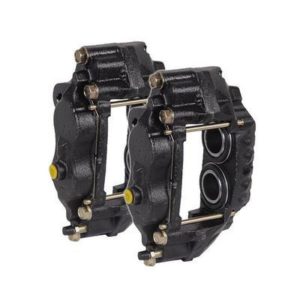
Trail Gear Brake Caliper – 140444-1-KIT
- Left (driver side) brake caliper, supplied empty
- Larger V6 style caliper from 88-95 Toyota Pickups and 4Runners
- Fits 1989-1995 Toyota 4Runner and Pickup with IFS
- Brake pads are not included
SKU: TGI140444-1-KIT -
Brakes & Steering, Disc Brake Calipers, Disc Brake Kits & Components

Spidertrax Offroad Wilwood Forged Dynalite Caliper – WIL1206818
 Brakes & Steering, Disc Brake Calipers, Disc Brake Kits & Components
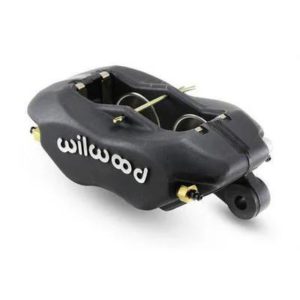
Spidertrax Offroad Wilwood Forged Dynalite Caliper – WIL1206818
- Wilwood Forged Dynalite 4-piston front caliper
- Replaces Dynalite calipers with 5.25 inch centered mounting lugs
- Base model for Spidertrax Ultra4 big brake setups
SKU: SPIWIL1206818 -
Brakes & Steering, Disc Brake Calipers, Disc Brake Kits & Components

Power Stop Red Powdercoated Performance Calipers – S5302
 Brakes & Steering, Disc Brake Calipers, Disc Brake Kits & Components
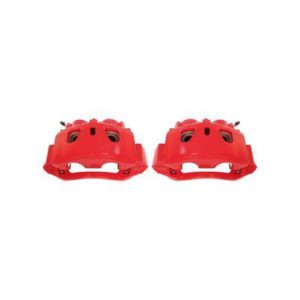
Power Stop Red Powdercoated Performance Calipers – S5302
- Front caliper for the 2011–2021 Silverado and Sierra 2500 HD and 3500 HD
- Also fits the 2016–2019 Suburban 3500 HD.
- Red powder coat, direct fit
- Aimed at towing, hauling and daily driving
SKU: PSTS5302 -
Brakes & Steering, Disc Brake Calipers, Disc Brake Kits & Components
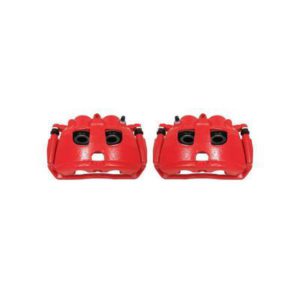
Power Stop Red Powdercoated Performance Calipers – S5174
 Brakes & Steering, Disc Brake Calipers, Disc Brake Kits & Components
Power Stop Red Powdercoated Performance Calipers – S5174
- Rear caliper for 2009–2018 Ram 2500 and 3500 and the 2012 Ram 1500
- Direct fit, red powder-coat finish
- Remanufactured in Chicago, IL with new boots and seals
- Abutment clips included where applicable
SKU: PSTS5174 -
Brakes & Steering, Disc Brake Calipers, Disc Brake Kits & Components
Power Stop Performance Powder Coated Rear Calipers with Brackets – S5476
 Brakes & Steering, Disc Brake Calipers, Disc Brake Kits & Components
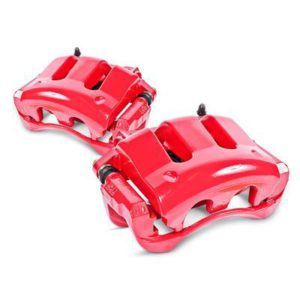
Power Stop Performance Powder Coated Rear Calipers with Brackets – S5476
- Rear caliper and bracket for the 2015–2020 Ford Edge, 2017–2019 Escape, Lincoln MKC and MKX
- Direct fit, red powder-coated
- Remanufactured with new boots and seals
- Abutment clips where applicable
SKU: PSTS5476 -
Brakes & Steering, Disc Brake Calipers, Disc Brake Kits & Components
Power Stop Performance Powder Coated Rear Calipers with Brackets – S5330
 Brakes & Steering, Disc Brake Calipers, Disc Brake Kits & Components
Power Stop Performance Powder Coated Rear Calipers with Brackets – S5330
- Rear caliper and bracket for the 2011–2019 Silverado 3500 HD and Sierra 3500 HD
- High-temperature red powder coat
- Remanufactured; new boots and seals
- Direct fit in place of the stock caliper
SKU: PSTS5330 -
Brakes & Steering, Disc Brake Calipers, Disc Brake Kits & Components
Power Stop Performance Powder Coated Rear Calipers with Brackets – S5300
 Brakes & Steering, Disc Brake Calipers, Disc Brake Kits & Components
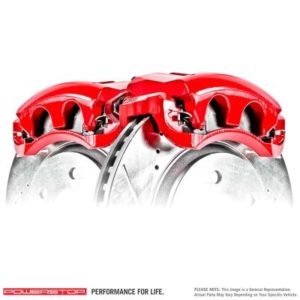
Power Stop Performance Powder Coated Rear Calipers with Brackets – S5300
- Rear caliper and bracket for the 2011–2020 Dodge Durango and Jeep Grand Cherokee
- Direct fit, red powder-coated finish
- Remanufactured with new boots and seals
- Silicone-lubricated caliper pins
SKU: PSTS5300 -
Brakes & Steering, Disc Brake Calipers, Disc Brake Kits & Components
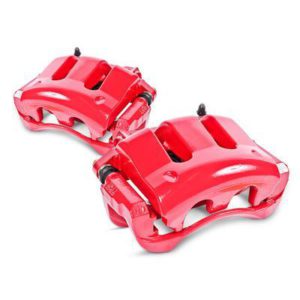
Power Stop Performance Powder Coated Rear Calipers with Brackets – S5210
 Brakes & Steering, Disc Brake Calipers, Disc Brake Kits & Components
Power Stop Performance Powder Coated Rear Calipers with Brackets – S5210
- Rear caliper and bracket for the 2009–2010 Dodge Ram 3500 and 2011–2018 Ram 3500
- Remanufactured with new boots and seals
- High-temperature red powder coat, direct fit
- Abutment clips included where applicable
SKU: PSTS5210 -
Brakes & Steering, Disc Brake Calipers, Disc Brake Kits & Components
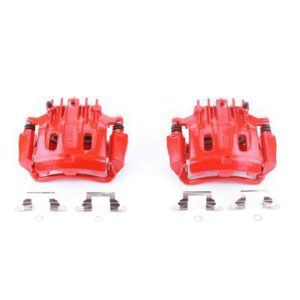
Power Stop Performance Powder Coated Rear Calipers with Brackets – S4752
 Brakes & Steering, Disc Brake Calipers, Disc Brake Kits & Components
Power Stop Performance Powder Coated Rear Calipers with Brackets – S4752
- Rear calipers with brackets for the 2000–2004 Ford F-250 and F-350 Super Duty and 2000–2005 Excursion
- Remanufactured in the USA, red powder-coated
- New boots and seals; abutment clips where applicable
- Power Stop part number PSTS4752
SKU: PSTS4752 -
Brakes & Steering, Disc Brake Calipers, Disc Brake Kits & Components
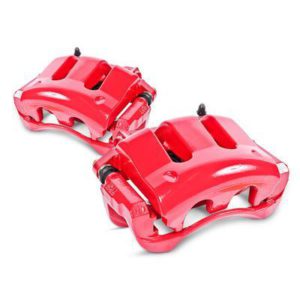
Power Stop Performance Powder Coated Front Calipers without Brackets – S2766
 Brakes & Steering, Disc Brake Calipers, Disc Brake Kits & Components
Power Stop Performance Powder Coated Front Calipers without Brackets – S2766
- Front calipers without brackets for the 2003–2009 Toyota 4Runner and Lexus GX470
- Remanufactured, red powder-coated, direct fit
- New boots and seals; abutment clips where applicable
- Power Stop part number PSTS2766
SKU: PSTS2766 -
Brakes & Steering, Disc Brake Calipers, Disc Brake Kits & Components
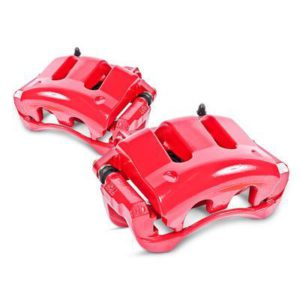
Power Stop Performance Powder Coated Front Calipers without Brackets – S1784
 Brakes & Steering, Disc Brake Calipers, Disc Brake Kits & Components
Power Stop Performance Powder Coated Front Calipers without Brackets – S1784
- Front caliper pair without brackets for the 1995–2003 Toyota Tacoma
- Remanufactured, red powder-coated
- Pressure tested; new bleeder screws and pins where applicable
- Power Stop part number PSTS1784
SKU: PSTS1784 -
Brakes & Steering, Disc Brake Calipers, Disc Brake Kits & Components
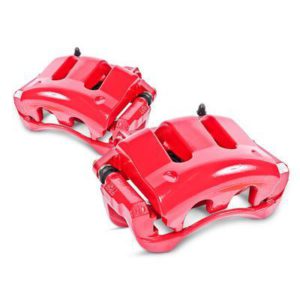
Power Stop Performance Powder Coated Front Calipers with Brackets – S5528
 Brakes & Steering, Disc Brake Calipers, Disc Brake Kits & Components
Power Stop Performance Powder Coated Front Calipers with Brackets – S5528
- Front calipers with brackets for the 2014–2020 Jeep Cherokee, including the KL
- Remanufactured, red powder-coated, direct fit
- New boots and seals; abutment clips where applicable
- Power Stop part number PSTS5528
SKU: PSTS5528
What a caliper does
The caliper holds the brake pads and uses hydraulic pressure to squeeze them against the rotor. Its piston or pistons move outward as fluid pressure rises, and the pads clamp the spinning rotor to slow the wheel. Calipers can fail by sticking, leaking, seizing a piston or corroding the slide pins, which leads to uneven pad wear, pulling to one side, burning smells or a spongy pedal.
Reading the listings
- Position: front or rear, since calipers differ by axle.
- Side: some are sold as a pair, with one left and one right, and others as a single unit.
- Brackets: a loaded caliper includes the bracket, while a caliper sold without brackets requires reusing the original ones.
- Finish: powder coating, often red or black, protects against corrosion and looks clean behind open wheels.
Replacement or upgrade
A like-for-like replacement restores factory function, which suits most vehicles. A performance design may offer better corrosion protection or a firmer pedal, but it does not by itself change braking capacity unless it comes with larger rotors or pads. Forged, multi-piston calipers are generally part of a bigger brake upgrade, and usually need matching rotors and sometimes larger wheels for clearance. Sample listings also include a caliper for the Toyota pickup and 4Runner with independent front suspension, showing how specific fitment can be.
Installation and bleeding
Brakes are safety-critical, so professional installation is recommended unless you have experience. Replace calipers in left and right pairs on the same axle, and replace the pads, hardware and brake hoses as needed. Clean and lubricate slide pins with brake-safe grease, use new copper washers on banjo fittings and torque everything to specification. After installing, bleed the system thoroughly with fresh fluid, check for leaks, and bed in the pads according to the pad manufacturer's instructions.
Confirm fitment for your exact year, make and model and check front versus rear, since some calipers differ even within the same model year.
Inspect rotors, pads and brake hoses whenever calipers come off, and use fresh brake fluid from a sealed container. Rotor thickness and runout should be within the manufacturer's limits, or the new calipers may wear pads unevenly.
Materials and construction
Most calipers are cast iron or aluminum. Cast iron is durable and economical, while aluminum is lighter and sheds heat well, and forged aluminum designs are common in performance applications. The piston may be steel, phenolic or aluminum, and phenolic resists heat transfer to the fluid. Powder coating protects against rust and gives a uniform finish, though it is cosmetic. Seals inside the caliper are rubber and are the first parts to age, which is a reason loaded calipers are popular for restoring a worn assembly.
Measuring and confirming fitment
Compare piston count, bleeder screw location, inlet port thread and the bracket mounting bolt spacing with the old unit. Check that the rotor thickness and pad shape match, since calipers are designed for particular rotors. A caliper from a different trim may look identical but use different mounting bolts or rotor sizes. Sample listings mention left and right pairs, calipers for a V6 independent front suspension and calipers with or without brackets, so read them carefully.
Mistakes to avoid
Do not hang a caliper by its hose while it is off, and do not reuse crushed copper washers. Avoid contaminating pads with grease or brake cleaner residue. Re-check the pedal feel before moving the vehicle.
Popular Disc Brake Calipers brands
Disc Brake Calipers FAQ
Should I replace calipers in pairs?
Yes. Replacing both calipers on an axle keeps braking even from side to side. Most pairs come as a left and right set, and pads and hardware are usually renewed at the same time.
What does without brackets mean?
It means the caliper does not include its mounting bracket, so you reuse the existing one. A listing with brackets includes the new bracket, which can save work if the old one is corroded.
What are signs of a bad brake caliper?
Common signs are the vehicle pulling to one side under braking, uneven pad wear, a burning smell, leaking fluid or a wheel that runs hot. A stuck piston or slide pin is a frequent cause.
Do I need to bleed the brakes after a caliper swap?
Yes. Opening the hydraulic line lets air in, which makes the pedal soft. Bleed all affected lines with fresh fluid, check for leaks and test the vehicle carefully at low speed.