
Wheel and Tire Accessories
Showing 85–96 of 427 resultsSorted by popularity
-
Wheel Spacers and Adapters
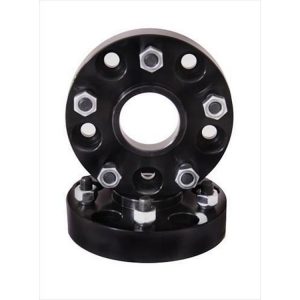
Rugged Ridge Wheel Spacers (Black) – 15201.08
- Rugged Ridge 15201.08 black machined aluminum spacer, 1.5 inch thick
- Built for a 5 on 4.5 bolt pattern
- Double anodized black finish with grade-8 hardware
- Includes 10 pre-installed grade-8 wheel studs and 10 lug nuts
- No vehicle model or year is named for this spacer
SKU: RUG15201.08 -
Wheel Spacers and Adapters
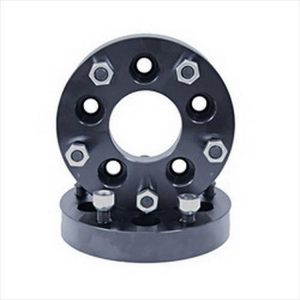
Rugged Ridge Wheel Spacer Adapters (Black) – 15201.07
- Rugged Ridge 15201.07 black aluminum hub centric adapters, 1.375 inch thick
- Converts a 5 on 5 bolt pattern to 5 on 5.5, as listed
- Comes as a spacer pair with 10 pre-installed grade-8 wheel studs
- Includes 10 lug nuts and thread locker
- No vehicle fitment is listed, so check bolt pattern and hub before installing
SKU: RUG15201.07 -
Wheel Spacers and Adapters
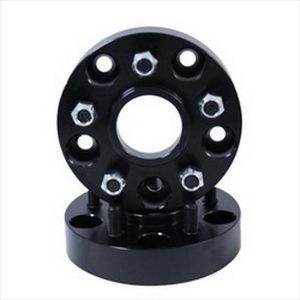
Rugged Ridge Wheel Spacer Adapter (Black) – 15201.06
- Hub centric black spacer pair, 1.375 inch thick
- Bolt pattern range of 5 on 5 to 5 on 4.5 inch
- Rugged Ridge part number 15201.06
- Includes 10 pre-installed grade-8 studs, 10 lug nuts and thread locker
- Marked universal fit
SKU: RUG15201.06 -
-
Wheel Spacers and Adapters
Rugged Ridge Wheel Spacers (Black) – 15201.03
- Pair of black machined aluminum wheel spacers, 1.25 inch thick
- Bolt pattern 5 on 5.5 inch
- Rugged Ridge part number 15201.03
- Includes 10 pre-installed grade 8 studs, 10 lug nuts and thread locker
- Marked universal fit
SKU: RUG15201.03 -
-
-
-
Tire Repair Kit
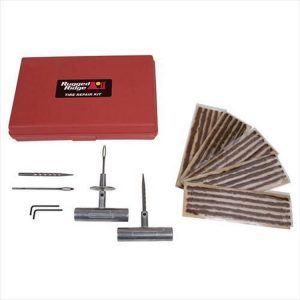
Rugged Ridge Tire Repair Kit – 15104.51
- Rugged Ridge tire repair kit, part number 15104.51, in a heavy duty carry case
- Includes 2 aluminum handles, 2 reamers, 2 needles and 2 allen head wrenches
- Includes 25 self vulcanizing tire plugs
- Universal fit; not vehicle-specific
SKU: RUG15104.51 -
-
Tire Stop
Rugged Ridge Tire Stop – 11140.01
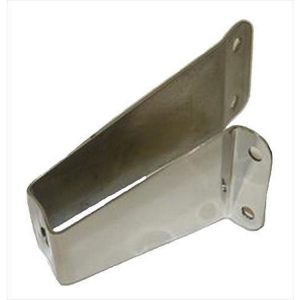
- Factory style replacement tire stop for bent or rusted originals
- Fits 1976–1983 Jeep CJ5, 1976–1986 Jeep CJ7, 1981–1985 Jeep Scrambler and 1987–1995 Jeep Wrangler (YJ)
- Stainless steel construction in black with mounting hardware
- Part number 11140.01 from Rugged Ridge
SKU: RUG11140.01


What is in this category
These parts support the wheels and tires: lug nuts and studs that hold them on, spacers and adapters that change offset or bolt pattern, center caps and valve stems that finish the look, covers that protect a rear-mounted spare, and chains for winter traction.
Lug nuts and studs
- Thread size: common examples are 12x1.5, 12x1.25, 14x1.5 and 1/2-20. It must match the vehicle's studs.
- Seat type: conical, ball or flat. The wheel and nut must use the same seat.
- Style: closed-end or open-end, and whether it needs a special key.
Studs need to match the hub and be long enough for full nut engagement. Tighten lug nuts with a torque wrench in a star pattern to the specification, and recheck after the first drive.
Spacers and adapters
Wheel spacers push the wheel outward, which changes the stance and can improve clearance over brakes or suspension. Adapters change the bolt pattern, for example from 5x4.5 to another pattern. Both are safety-sensitive parts. Look for hub-centric designs where possible, and use the correct studs or bolts. Sold-as-a-pair listings include one for each side of an axle. Wider tracks can alter steering feel and wheel bearing load, so get professional installation and check local rules.
Covers, caps and chains
- Spare tire covers protect the spare from sun and mud and often show a logo.
- Center caps and valve stems are mostly cosmetic or maintenance items, and should match your wheel series.
- Snow chains need to match tire size, and the pack lists which sizes it fits. Check vehicle clearance and local laws on chains.
Fitment checklist
Confirm bolt pattern, thread pitch, center bore, tire size and vehicle year, make and model. Factory and aftermarket wheels can differ even with the same bolt pattern. Always follow the vehicle manufacturer's torque and the accessory maker's instructions.
Inspection, pairing and mistakes
Inspect lug nuts and studs when rotating tires. Nuts with rounded seats, cracks or stripped threads should be replaced as a set, and studs that are bent or stretched should be replaced right away. Tighten the nuts again after the first 50 miles on any new wheel, spacer or adapter, since clamping surfaces settle after the first drive.
- Do not use oil or anti-seize on threads unless the maker says so, because it can change the effective torque.
- Do not use an impact wrench for final tightening.
- Do not mix seat types, such as a flat-seat nut on a conical wheel.
- Do not stack spacers on top of each other unless the maker approves it.
When matching parts, measure the center bore of the wheel against the hub. If the bore is larger than the hub, a hub-centric ring fills the gap and prevents vibration. Spacer thickness also affects how far the studs reach through the wheel, so check for full thread engagement. Spare tire covers should match the diameter and width of the spare, including any off-road tire, and need to fit over the mounting hardware.
Snow chains should be test fitted in dry conditions before you need them, and removed once the road is clear.
Popular Wheel and Tire Accessories brands
- Pro Comp Alloy Wheels (93)
- SCC Security Chain (42)
- Rugged Ridge (38)
- Gorilla Automotive (30)
- Crown Automotive (24)
- Jeep (22)
- MasterTop (21)
- Bestop (19)
- Spidertrax Offroad (17)
- Omix-Ada (16)
- Smittybilt (14)
- G2 Axle and Gear (13)
Shop Wheel and Tire Accessories by type
- Wheel Center Cap (90)
- Spare Tire Cover (74)
- Wheel Lug Nut (62)
- Wheel Spacers and Adapters (54)
- Snow Chains (41)
- Wheel Stud (38)
- Wheel Trim Ring (12)
- Tire Pressure Sensor (8)
- Tire Repair Kit (6)
- Tire Deflator (4)
- Tire Air Chuck (4)
- Tire Stop (3)
- Wheel Hub Spacers (4)
- Lug Wrench (4)
- Valve Stems (4)
- Tire Valve Deflator (4)
- Tire Inflation Kit (3)
- Valve Stem Caps (3)
- Tire Pressure Gauge (3)
- Tire Pressure Monitor Sensors (1)
- Spare Tire Carrier Lock (2)
- Wheel Chock (1)
Wheel and Tire Accessories FAQ
How do I find my lug nut thread size?
Check the owner's manual or the vehicle manufacturer's specifications. Common sizes include 12x1.5 and 14x1.5, but pitch varies. Using the wrong thread can damage studs and cause wheels to loosen.
Are wheel spacers safe?
They can be when properly designed, hub-centric and installed with correct hardware and torque. Poor-quality or ill-fitting spacers can cause vibration or failure. Professional installation and checking torque after driving are advisable.
What is the difference between a spacer and an adapter?
A spacer moves the wheel outward but keeps the same bolt pattern. An adapter changes the bolt pattern so wheels from another application fit. Both change offset and need correct studs and torque.
Do I need chains for every tire?
Chain rules vary by vehicle and region. Many vehicles chain only the drive axle. Check the owner's manual and the chain maker's instructions, and confirm the chain size matches your tire size.