
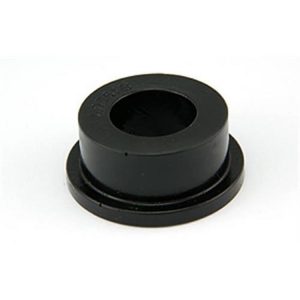
Bushings for track bars and track arms, the lateral locating link on solid-axle Jeeps and trucks, in polyurethane and other materials. Replacing worn bushings can reduce steering wander and clunks. This listing covers sets for track arm and track rod mounts, front and rear. Brands include Energy Suspension, Prothane Motion Control, Rubicon Express and Daystar. See product pages for part numbers, then compare the products below.
Track Bar Bushings
Showing 1–12 of 27 resultsSorted by popularity

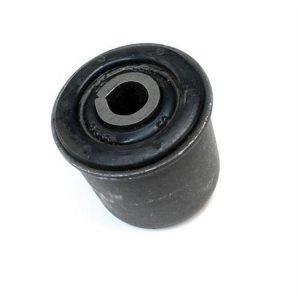
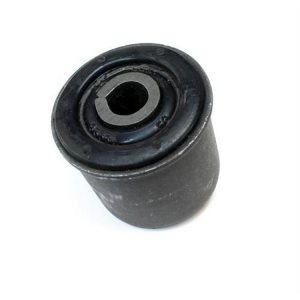

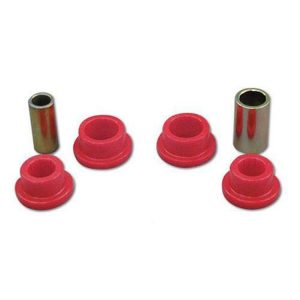

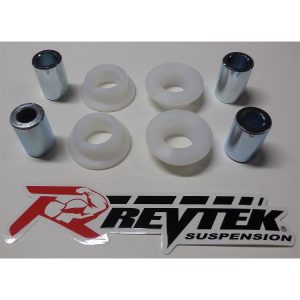


What the track bar does
On a solid axle with coil springs, the track bar, also called a panhard rod or track arm, locates the axle side to side beneath the vehicle. It is anchored to the frame at one end and to the axle at the other, with a bushing in each mount. When those bushings crack or compress, the axle can shift sideways, which feels like vague steering, wandering on the highway, clunks over bumps or a death wobble type of shake.
Rubber versus polyurethane
Factory bushings are rubber, which isolates noise and vibration but wears out and can deform under load. Polyurethane bushings are firmer, resist compression and typically last longer, and they keep the axle position more consistent. The trade-off is that polyurethane can transmit more noise and harshness and may squeak without proper lubrication.
- Rubber: quiet and compliant, but softer.
- Polyurethane: firmer and more durable, with some added vibration.
- Durometer rating: a higher number means a harder bushing, so look at what the maker lists.
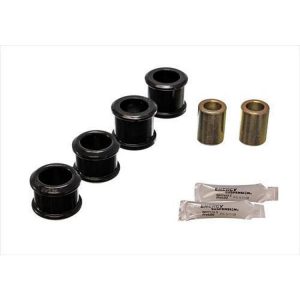
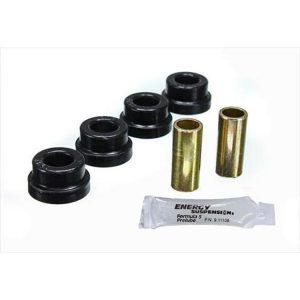
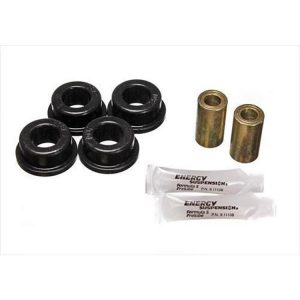
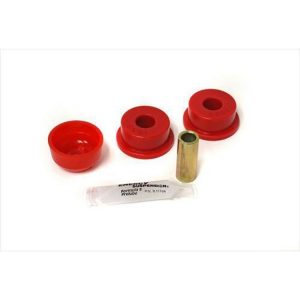
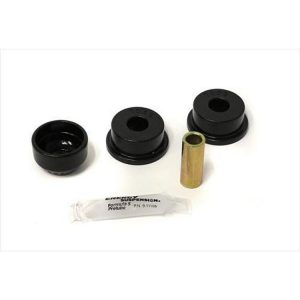
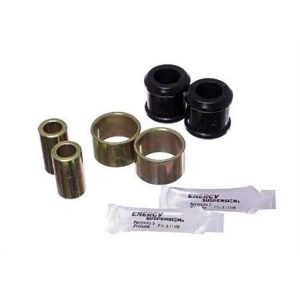
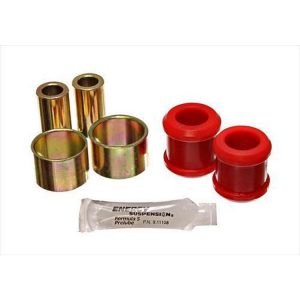
Some kits include metal sleeves and grease, which matter for fit and long-term quiet operation.
Choosing the right set
Sets are sold by vehicle, axle and position. A listing may specify front or rear and refer to a track arm or track rod, and may include inner sleeves for specific bolt sizes. Count the bushings needed, since the bar has two ends and some designs use more than one per end. Confirm fitment for your exact year, make and model, and for lifted vehicles check the lift kit maker's instructions, because aftermarket track bars often use their own bushings or heim joints.
Installation notes
Removing the old bushing usually takes a press, a bushing driver or careful use of a torch-free method such as a socket and vise. Torque the track bar bolts with the vehicle at ride height and the suspension loaded, not hanging, because tightening at full droop can preload the rubber and cause early wear. Use the specified lubricant on polyurethane parts and inspect the bar and brackets for cracks while the bar is out. After the job, check that the axle is centered and have the alignment checked. If you are unsure, a suspension shop can handle it.
Bushing work often exposes other wear. While the track bar is off, look at the frame bracket and axle bracket for elongated holes, cracks and weld damage, and check the bolts for stretched threads. Replace worn hardware with the grade the manufacturer specifies. If your vehicle has been lifted, a track bar relocation bracket or adjustable bar helps recenter the axle, and the bushings must match the new parts. Test for play by having a helper turn the steering wheel while you watch the bar ends and bushings. After installation, drive on a familiar road and see whether the steering feels more settled. Re-check torque after a few hundred miles, because polyurethane can settle slightly. If vibration or wander persists, inspect the steering stabilizer, tie rod ends and wheel balance as well.
Popular Track Bar Bushings brands
- Energy Suspension (10)
- Prothane Motion Control (5)
- Rubicon Express (5)
- TeraFlex (2)
- Daystar (2)
- Skyjacker (1)
- Bd Diesel (1)
- Revtek (1)
- Crown Automotive (1)
Track Bar Bushings FAQ
What are signs of a worn track bar bushing?
Common signs include loose or wandering steering, clunking over bumps, a shimmy at highway speed and visible cracks in the rubber. Wiggling the axle sideways while watching the bar can reveal play.
Are polyurethane track bar bushings better than rubber?
They are firmer and often last longer, which keeps the axle more precisely located. Rubber is quieter and softer. The better choice depends on whether you prefer comfort or firmness.
Should I tighten track bar bolts with the vehicle in the air?
No. Tighten with the weight of the vehicle on the suspension, at normal ride height. Tightening while the suspension hangs preloads the bushing and can shorten its life.
Do I need to replace both ends of the track bar?
It is usually sensible to replace both bushings at the same time, since they are the same age and see the same wear. Check the listing to see how many bushings are in the set.