
Steering Upgrades and Drag Links
Showing 37–40 of 40 resultsSorted by popularity
-
-
Steering Upgrades and Drag Links
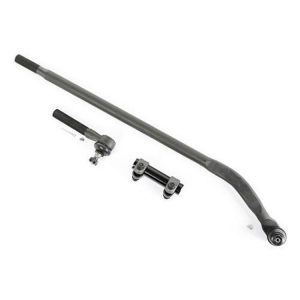
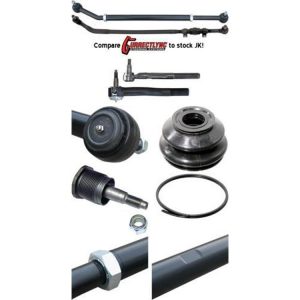
Currie Currectlync Heavy Duty Drag Link – JK-9703DL
- Currie Currectlync Heavy Duty Drag Link, model JK-9703DL
- Heavy duty steering drag link in the Steering Upgrades and Drag Links category
- Fitment not listed; check manufacturer specifications
- UPC 70000662440
SKU: CURJK-9703DL -
-
Steering Upgrades and Drag Links
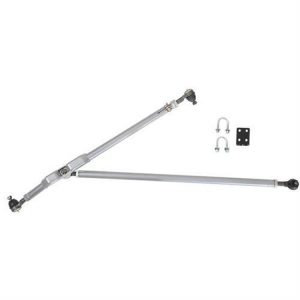
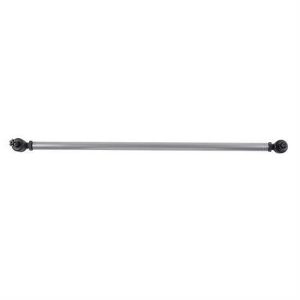
Rubicon Express Chromoly Draglink – RE2610
- Rubicon Express RE2610 chromoly drag link for 2 and 4-door JK Wranglers
- Converts the drag link from under the knuckles to on top of them
- Requires special tools and a tapered reamer; alignment needed after install
- UPC 614901440270
SKU: R/ERE2610



What the drag link does
In a solid-axle steering system, the pitman arm swings back and forth when you turn the steering wheel. The drag link carries that motion to the steering knuckle, and the tie rod transfers it across to the other wheel. Because the drag link is a primary steering component, any slop, bend or wear directly changes how the vehicle tracks.
Why upgrade it
Lift kits and larger tires change the geometry and increase the loads on steering parts. Stock drag links can bend on a rock or while pushing larger tires. Aftermarket links address this through heavier tubing, stronger ends or adjustable length to correct alignment after a lift. Some kits are described as flipped, which refers to turning the drag link ends so the joint angle improves on lifted vehicles, and which usually pairs with a track bar and pitman arm geometry change. Center link kits are used on specific applications and replace the center portion of the steering linkage.
What to compare
- **Material and construction:** tube wall thickness, forged ends and the grade of the steel are all mentioned in product descriptions, so compare them.
- **Joint design:** greaseable joints can be serviced, while sealed ends need less attention but may wear differently.
- **Adjustability:** adjustable links allow the steering wheel to be centered after a lift.
- **Application:** many are made for a specific model line, lift height range and steering layout, such as left-hand drive or a given wheelbase.
- **Included hardware:** confirm whether ends, nuts, cotter pins and mounting hardware are in the box.
Safety and installation
Steering is a safety-critical system. Proper installation matters as much as the part. Torque all castle nuts to the manufacturer's specification and always use new cotter pins. Check for tight tolerances, interference with the axle, tire and exhaust at full lock, and recheck wheel alignment afterward. A lift often changes toe and caster, and the steering wheel should be centered when the wheels are straight.
Because mistakes here can cause loss of steering, professional installation is advised unless you are experienced. Confirm fitment for your year, make and model, and keep a regular schedule for inspecting joints, boots and fasteners.
Steering parts should be treated as a system. When you replace the drag link, inspect the tie rod ends, track bar, pitman arm, steering box and ball joints at the same time, because worn neighbors cause the same symptoms and will undermine a new part. Grease any serviceable joints as the manufacturer directs, and check the boots for tears that let dirt in. Make sure the steering stops are set so the tires do not hit the frame or the links at full lock. After a lift or tire change, drive slowly in a safe area, turning lock to lock and listening for contact. Retorque the fasteners after a short break-in period. If you notice shimmy, wandering or unusual play after installation, stop and diagnose it rather than driving on, since the cause is usually something that can be corrected.
Popular Steering Upgrades and Drag Links brands
- TeraFlex (6)
- Omix-Ada (6)
- Crown Automotive (6)
- Skyjacker (4)
- Rugged Ridge (3)
- Rubicon Express (3)
- Pro Comp Suspension (3)
- Currie (3)
- Mountain Off Road Enterprises (2)
- California Super Trucks (1)
- Moog (1)
- Rancho (1)
Steering Upgrades and Drag Links FAQ
What is a drag link?
A drag link is the rod connecting the steering box's pitman arm to the steering knuckle or track bar on a solid-axle vehicle. It carries steering motion to the wheels, so wear or bending will affect handling.
Why would I need an upgraded drag link after a lift?
A lift changes steering geometry and may leave the stock link at an awkward angle. An adjustable or heavier link can correct alignment and withstand larger tires, though your lift kit may specify its requirements.
What does a flipped drag link mean?
It generally means the link's joint is oriented the opposite way to improve its angle on a lifted vehicle. It often pairs with other geometry changes, so follow the kit instructions and confirm it fits your model.
Should I get an alignment after installing steering parts?
Yes. Changing steering components or lift height affects toe, caster and wheel centering. An alignment confirms the steering is straight and helps prevent tire wear and wandering.