
Armor & Protection
Showing 145–156 of 162 resultsSorted by popularity
-
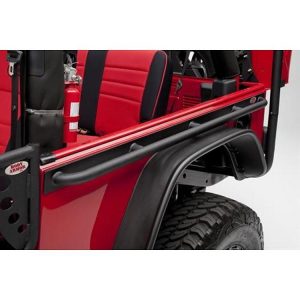
Body Corner Guard
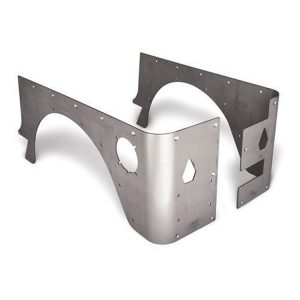
Poison Spyder Trail Corner (Bare Steel) – 13-06-010-PC
- Trail Corner body guard in 3/16 inch steel
- Pre-cut gas filler, taillight and license plate holes
- Works with OEM taillights; original license plate hardware can be re-used
- Finish to confirm before ordering if color matters
SKU: PSC13-06-010-PC -
-
-
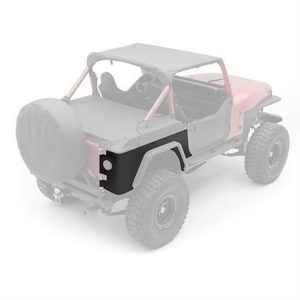
Body Corner Guard
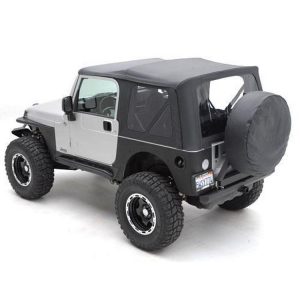
Smittybilt XRC Corner Guards (Black) – 76876
- Black powder coated XRC corner guards in 3/16 inch cold roll steel
- Hand crafted for fit, with stainless steel hardware included
- Cutouts for factory tail lights and fuel filler
- Optional 3 inch fender extension, part 76877
- Drilling required
SKU: S/B76876 -
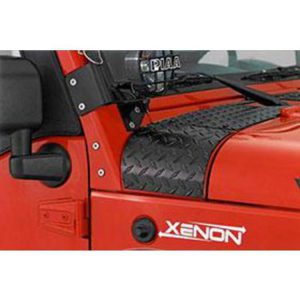
Body Protection
Warrior Outer Hood Cowling Cover (Black) – 923PC
- Warrior outer hood cowling cover, part 923PC, black powder coat
- Aluminum diamond plate with hardware included
- Covers the mirror bracket area on the cowl; drilling required
- Offered for 2 and 4-door models; confirm fit for your year and model
SKU: W/I923PC -
-
Body Corner Guard
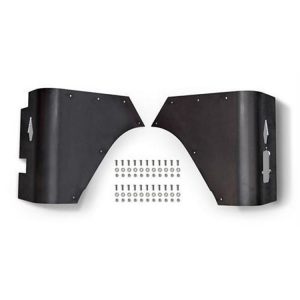
Poison Spyder Stock Crusher Corners (Bare Steel) – 14-04-010
- Stock Crusher Corners in bare 3/16 inch plate steel
- Includes openings for the factory wheel and fuel filler
- Mounting holes for factory flares, tail light and license plate frame
- Stainless steel flat head cap screws; cutting or drilling required
SKU: PSC14-04-010 -
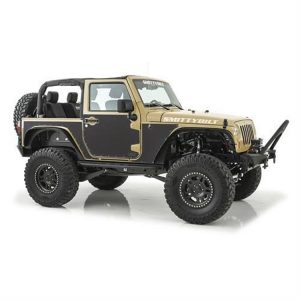
Body Protection
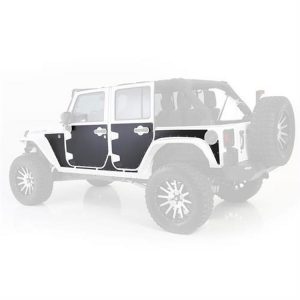
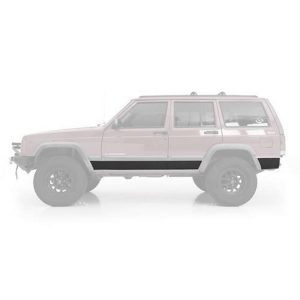
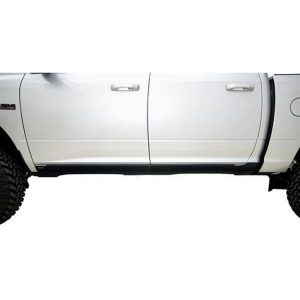
Smittybilt XRC Body Cladding – 76854
- Body side cladding for 4-door models
- 1/8 inch cold rolled steel with two-stage textured matte black finish
- Works with OE and aftermarket flares for lower quarter panel protection
- 304 stainless steel button head rivets included
- Part number 76854, UPC 631410110937
SKU: S/B76854 -
-
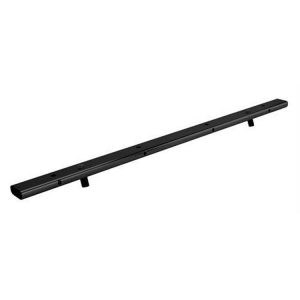
Roll Bar Pads and Covers
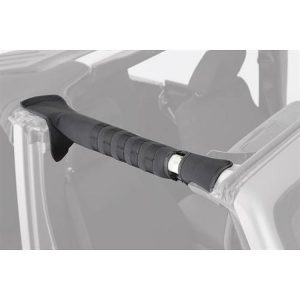
Smittybilt MOLLE Sport Bar Cover Kit (Black) – 5665101
- Sport bar cover kit in black with MOLLE attachment points
- Foam-lined, heavy-duty 600D striped canvas
- MOLLE points in three sections for MOLLE-style pouches
- Pre-cut seat belt and sound bar holes with double layer stitching
SKU: S/B5665101






Where vehicles need protection
Off-road damage tends to happen in the same few places: the transfer case, oil pan, fuel tank, differentials, rocker panels and rear corners. Armor covers those areas so rocks and ledges hit steel or tough plastic instead of thin factory parts. What you need depends on how rough your trails are and what your vehicle leaves exposed.
Main armor types
- Skid plates: bolt under the vehicle to protect the engine, transfer case, gas tank, differential or control arms. A full bellypan covers several components at once.
- Rock sliders and guards: run along the rocker panels to take side hits, and can double as a step.
- Body armor: corner guards and fender protection, often made of steel or thermoplastic.
- Roll cages and sport bars: add structure and mounting points, with padded covers for comfort.
- Headache racks and chase racks: protect a truck cab or hold lights and gear.
Specs to compare
Material and thickness are the first question. Steel plate, commonly in thicknesses such as 3/16 inch, is strong and affordable but heavy, while aluminum is lighter but may dent or wear faster. Look at the finish, such as powder coat, which helps resist rust. Check whether a skid plate keeps access to drain plugs and fill points, and whether it adds clearance or reduces it. Fully welded and formed designs resist twisting better than flat plates.
Installation and safety
Many skid plates and sliders are bolt-on, but some need drilling or welding. Use hardware of the grade the manufacturer specifies and tighten it to the listed torque. Armor adds weight, which can affect springs and handling. Roll cages and sport bars are safety structures, so professional installation and proper mounting are strongly advised. Never treat a sport bar as a certified roll cage unless the manufacturer says it is. Rules about rollover protection can vary by state.
Fitment
Armor is made for specific frames, engines and axle types, so details like the engine size, door count and axle model matter. Confirm fitment for your exact year, make and model before choosing a part.
Planning an armor package
Armor is easier to plan as a system. Start with the parts most likely to be hit on your trails, such as the oil pan, transfer case and fuel tank, then add rock sliders to protect the rocker panels and body corners to protect the fenders and bed. Think about how each piece affects the others: sliders can share mounting points with the body or frame, and a skid plate that sits lower may reduce clearance for a muffler or crossmember. Keep weight in mind, since steel adds up quickly, and consider the finish, because bare steel rusts quickly while powder coat can chip after hard use and needs touching up. Inspect your armor after every rough trip, retighten bolts, and look for cracked welds or bent mounting tabs that could reduce protection the next time out.
A frequent mistake is buying armor by looks without checking mounting points. Confirm that the plate reaches solid frame or crossmember locations, and that any drain plug access, exhaust clearance and airflow to the transfer case and transmission remain adequate so components do not run hot.
Popular Armor & Protection brands
- Smittybilt (21)
- Rugged Ridge (18)
- Poison Spyder Customs (17)
- Go Rhino (15)
- Fab Fours (9)
- Bestop (7)
- Rubicon Express (6)
- JcrOffroad (6)
- Bushwacker (6)
- Warrior (5)
- Rough Country (5)
- Artec Industries (5)
Shop Armor & Protection by type
Armor & Protection FAQ
Are skid plates necessary?
They are not required for every driver, but they are a common upgrade for trail use. Factory underbody parts can be thin or exposed, so a skid plate gives a layer of protection for components that are costly or difficult to fix.
What is the difference between rock sliders and side steps?
Rock sliders are built to take impacts and support the vehicle on rocks, usually in strong steel tube or plate. Side steps are mostly for entry and exit and are generally not designed for heavy loads.
Is a sport bar the same as a roll cage?
Not usually. A sport bar gives passengers and cargo some structure and mounting points, while a full roll cage is designed to protect occupants in a rollover. Check the manufacturer's stated purpose and ratings.
Will skid plates affect my ground clearance?
A skid plate that mounts tight to the frame typically adds little thickness, but some designs hang lower. Check the product description for mounting method and dimensions, and confirm that it fits with any lift or other underbody parts you run.