
Transmission Mount
Showing 25–26 of 26 resultsSorted by popularity



What a transmission mount does
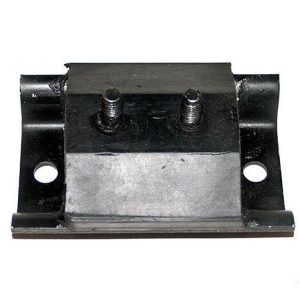
The transmission mount is a cushion, usually rubber or polyurethane bonded to a steel bracket, that holds the back of the transmission to a crossmember. It carries part of the drivetrain's weight, controls how far the assembly can move under torque and keeps vibration out of the body. Together with the engine mounts it keeps the driveline aligned.
Signs of a worn mount
- A clunk when shifting between drive and reverse or when applying and releasing the throttle.
- Vibration at idle or at certain speeds.
- Visible cracks, torn rubber or an oil-soaked cushion.
- A transmission that sits visibly low or shifted, or a driveshaft angle that has changed.
A failed mount can put strain on the driveline, exhaust and cooling lines, so replace it promptly.
Rubber versus polyurethane
Original-style rubber mounts give the most vibration isolation and are the usual choice for daily driving. Polyurethane mounts are firmer, reduce drivetrain movement and last well in oil and heat, but they transmit more noise and vibration to the cabin. Some mounts list zinc finishes or fit both manual and automatic transmissions, so read the notes.
Choosing the right mount
- Transmission type: listings reference transmissions such as T90, T14, AX5, BA10/5 and NSG370, so match the exact unit.
- Engine: some mounts are listed by engine, for example 4.0L or 4.7L.
- Year range and model: Wrangler YJ, CJ and Cherokee XJ applications differ.
- Parts included: some cushions come without the bracket, and the mount bolt may be sold separately.
Installation notes
Support the transmission with a jack and a block of wood under the pan before removing the old mount, never under a fragile pan edge without a spreader. Replace worn fasteners, tighten to the factory torque specification and check for clearance from the exhaust and driveshaft. Mount replacement involves supporting heavy drivetrain parts, so use professional installation if you lack the equipment.
The mount does not work alone. Engine mounts, the transfer case mount on four-wheel-drive models, the crossmember and the driveshaft all share the loads, so inspect them together. A worn transmission mount can push the driveline out of position and stress a mount that is otherwise fine, while a sagging crossmember can make a new mount wear quickly. Look for oil leaks from the rear seal or transmission case, since oil softens rubber and shortens the life of a new cushion.
When replacing a mount, consider the vehicle's use. A lifted Jeep with a changed driveshaft angle may benefit from a firmer mount, while a vehicle used on rough trails should have mounts with solid bolts, correct washers and locking hardware. Some applications use a cushion that bolts to a bracket, with the cushion sold separately from the bracket, so check what each product includes. After installation, run through the gears with the parking brake set and watch for unusual movement, and recheck the bolts after a short drive since new rubber settles slightly.
Fitment
Confirm your exact year, make, model, engine and transmission, along with the manufacturer's specifications, before choosing a product below.
Popular Transmission Mount brands
- Crown Automotive (11)
- Energy Suspension (5)
- Daystar (4)
- Prothane Motion Control (2)
- Rubicon Express (2)
- Omix-Ada (2)
- Jeep (1)
Transmission Mount FAQ
How do I know if my transmission mount is bad?
Typical signs are clunking when shifting or on and off throttle, increased vibration, and visible cracking or sagging in the mount. A mechanic can check by watching the transmission move while the vehicle is shifted in a safe setting.
Is a polyurethane transmission mount better than rubber?
It depends on your priorities. Polyurethane resists oil and heat and reduces movement, but it is firmer and passes more vibration to the cabin. Rubber isolates better and is the typical choice for comfort.
Can a bad transmission mount damage other parts?
Yes. Excess movement can stress the driveshaft, exhaust, wiring, shifter linkage and cooling lines, and it can cause driveline vibration. Replace worn mounts promptly rather than waiting for related damage.
Do I need to replace the mount bolt too?
Often it is a good idea if the bolt is corroded, stretched or damaged, and some mount kits do not include it. Use the correct bolt and tighten to the factory specification for your vehicle.