Sway bar disconnects and links for lifted Jeeps and other solid-axle vehicles. This suspension branch lists quick disconnects, replacement end links, center tubes, snap pins and adapters that let you free the sway bar for trail articulation and reconnect it for the road. Brands include Rubicon Express, TeraFlex, Warrior and Rock Krawler. Compare lift ranges and models on each product page, then compare the products below.
Sway Bar Link - Disconnect
Showing 1–12 of 29 resultsSorted by popularity
-
-
Sway Bar Link - Disconnect
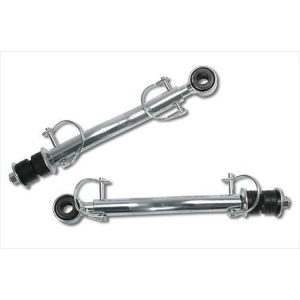
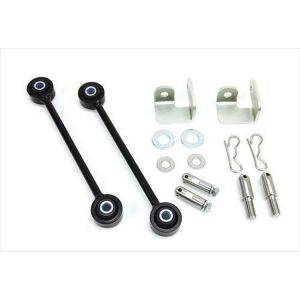
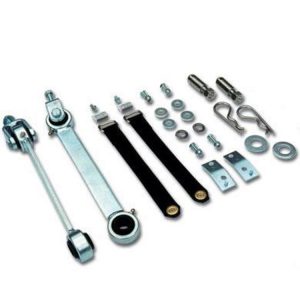
Warrior Sway Bar Disconnects – 83071
- Sway bar disconnects with a double snapper clip for quick removal
- Complete with black polyurethane bushings in two assembled bars
- Four lengths available, part number 83071
- Fits 1997–2006 Jeep TJ and 2004 LJ Unlimited Wranglers
SKU: W/I83071 -
Sway Bar Link - Disconnect

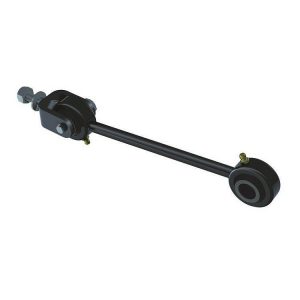
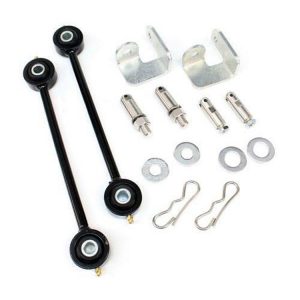
TeraFlex TJ 0-2 Inch Front Swaybar Quick Disconnect Link – Passenger – 600494
 Sway Bar Link - Disconnect
TeraFlex TJ 0-2 Inch Front Swaybar Quick Disconnect Link – Passenger – 600494
- TeraFlex 600494 passenger side front swaybar quick disconnect link
- 0-2 inch lift per the title
- Fitment lists 1997–2001 Jeep Cherokee XJ, 2004–2006 Jeep Wrangler LJ and 1997–2006 Jeep Wrangler TJ
SKU: TER600494 -
Sway Bar Link - Disconnect
TeraFlex Swaybar Quick Disconnects – 1753010
- Front TeraFlex swaybar quick disconnect, part number 1753010
- Front quick disconnect for 2007–2015 Jeep Wrangler JK, 2 and 4-door models
- 0-3 inch lift, spherical polyurethane bushings
- Disconnects can be secured out of the way when unhooked
SKU: TER1753010 -
-
-
Sway Bar Link - Disconnect
TeraFlex Swaybar Quick Disconnects – 1743090
- Front TeraFlex swaybar quick disconnect, part number 1743090
- Fits 2004–2006 Jeep Wrangler LJ and 1997–2006 Jeep Wrangler TJ per the manufacturer list
- Designed for a 2-6 inch lift
- Spherical polyurethane bushings, greasable type
SKU: TER1743090 -
-
Sway Bar Link - Disconnect
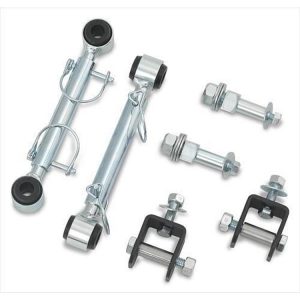
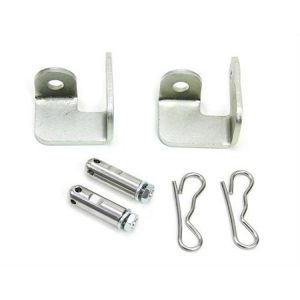
TeraFlex Swaybar Quick Disconnect Upper Stud Bracket Kit – 1601277
- Fits 2007 to 2016 Jeep Wrangler JK, Rubicon and Unlimited
- Front swaybar quick disconnect upper mounting kit
- Includes frame bracket, upper quick disconnect stud, hitch pin clip and lock nut
- Part number 1601277; UPC 843885022510
SKU: TER1601277


What a sway bar does
A sway bar links the left and right sides of the suspension to reduce body roll in corners. On the road that is helpful, but on rocks and uneven trails the bar resists one wheel dropping while the other rises, which limits articulation and traction. A disconnect lets you release the bar for the trail.
Types of links and disconnects
- Quick disconnects: use a pin or a quick-release fitting so you can disconnect the bar in minutes, often without tools.
- Replacement end links: longer or heavy-duty links that restore proper geometry after a lift.
- Center tubes and snap pins: replacement parts for existing disconnect systems.
- Adapters: fittings for specific axle or model years, such as TJ, ZJ and XJ versions.
How to choose
Start with your vehicle, lift height and axle position. Links need to be roughly the right length for the lift, so a kit made for a 2.5 to 4 inch lift will not match a stock-height or taller setup. Check whether it is for the front or rear, and whether it includes bushings and hardware. Polyurethane or heavy bushings stay quiet and avoid metal-to-metal wear, while the post-to-eye length shows how the link will sit.
Using disconnects
With a manual disconnect, you must release the bar before the trail and reconnect before driving on pavement. Driving at speed with the sway bar disconnected makes the vehicle lean more in corners and can feel unsettling, particularly with a high center of gravity. Store disconnected links so they do not rattle or hang down where they can catch an obstacle. Some owners add a quick-release pin lanyard to avoid losing pins.
Installation notes
Support the vehicle safely and use the manufacturer's torque specifications on the links and axle brackets. Keep the axle at ride height when final-tightening bushing bolts. Because lifted vehicles can have different geometry, check for interference with the shocks, brake lines and tires through the full travel. Confirm fitment for your exact year, make, model and lift height, and review the manufacturer's specifications.
Trail habits and maintenance
Disconnect systems have simple habits that keep them working. Practice the disconnect and reconnect procedure in your driveway so you can do it quickly on the trail, and keep the pins or tools in a consistent place. Lubricate pivots and quick-release fittings lightly, since grit and mud cause wear, and inspect rubber or polyurethane bushings for cracks and flattening. Check that all fasteners remain tight after rough trips, because vibration can loosen hardware over time. Remember that the vehicle handles differently with the bar released, so reduce your speed on pavement until it is reconnected. Some owners also like to mark the link position with paint so alignment is easy to see. Replace damaged links as a pair so both sides remain even.
Common mistakes include buying links for the wrong lift range, over-tightening bushings until they bind, and forgetting a pin on the trail. Carry a spare pin or two, and verify the links do not hit the shock, driveshaft or tire at full flex.
Popular Sway Bar Link - Disconnect brands
Sway Bar Link - Disconnect FAQ
Do I need sway bar disconnects?
Not for every driver. They are useful if you drive technical trails where extra articulation helps traction, but they add steps to your routine. Mostly street-driven vehicles often do fine with standard links.
Can I drive on the road with my sway bar disconnected?
It is not recommended, particularly at speed. The vehicle will lean more in corners and braking or sudden maneuvers can feel less stable. Reconnect the bar before returning to pavement.
Do I need longer links after a lift?
Often yes. A lift changes the distance between the axle and the sway bar mount, and stock links can bind or tilt. Pick links made for your lift height, and check the stated lift range on the product page.
What does post to eye mean?
It describes the link's length measured from the stud, or post, on one end to the eye, or hole, on the other. Compare this number with your current link or the length required for your lift height.