
Seats
Showing 133–144 of 176 resultsSorted by popularity
-
Seats
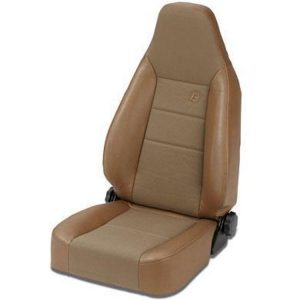
Bestop Trailmax II Sport Recliner Seat (Spice) – 39438-37
- Bestop Trailmax II Sport Recliner Seat, Spice, part 39438-37
- Front reclining seat with a built-in headrest and full fabric front
- Rotary recliner dial mounts to either side for driver or passenger use
- Bestop’s notes say Wrangler applications need seat adapter brackets
- Confirm fit for your year, model and trim before you order.
SKU: BST39438-37 -
Seats
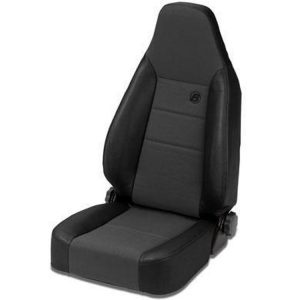
Bestop Trailmax II Sport Recliner Seat (Black) – 39438-15
- Fits the 1976–1986 Jeep CJ5 and CJ7, 1987–1995 Wrangler YJ, 1997–2006 Wrangler TJ and 2004–2006 Wrangler LJ, per the manufacturer fitment list
- Part number 39438-15: black reclining seat with a built-in headrest
- Black denim vinyl with a full fabric front
- Rotary recliner dial mounts to either side for driver or passenger use
- 1997–2002 and 2003–2006 Wrangler applications need seat adapter brackets
SKU: BST39438-15 -
Seats
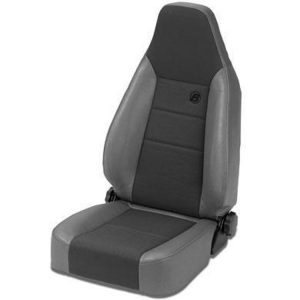
Bestop Trailmax II Sport Recliner Seat (Gray) – 39438-09
- Bestop Trailmax II sport recliner seat in gray, part number 39438-09
- Gray vinyl with full fabric front and a rotary recliner dial that mounts on either side
- Built-in headrest and elastic mesh map pocket on the back of the seat
- No vehicle fitment is listed; 1997 to 2002 and 2003 to 2006 Wrangler applications need adapter brackets
SKU: BST39438-09 -
Seats
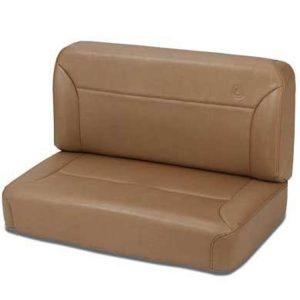
Bestop Trailmax II Vinyl Fixed Rear Bench Seat (Spice) – 39437-37
- Fixed low back rear bench for two, spice vinyl, part 39437-37
- Fitment list covers CJ3, CJ5, CJ6, CJ7, Willys CJ and YJ
- 33.5 inch wide x 16.5 inch deep x 17 inch tall
- Atlas frame and mounting hardware included
- UPC 77848028268
SKU: BST39437-37 -
-
Seats
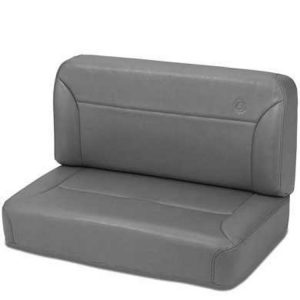
Bestop Trailmax II Vinyl Fixed Rear Bench Seat (Gray) – 39437-09
- Fixed low back rear bench for two, gray vinyl, part 39437-09
- Fitment list covers CJ3, CJ5, CJ6, CJ7, Willys CJ and YJ
- 33.5 inch wide x 16.5 inch deep x 17 inch tall
- Atlas frame and mounting hardware included
- UPC 77848028244
SKU: BST39437-09 -
Seats
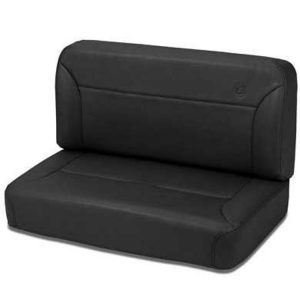
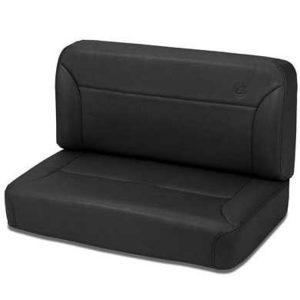
Bestop Trailmax II Fixed Rear Bench Seat (Black) – 39437-01
- Fixed low back rear bench for two, black vinyl, part 39437-01
- Fitment list covers CJ3, CJ5, CJ6, CJ7, Willys CJ and YJ
- 33.5 in wide x 16.5 in deep x 17 in tall
- Requires drilling to install
- Mounting hardware included; UPC 77848028237
SKU: BST39437-01 -
-
Seats
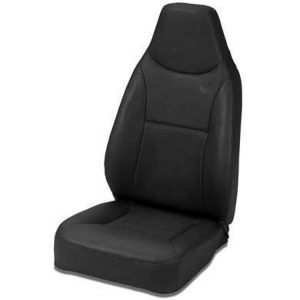
Bestop Trailmax II Stationary High Back Seat (Black) – 39436-15
- Front stationary high back seat in black denim vinyl, part 39436-15
- Fitment list covers CJ5, CJ7, Wrangler LJ, TJ and YJ
- Variable Rate of Resistance springs and high density foam
- Adapter brackets required for 1997-02 and 2003-06 Wrangler
- UPC 77848028008
SKU: BST39436-15 -
Seats
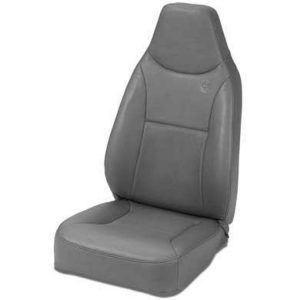
Bestop Trailmax II Stationary High Back Seat (Gray) – 39436-09
- Front stationary high back seat in gray denim, part 39436-09
- Built-in headrest and Atlas frame
- No vehicle fitment list is provided
- 1997-02 and 2003-06 Wrangler applications need adapter brackets
- Mounting hardware included; UPC 77848027995
SKU: BST39436-09 -
Seats
Bestop Trailmax II Stationary High Back Seat (Black) – 39436-01
- Bestop Trailmax II stationary high back seat in black vinyl, part number 39436-01
- Manufacturer fitment list covers Jeep CJ5 and CJ7 (1976-1986), Wrangler YJ (1987-1995), TJ (1997-2006) and LJ (2004-2006)
- Built-in headrest and mounting hardware included
- 1997-2002 Wrangler needs bracket 51256-01; 2003-2006 needs brackets 51245-01 and 51248-01
SKU: BST39436-01 -
Seats
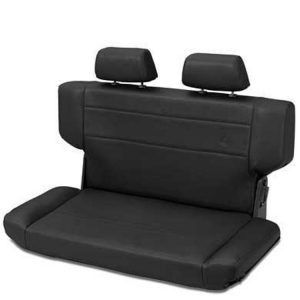
Bestop Trailmax II Fold and Tumble Rear Seat (Black) – 39435-15
- Fold and Tumble rear seat from the Bestop Trailmax II line, black, part 39435-15
- Black denim vinyl upholstery over an Atlas frame
- Dual headrests and high-density closed cell foam
- Mounting hardware included
- Not for the Wrangler Unlimited; UPC 77848028299
SKU: BST39435-15



Types of seats you will find
This category covers both front and rear seating, and the use case differs for each.
- **Front bucket and recliner seats.** Replacement factory-style seats, or sport and racing-style seats with higher bolsters for support on side slopes and washboard roads.
- **Suspension seats.** Designs such as a Baja-style seat add a pivoting or sprung base to absorb impacts, popular in desert and high-speed use.
- **Rear bench seats.** Fixed, low-back or high-back benches that restore seating in vehicles where the rear seat was removed.
- **Fold-and-tumble rear seats.** The back folds and the seat tips forward to free cargo space or give access behind the front seats.
Choosing a seat
- **Comfort and support.** Sit in a similar seat if you can. Tall drivers and those with a larger frame should compare listed dimensions such as width, depth and height.
- **Material.** Vinyl and denim shed water, mud and spills. Leather looks good but can be warm in summer. Some seats are made with water-resistant fabrics for open vehicles.
- **Adjustability.** Recliners and sliders help drivers with different heights share a vehicle.
- **Weight.** Lightweight racing seats cut weight but give up some padding and convenience.
- **Safety equipment.** If you want a harness, confirm the seat is designed for it, and use brackets and belts rated for the application.
Fitment and installation
Seat mounting differs widely between vehicles. Some seats are vehicle specific, while universal-fit seats need an adapter or bracket set to bolt to your floor. See the Seat Mounting Bracket and Seat Adapter subcategories for those parts. Confirm fitment for your exact year, make and model before ordering.
Seat mounting hardware is safety-critical. Use the grade of bolts and spacer hardware the manufacturer specifies, torque to the listed values, and make sure the mounting points are on solid floor structure. In a crash, seat and belt anchors carry large loads, so have a professional install the seat if you are unsure about drilling or modifying the floor. Do not put aftermarket seats in a vehicle with side airbags in the factory seat without understanding how that affects the safety system.
Check that wiring for seat belt sensors or heaters is handled properly, and check that the seat does not block the factory belt reach or restrict pedal movement.
Measure the available space before choosing a seat. Check the floor width between the door sill and the console or tunnel, the distance from the pedals to the seat back, and headroom with a roll bar or soft top in place. Seat width listed for a bucket should fit between the mounting points without touching the door or console.
Other items often used with seats include seat belts and belt pads, brackets and adapters, and headrests, all of which have their own subcategories. Common mistakes include reusing worn belts, using bolts of the wrong grade, and leaving the seat loose enough to shift under braking. Inspect the slider latches, mounting bolts and fabric regularly. Vinyl and denim can be cleaned with mild soap, and drying a wet seat after water crossings helps prevent mildew and odors.
Popular Seats brands
- Corbeau (60)
- Bestop (40)
- Smittybilt (38)
- Rugged Ridge (29)
- MasterCraft Safety (9)
- Bartact (2)
- Rampage (1)
- Misch 4x4 (1)
Shop Seats by type
- Seat Mounting Bracket (21)
- Seats (11)
- Seat Adapter (5)
- Seat Belt (3)
- Seat Belt Pad (1)
Seats FAQ
Do universal seats need brackets?
Often yes. A universal seat has a standard mounting pattern, but the floor of your vehicle is different, so you typically need vehicle-specific brackets or an adapter. Check the listed fitment and the Seat Mounting Bracket subcategory.
What is a fold-and-tumble rear seat?
It is a rear seat whose back folds down and whose cushion tips forward. This frees up cargo space or lets passengers reach the area behind the front seats, and is common on two-door Jeeps and similar vehicles.
Can I put aftermarket seats in a vehicle with airbags?
Be careful. Some factory seats contain side airbags or sensors, and replacing them can disable or change the safety system. Read the manufacturer's notes, check how the vehicle is equipped, and consider professional advice before swapping.
Are racing seats comfortable for daily driving?
Racing seats have firm, deep bolsters that hold you in place off-road. Some drivers find them tight or hard on long commutes. Look at width and padding details, and consider a seat with more cushioning if you drive on the street daily.