
Safety and first aid in an overland setup starts with a secure fire extinguisher mount and ends with whatever else you decide to carry for trail emergencies. This category currently centers on extinguisher holders, clamps and roll bar mounts from H3R Performance, Drake, Rugged Ridge and Poison Spyder. Check each product page for bottle size, bar diameter and part number, then compare the products below.
Safety & First Aid
Showing 1–12 of 35 resultsSorted by popularity
-
Safety & First Aid
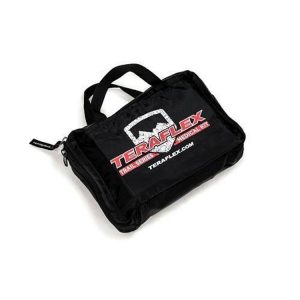
TeraFlex Trail Series Medical Kit – 5028550
- TeraFlex Trail Series medical kit, part number 5028550
- Non-critical triage support for remote off-road trail trips
- Includes bandages, gauze, moleskin, nitrile gloves and cloth tape
- Includes aspirin, ibuprofen and acetaminophen
- Includes the book Wilderness & Travel Medicine
SKU: TER5028550 -
Safety & First Aid
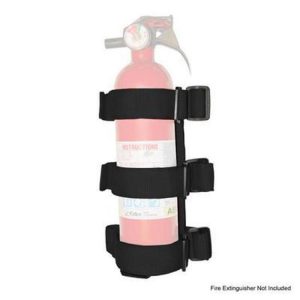
Rugged Ridge Fire Extinguisher Holder (Black) – 13305.21
- Rugged Ridge black fire extinguisher holder, part number 13305.21
- Thick nylon web straps with hook and loop fasteners
- Fits up to a 3 roll bar, with or without padding
- Maximum extinguisher diameter is 4; confirm the unit before ordering
- Universal fit, UPC 804314119744
SKU: RUG13305.21 -
-
-
Safety & First Aid
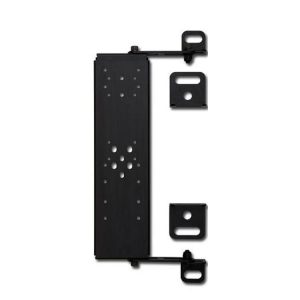
H3R Performance Universal Fire Extinguisher Seat Mount – SM01BK
- H3R Performance universal fire extinguisher seat mount, part number SM01BK
- Fully adjustable, attaches to seat rail bolts or the seat slider
- Lightweight, durable aluminum construction
- Accepts H3R billet aluminum and standard extinguisher brackets
- Universal fit per H3R Performance
SKU: H3RSM01BK -
Safety & First Aid
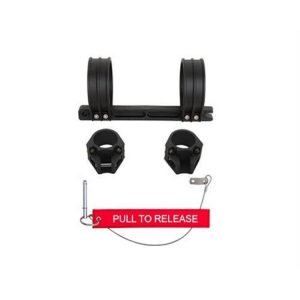
Extreme Duty Fire Extinguisher Bracket
- H3R Performance Extreme Duty bracket, part number NBR402
- Quick release mount with a bright red pull-to-release strap
- Fiberglass-reinforced nylon with corrosion-resistant hardware
- Designed to meet MIL SPEC 810G
- Designed to withstand inertial loads in excess of 27G
- Universal fit per H3R Performance
SKU: H3RNBR402 -
Safety & First Aid
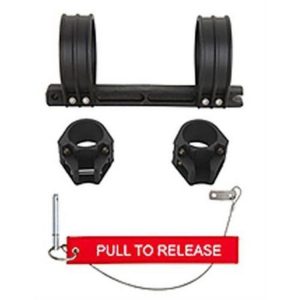
Extreme Duty Fire Extinguisher Bracket
- H3R Performance Extreme Duty bracket, part number NBR301
- Quick release design with a bright red pull-to-release strap
- Fiberglass-reinforced nylon with corrosion-resistant hardware
- Designed to meet MIL SPEC 810G
- Designed to withstand inertial loads in excess of 27G
- Universal fit per H3R Performance
SKU: H3RNBR301 -
Safety & First Aid
H3R Performance 2.5 lb. HalGuard Red Clean Agent Fire Extinguisher – HG250R
- 2.5 lb. red HalGuard clean agent extinguisher, part number HG250R
- Electrically non-conductive agent that liquefies into a gas
- No thermal shock to electronics, no mess or damage
- Passed Underwriters Laboratories testing, meets FAA requirements
- Universal fit
SKU: H3RHG250R -
Safety & First Aid
H3R Performance 2.5 lb. HalGuard Chrome Clean Agent Fire Extinguisher – HG250C
- 2.5 lb HalGuard clean agent fire extinguisher
- Electrically non-conductive clean agent that turns rapidly into a gas
- Underwriters Laboratories tested, meets FAA requirements
- Part number HG250C, UPC 856991001072
SKU: H3RHG250C -
Safety & First Aid

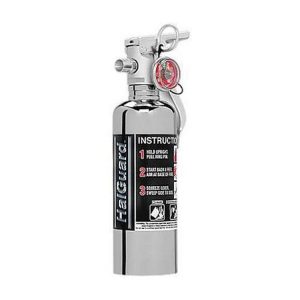
H3R Performance H3R Performance 1.4 lb. HalGuard Chrome Clean Agent Fire Extinguisher – HG100C
 Safety & First Aid
H3R Performance H3R Performance 1.4 lb. HalGuard Chrome Clean Agent Fire Extinguisher – HG100C
- 1.4 lb. chrome HalGuard clean agent extinguisher, part number HG100C
- Electrically non-conductive agent that turns into a gas
- No thermal shock to electronics, no mess or damage
- Passed Underwriters Laboratories testing, meets FAA requirements
- Universal fit
SKU: H3RHG100C







Why mount an extinguisher
A fire extinguisher is only useful if you can reach it in seconds. A loose bottle sliding around the cabin can be a hazard in a rollover or hard stop, so a rigid mount matters just as much as the extinguisher itself. Off-road vehicles generate fire risk from hot exhaust, dry brush, fuel leaks and electrical faults, so many trail groups treat an extinguisher as standard gear.
Mount styles
- Roll bar clamps grip the roll bar or cage tube and hold the bottle within reach of the driver and passenger. They are made for specific tube diameters, such as 1-3/4 inch.
- Bracket and holder mounts bolt to a floor, seat frame, console or panel.
- Band or clamp styles wrap around the cylinder with a quick-release strap, popular for billet aluminum bottle holders.
- Heavy-duty brackets are built for rough use where vibration is high.
Sizing
Match the mount to the extinguisher body diameter. A product made for a 2.5 pound bottle will not hold a 5 pound bottle securely. Round clamp diameters, such as 3 inch, correspond to larger cylinders, while compact bottles use smaller diameter bands. Also check the tube size for roll bar clamps, since an incorrectly sized clamp can slip. Product details usually list the supported bottle weight and diameter.
Placement tips
- Mount it where the driver can reach it while belted.
- Keep the release path clear, and avoid areas near heat or fuel lines.
- Use a quick-release design so you do not need tools in an emergency.
- Make sure the mount does not interfere with the roll cage, seat belt or airbag zones.
Extinguisher selection and care
Choose a rated extinguisher suited to automotive fires, typically a dry chemical type labeled for liquid and electrical fires, and check the gauge regularly. Replace or service it according to the manufacturer's instructions. Do not drill into a roll cage or structural member unless the manufacturer allows it. If you are unsure about attachment to a safety structure, ask a qualified fabricator.
Check fitment for your vehicle and confirm the mount's specifications before installing.
Inspect the mount after rough trail days, since vibration can loosen hardware, and keep thread-locking compound on bolts where the instructions allow it.
Related gear and common mistakes
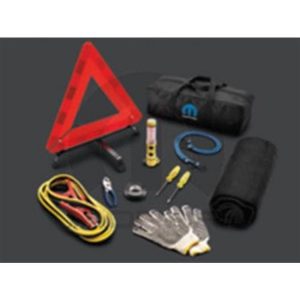
A mount is one part of a safety kit. Many trail drivers also carry a first aid kit sized for the group, a tourniquet and trauma supplies if trained to use them, a flashlight with spare batteries, a tire plug kit, a reflective triangle or flares and a fire blanket. The category pages for recovery and camping parts can help you build out the rest, but only choose items you know how to use.
- Do not hide the extinguisher. If it sits under a bag or behind a seat, the time lost can matter. Keep it visible and in a consistent place.
- Check the gauge monthly. Extinguishers lose pressure and need replacement or professional servicing based on type and age.
- Avoid cheap plastic clamps in heat. Metal or heat-tolerant mounts are better in a vehicle that sits in the sun.
- Secure the first aid kit the same way, so it does not become a projectile.
- Train everyone. Passengers should know where the extinguisher is and how to use it.
Popular Safety & First Aid brands
- H3R Performance (24)
- Drake (7)
- Rugged Ridge (4)
- TeraFlex (1)
- Jeep (1)
- RT Off-Road (1)
- 4Wheel Drive Hardware (1)
- Poison Spyder Customs (1)
Safety & First Aid FAQ
What size fire extinguisher is common for trail vehicles?
Many people carry a 2.5 pound bottle for the cabin, with larger bottles in some rigs. The right size depends on space and mounting. Use a mount made for that bottle's weight and diameter.
Where is the best place to mount an extinguisher?
Mount it where the driver can reach it while seated and belted, such as a roll bar or console, away from heat sources and out of the way of belts and airbags. Make sure it will not come loose.
Do I need a different clamp for different roll bar sizes?
Yes. Roll bar clamps are made for specific tube diameters, such as 1-3/4 inch. Measure your bar and compare it with the listed size so the clamp grips firmly without slipping.
Can I drill my roll cage to mount a bracket?
Generally avoid it. Drilling can weaken a structural tube. Use clamp-style mounts or ask a qualified fabricator or the cage manufacturer before modifying any safety structure.