
Truck Cab Protector / Headache Rack
Showing 13–24 of 29 resultsSorted by popularity
-
Armor & Protection, Truck Cab Protector / Headache Rack
Dee-Zee Cab Rack – DZ95058RB
- Fits the 2013–2026 Ram 2500 and Ram 3500 (manufacturer fitment list)
- 100 percent aluminum with gloss black powder coat
- Rear window protection screen and front heavy duty mesh
- Installs into the vehicle’s stake pockets
SKU: DEEDZ95058RB -
Armor & Protection, Truck Cab Protector / Headache Rack
Dee-Zee Cab Rack – DZ95050RB
- Fits many Silverado, Sierra, F-150, Ram and Tundra pickups, 2004–2021 (manufacturer fitment list)
- 100 percent aluminum cab rack with gloss black powder coat
- Rear window protection screen and front heavy duty mesh
- Installs into the vehicle’s stake pockets
SKU: DEEDZ95050RB -
Armor & Protection, Truck Cab Protector / Headache Rack

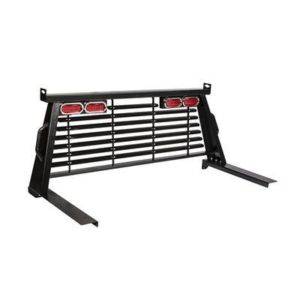
Aries Offroad Classic Headache Rack (Semi-Gloss Black) – 111000
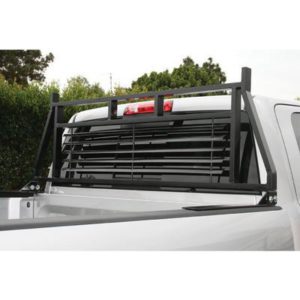 Armor & Protection, Truck Cab Protector / Headache Rack
Aries Offroad Classic Headache Rack (Semi-Gloss Black) – 111000
- Fits many Silverado, Sierra, Dodge Ram, Ram and F-150 trucks (manufacturer fitment list)
- 1″ x 2″ steel tubing, semi-gloss black powder coat
- Fully louvered center section
- Heavy-duty flat steel brackets; works with crossover tool boxes
SKU: ARS111000 -
Armor & Protection, Truck Cab Protector / Headache Rack
Aries Offroad AdvantEDGE Headache Rack (Chrome) – 1110201
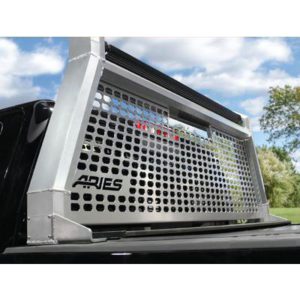 Armor & Protection, Truck Cab Protector / Headache Rack
Aries Offroad AdvantEDGE Headache Rack (Chrome) – 1110201
- Fits Ram 1500, 2500 and 3500 trucks, 2009–2024 depending on model (manufacturer fitment list)
- Chrome octagonal-tube headache rack
- Punched octagonal mesh center section and raised horns
- Patented installation system
SKU: ARS1110201 -
Armor & Protection, Truck Cab Protector / Headache Rack

Addictive Desert Designs Venom Chase Rack – C745142600103
 Armor & Protection, Truck Cab Protector / Headache Rack
Addictive Desert Designs Venom Chase Rack – C745142600103
- Built for the 2014 and newer Toyota Tundra
- Part number ADSC745142600103
- Steel main tube with a .120″ wall and laser cut panels
- Lighting options allow 50″ forward and 30″ rearward
SKU: ADSC745142600103 -
Armor & Protection, Truck Cab Protector / Headache Rack
Addictive Desert Designs Stealth Fighter Chase Rack – C1115521101NA
 Armor & Protection, Truck Cab Protector / Headache Rack
Addictive Desert Designs Stealth Fighter Chase Rack – C1115521101NA
- Fits the 2017–2019 Ford F-150 Raptor (manufacturer fitment list)
- Bolt-on chase rack using OEM mounting holes, no drilling
- Slots for up to a 20″ LED bar with the Universal Light Mount Kit
- Hammer black powder coat, made in America
SKU: ADSC1115521101NA -
-
-
-
Truck Cab Protector / Headache Rack
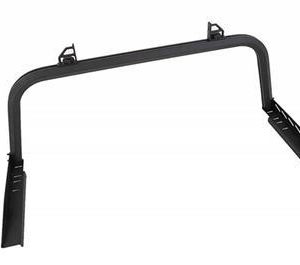
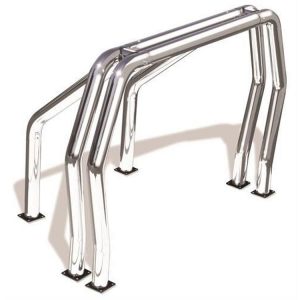
Classic Off-Road Style Bed Bars Kit
- Go Rhino classic off-road style bed bars kit, part number 9109370DSS
- Double bars with a single kicker between the wheel wells
- 3 inch diameter polished stainless steel tubing
- Light bar not included, limited lifetime warranty
SKU: ORP9109370DSS






What a headache rack does
A cab protector or headache rack mounts behind the cab and stands between the bed and the rear glass. If a load slides forward, such as lumber, ladders or equipment, the rack takes the impact before the cab. Many also provide mounting points for light bars, tie-downs and antennas, and they change the look of the truck.
Types of racks
The category covers several designs.
- Headache racks and cab racks, a flat or mesh panel in steel or aluminum, sized to the cab's width
- Chase racks, tube-frame designs that rise above the cab and carry lights, often tailored to off-road builds
- Sport bars, bed-mounted hoops that carry lights and sometimes include a power-actuated light mount
- Bed bars, which add main and rear support bars
- Racks with cutouts or lights, and options in black, chrome, stainless or bare steel
Choosing a rack
Think about what you carry. Work trucks that haul long or heavy loads benefit from a full-height steel panel, while a lightweight chase rack suits trail rigs that mainly need light mounting. Check material and finish: black powder coat is common, stainless resists rust, and bare steel needs finishing before use.
Confirm fitment by year, make, model, cab style and bed length, and note whether the rack interferes with a bed cover, cap or camper shell. Look at how it mounts, such as bolting to stake pockets or bed rails, and whether it needs drilling. Consider added weight and whether the rack blocks rear visibility.
Installation and load safety
Racks are heavy and awkward, so plan on two people for installation. Use all the mounting hardware included and torque to the manufacturer's specifications. Check that lights and wiring do not interfere with the rack structure.
A headache rack is not a roll bar or crash structure. Tie loads down properly, and do not exceed the rack's or the truck's rated capacities. Lighting use and height rules vary by state, so check local regulations before mounting auxiliary lights.
Finally, check bed access and clearance before drilling or bolting. A tall rack can interfere with a bed cover, a ladder rack or a camper, and a rack that sits close to the cab can leave little room for a rear window sliding open. Test-fit the parts before final tightening.
Load ratings, mounting and everyday use
Racks are built from different materials and thicknesses, and these affect weight, strength and cost. Steel is strong and heavy, aluminum is lighter and resists corrosion, and tube styles trade panel coverage for lighter weight. Look for details such as tube diameter, wall thickness, gusseting and the type of mounting hardware, rather than relying on appearance alone.
- Check how the rack attaches, since stake-pocket, rail and bolt-through mounts spread loads differently
- Use thread locker or locking hardware where recommended, and recheck bolts after the first drive
- Seal any drilled holes with a rust inhibitor to prevent corrosion
- Confirm the rack does not interfere with the tailgate, bed liner or a tonneau cover
- Keep the weight of added lights, spare tires or accessories within the manufacturer's stated limits
Over time, check for cracked welds, loose hardware and rust at mounting points, especially on trucks that haul heavy cargo or see rough roads. A rack with moving or electrical parts, like a power-actuated light mount, needs its wiring and moving parts inspected too. Keep the wiring protected from abrasion and heat, and fuse any added circuit as recommended.
Popular Truck Cab Protector / Headache Rack brands
- Go Rhino (15)
- Dee-Zee (4)
- Aries Offroad (3)
- Addictive Desert Designs (2)
- Fab Fours (1)
- Trail Gear (1)
- B&W Hitch (1)
- Road Armor (1)
- DV8 Offroad (1)
Truck Cab Protector / Headache Rack FAQ
What is the difference between a headache rack and a chase rack?
A headache rack is a barrier for protecting the cab. A chase rack is a taller tube frame, often for lights and recovery or spare tire mounting, with less cargo protection.
Will a headache rack fit my truck?
Fitment depends on the year, make, model, cab and bed. Many listings are direct fit, and you should confirm the vehicle on the product page and the manufacturer's specifications.
Can I mount lights on a cab protector?
Many have mounting points or cutouts for light bars and pods. Check the product details, and follow the lighting laws in your state about use on public roads.
Does a headache rack block the rear view?
Some designs use open mesh or frames that keep visibility, while solid panels may block some view. Check the product style and your needs for visibility.