
Winch Cable and Synthetic Rope
Showing 37–48 of 50 resultsSorted by popularity
-
-
-
-
-
-
Winch Cable and Synthetic Rope

Daystar Durable Polyurethane Fairlead Rope Rollers for Synthetic Rope – KU70054RE
 Winch Cable and Synthetic Rope
Daystar Durable Polyurethane Fairlead Rope Rollers for Synthetic Rope – KU70054RE
- Daystar red polyurethane fairlead rope rollers, KU70054RE
- Upgrades a standard roller fairlead for synthetic winch rope
- Replaces the steel rollers on a conventional fairlead
- Not for use with steel winch cable
SKU: DAYKU70054RE -
Winch Cable and Synthetic Rope
Daystar Durable Polyurethane Fairlead Rope Rollers for Synthetic Rope – KU70054BK
 Winch Cable and Synthetic Rope
Daystar Durable Polyurethane Fairlead Rope Rollers for Synthetic Rope – KU70054BK
- Daystar black polyurethane fairlead rope rollers, KU70054BK
- Fits all standard winch roller fairleads
- Makes roller fairleads compatible with synthetic winch rope
- Not for use with steel winch cable
SKU: DAYKU70054BK -
Winch Cable and Synthetic Rope
Warn Spydura Synthetic Winch Rope (Black) – 88468
- Warn Spydura synthetic winch rope, item 88468, 3/8 inch by 80 feet, black
- Made for winches with a 10,000 pound pull rating or less
- Ultra high molecular weight polyethylene with urethane coating
- Temperature resistant first-layer sleeve and ballistic nylon sliding sleeve
- Self-tightening rope attachment
- Universal fit; UPC 12748884682
SKU: WAR88468 -
-
-
-
Winch Cable and Synthetic Rope
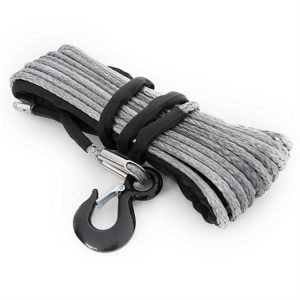
Smittybilt 12
- Synthetic winch rope, 7/16 inch by 88 feet
- Listed rated line pull of 12000 lbs
- Dyneema SK-75 construction, about one-seventh the weight of steel cable
- Floats, non-rotational and minimal stretch
- Includes a protective sleeve, stainless steel thimble and safety hook
SKU: S/B97712





Wire rope versus synthetic rope
Wire rope is the traditional choice. It is tough against abrasion and heat and generally costs less, but it is heavy, can develop sharp burrs and kinks, and stores energy that can be dangerous if it breaks. Synthetic rope is made of high-strength fibers, is far lighter, floats, and does not coil as violently if it snaps. It needs more care, since it can be damaged by heat, rough edges, dirt and ultraviolet light.
Match the line to your winch
The rope must suit the winch drum. Check the rope diameter, the length the drum can hold and the breaking strength. A common guideline is that the line's rated breaking strength should be well above the winch's rated line pull, and following the winch manufacturer's recommendation is best. Replacing a line with the wrong diameter can lead to poor spooling or lower capacity. Also check the end fittings, such as a hook, thimble or loop, and the fairlead type, since synthetic rope typically needs a smooth aluminum fairlead and wire rope uses a roller fairlead.
What to compare
- Diameter and length
- Rated breaking strength
- Cover or sleeve, which protects synthetic rope from abrasion
- End termination and whether a hook is included
- Whether the product is a full replacement or only a section
Safe use and care
Always wear leather gloves, and never grip a wire rope with a bare hand. Keep people clear of the line, and use a recovery damper or a heavy blanket draped over the line. Never let a winch line run past the last few wraps on the drum. Inspect the rope before each trip, and replace it if you find broken strands, flat spots, melted fibers or stiff sections. Rinse synthetic rope and let it dry, and re-spool it under tension so the layers do not bury each other.
Compatibility
Drum sizes differ by winch model. Confirm fitment for your winch model, check the manufacturer's specifications for rope diameter and length, and use only components rated for your recovery loads. Pair the line with a properly rated hook, shackles and a tree trunk protector so the rest of the recovery chain is as strong as the line itself.
Spooling and storage
How the line is wound on the drum matters. When respooling, keep light tension on the line, such as by driving slowly while winching in, and lay the wraps tightly and evenly side by side. Loose, crossed wraps can pull into the lower layers under load and jam or damage the line. Avoid pulling at extreme angles, since the rope can pile up at one end of the drum. Store the line clean and dry, with the hook secured so it does not hang loose. Replace the hook and other end hardware if it is bent, cracked or rusted. For synthetic rope, use a protective sleeve where the line may touch rocks, and keep it away from engine and exhaust heat.
Mark the rated capacity of the line in your records and keep any tag or paperwork that came with it. If you ever shorten, splice or repair a line, follow the manufacturer's guidance, since improper repairs can lower its strength.
Popular Winch Cable and Synthetic Rope brands
- Warn (34)
- Bubba Rope (5)
- Smittybilt (5)
- Rugged Ridge (4)
- Daystar (2)
- Trail Gear (1)
- Curt Manufacturing (1)
Winch Cable and Synthetic Rope FAQ
Is synthetic winch rope better than steel cable?
Each has trade-offs. Synthetic is lighter and safer if it breaks, but it is more vulnerable to abrasion and heat. Steel wire resists wear better but is heavy and can injure hands. Choose based on use and care.
What diameter rope does my winch need?
Use the diameter recommended by your winch manufacturer, because it affects drum capacity and rated pull. Check the winch label or manual, then compare the rope's breaking strength against the winch rating.
When should I replace a winch line?
Replace it when you see broken wires, frayed or melted fibers, kinks, flat spots or a stiff section. A damaged line can fail under load, so do not use it for recovery.