
Bed and Bumper Steps
Showing 37–37 of 37 resultsSorted by popularity
-
Bed and Bumper Steps
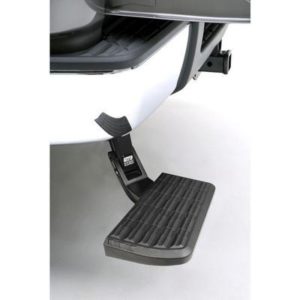
AMP BedStep Bumper Step (Black) – 75301-01A
- Fits Chevrolet Silverado and GMC Sierra 1500, 1500 HD, 2500, 2500 HD and 3500 pickups from 1999–2007
- Retractable, folding bumper step with a high-traction nylon composite pad
- Supports up to 300 lbs
- Gloss black finish, frame mounted under the rear bumper
SKU: AMP75301-01A

What these steps do
Lifted trucks and Jeeps put the tailgate and cargo area well above the ground. A bed or bumper step gives you a stable place to put a foot, whether you are loading gear, reaching a roof rack or hopping into the bed. This branch sits under Nerf Bars & Steps, but it focuses on the rear of the vehicle.
Listings include flip-down BedStep designs, Bestop TrekStep rear-mounted steps, and Carr hoop-style multi-mount steps.
Step styles
- Flip-down steps tuck into the bumper or hitch area and drop down when needed, keeping a clean look.
- Rear-mounted steps bolt to the bumper or hitch receiver and stay in a fixed position.
- Hoop or loop steps provide a hand grip as well as a foothold.
- Side steps from brands such as Kentrol serve a similar function along the body.
Choosing the right one
Confirm that the step is designed for your exact year, make, model and bumper style. A flip-down bumper step may require a particular factory bumper, and receiver-mounted steps need a compatible hitch. Check the stated weight capacity, the footprint of the tread and whether it has a non-slip surface.
Think about how you use the truck. If you tow, make sure the step does not block the hitch or trailer connections. If you carry a spare tire or bike rack, check that it does not interfere.
Installation and use
Most steps install with common hand tools and existing bolt locations, though some need drilling or trimming. Follow the torque specifications and recheck the hardware after the first few drives. Keep the step clear of the exhaust and make sure it does not reduce departure angle for off-road use.
Use steps within their rated capacity and on a stable surface, and watch for mud or ice, which make any step slippery. Remove accumulated debris from folding mechanisms so they move freely.
Further checks and care
Questions to ask before you choose
Consider who will use the step and for what. A tall driver may only need an occasional boost, while family members or pets may use it daily. Think about whether you want the step to disappear when not in use, and check ground clearance if you drive trails. Finally, confirm that your bumper's finish and thickness suit the clamps or brackets supplied.
Measuring and confirming fitment
Measure the bumper height, tailgate drop and clearance behind the bumper before choosing. Some steps depend on a flat or contoured bumper face, a particular hitch receiver size, or the factory tailgate handle location. Compare your measurements with the dimensions and application lists in the listing. For vehicles with a spare tire on the back, check where the carrier swings and whether the step interferes with it.
Materials and care
Steps use aluminum, steel and molded plastic, often with an anti-slip tread pattern or rubber pad. Powder-coated aluminum resists corrosion, and steel needs more care in salty conditions. Rinse mud from folding hinges and apply a light lubricant that does not attract dirt. Check bolts and pivot points regularly, and replace worn tread pads. If a step feels loose or wobbly, stop using it until the hardware is tightened or the part is replaced.
Popular Bed and Bumper Steps brands
Bed and Bumper Steps FAQ
Do bed steps fit every truck?
No. Each design is made for particular bumpers or hitches. Confirm the listed year, make and model, and compare against the manufacturer's specifications before choosing.
Will a bumper step interfere with towing?
Some designs fold away or are made to clear a hitch, but others may block trailer connections. Read the product notes and check clearance for your hitch and wiring before you install.
How much weight can a step hold?
Capacity varies by model and is listed by the manufacturer. Never exceed the stated rating, and remember that a rating assumes proper mounting with the supplied hardware.