Steering stabilizers are hydraulic dampers mounted between the axle and the steering linkage to calm shake and wobble on solid-axle trucks and Jeeps, especially with larger tires. This listing includes single and dual designs from Pro Comp, Skyjacker, Rough Country, Bilstein, and TeraFlex. Product pages give length, mount type, and fitment, with part numbers to help you compare the options.
Steering Stabilizer
Showing 1–12 of 73 resultsSorted by popularity
-
Lift Kits, Suspension & Shocks, Steering Stabilizer, Steering Stabilizers

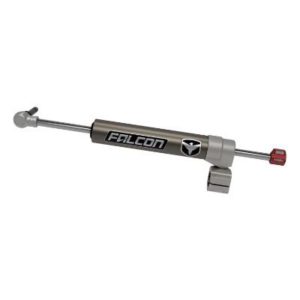
TeraFlex Falcon Nexus EF 2.2 Fast Adjust Steering Stabilizer for HD 1-5/8 Inch (42mm) Tie Rod – 01-02-22-110-158
 Lift Kits, Suspension & Shocks, Steering Stabilizer, Steering Stabilizers
TeraFlex Falcon Nexus EF 2.2 Fast Adjust Steering Stabilizer for HD 1-5/8 Inch (42mm) Tie Rod – 01-02-22-110-158
- Fits 2007–2018 Jeep Wrangler JK and JKU
- Built for the heavy-duty 1-5/8 inch (42mm) tie rod
- Three-position Fast Adjust knob with soft, medium and firm settings
- Brackets included with this single stabilizer
SKU: TER01-02-22-110-158 -
Lift Kits, Suspension & Shocks, Steering Stabilizer, Steering Stabilizers
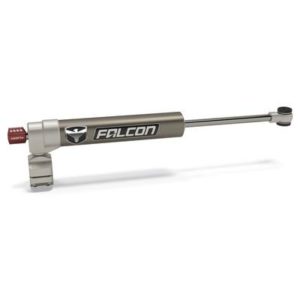
TeraFlex Falcon Nexus EF 2.2 Fast Adjust Steering Stabilizer – 01-02-22-110-1582
 Lift Kits, Suspension & Shocks, Steering Stabilizer, Steering Stabilizers
TeraFlex Falcon Nexus EF 2.2 Fast Adjust Steering Stabilizer – 01-02-22-110-1582
- Covers 2007–2018 Jeep Wrangler JK, 2- and 4-door models
- Fast Adjust knob with soft, medium and firm settings
- Available for a stock 1-3/8 inch or heavy-duty 1-1/2 or 1-5/8 inch tie rod
- Single stabilizer, direct fit
SKU: TER01-02-22-110-1582 -
Lift Kits, Suspension & Shocks, Steering Stabilizer, Steering Stabilizers
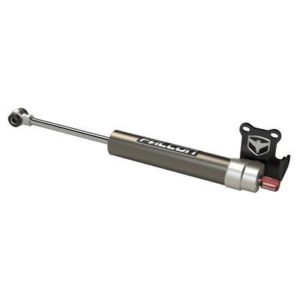
TeraFlex Falcon Nexus EF 2.2 Adjustable Steering Stabilizer – 09-02-22-110-000
 Lift Kits, Suspension & Shocks, Steering Stabilizer, Steering Stabilizers
TeraFlex Falcon Nexus EF 2.2 Adjustable Steering Stabilizer – 09-02-22-110-000
- Covers 2019 Jeep Wrangler JL in 2- and 4-door form
- Three-position Fast Adjust knob: soft, medium and firm
- Brackets included; shock boot not included
- Falcon Nexus EF 2.2 Equal Force design
SKU: TER09-02-22-110-000 -
Lift Kits, Suspension & Shocks, Steering Stabilizer, Steering Stabilizers
TeraFlex Falcon Nexus EF 2.1 Steering Stabilizer for Stock 1-3/8 Inch Tie Rod – 01-02-21-110-138
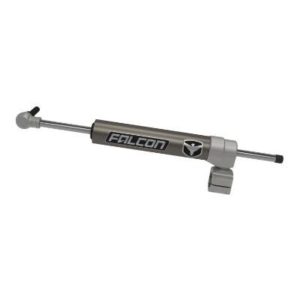 Lift Kits, Suspension & Shocks, Steering Stabilizer, Steering Stabilizers
TeraFlex Falcon Nexus EF 2.1 Steering Stabilizer for Stock 1-3/8 Inch Tie Rod – 01-02-21-110-138
- Fits 2007–2018 Jeep Wrangler JK, 2- and 4-door models
- Made for a stock 1-3/8 inch tie rod
- Volume Optimized Damping valve for quicker ramp-up at low speed
- Brackets included with this single stabilizer
SKU: TER01-02-21-110-138 -
Lift Kits, Suspension & Shocks, Steering Stabilizer, Steering Stabilizers
TeraFlex Falcon Nexus EF 2.1 Steering Stabilizer – 09-02-21-110-000
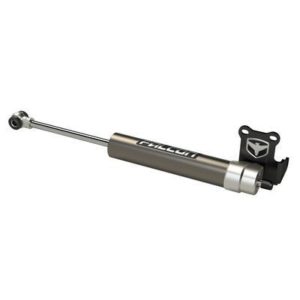 Lift Kits, Suspension & Shocks, Steering Stabilizer, Steering Stabilizers
TeraFlex Falcon Nexus EF 2.1 Steering Stabilizer – 09-02-21-110-000
- Fits 2019 Jeep Wrangler JL models, 2- and 4-door
- Fixed-rate Series 2.1 damper tuned for on- and off-road driving
- Brackets included with this single stabilizer
- Equal Force design for a properly weighted steering feel
SKU: TER09-02-21-110-000 -
Lift Kits, Suspension & Shocks, Steering Stabilizer, Steering Stabilizers

Skyjacker Steering Stabilizer Single Kit – 8122
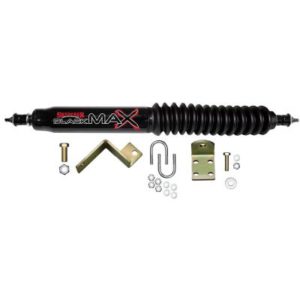 Lift Kits, Suspension & Shocks, Steering Stabilizer, Steering Stabilizers
Skyjacker Steering Stabilizer Single Kit – 8122
- Black single steering stabilizer kit for 0–2.5-inch lifts
- Fits 1988–1998 Chevrolet and GMC K1500 and K2500, Suburbans, Tahoe and Yukon
- Also fits the 1992–1994 Chevrolet Blazer
- Part number SKY8122, direct fit
SKU: SKY8122 -
Lift Kits, Suspension & Shocks, Steering Stabilizer, Steering Stabilizers
Skyjacker Steering Stabilizer Single Kit – 8110
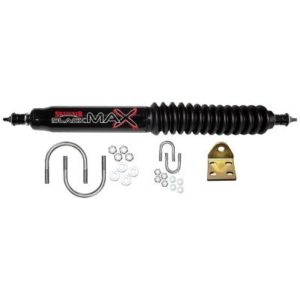 Lift Kits, Suspension & Shocks, Steering Stabilizer, Steering Stabilizers
Skyjacker Steering Stabilizer Single Kit – 8110
- Black single steering stabilizer kit for straight-axle trucks
- Fits 1959–1997 Ford F-150, F-250 and F-350, Dodge W-series and GMC K-series pickups
- Also fits 1975–1993 Dodge Ramcharger, 1971–1980 International Scout II and 1963–1967 Jeep Gladiator
- Part number SKY8110, direct fit
SKU: SKY8110 -
Lift Kits, Suspension & Shocks, Steering Stabilizer, Steering Stabilizers
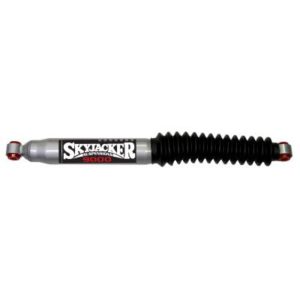
Skyjacker Steering Stabilizer Kit – 9400
 Lift Kits, Suspension & Shocks, Steering Stabilizer, Steering Stabilizers
Skyjacker Steering Stabilizer Kit – 9400
- Steering stabilizer cylinder only, Hydro Series, silver with black boot
- Fits 1984–2006 Jeep Cherokee XJ, Wrangler YJ, TJ and LJ, Grand Cherokee ZJ and Wagoneer SJ
- Part number SKY9400
- No hardware and brackets not included
SKU: SKY9400 -
Lift Kits, Suspension & Shocks, Steering Stabilizer, Steering Stabilizers
Skyjacker Steering Stabilizer Kit – 7202
 Lift Kits, Suspension & Shocks, Steering Stabilizer, Steering Stabilizers
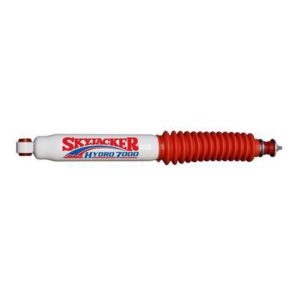
Skyjacker Steering Stabilizer Kit – 7202
- Complete single steering stabilizer kit for 2001–2018 Chevrolet and GMC 2500 and 3500 HD trucks
- Also fits the 2007–2018 Jeep Wrangler JK and 2001–2009 Ford F-250 Super Duty
- Red boot, brackets included, Hydro Series
- Part number SKY7202
SKU: SKY7202 -
Lift Kits, Suspension & Shocks, Steering Stabilizer, Steering Stabilizers
Skyjacker Steering Stabilizer Kit – 7150
 Lift Kits, Suspension & Shocks, Steering Stabilizer, Steering Stabilizers
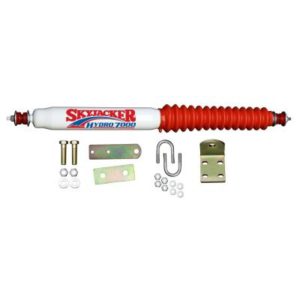
Skyjacker Steering Stabilizer Kit – 7150
- Complete single steering stabilizer kit for Ford Ranger, Explorer and Bronco II
- Also fits Mazda B-series and Navajo trucks built on the same platform
- Includes red shock boot and brackets, Hydro Series
- Part number SKY7150, limited lifetime warranty
SKU: SKY7150 -
Lift Kits, Suspension & Shocks, Steering Stabilizer, Steering Stabilizers
Skyjacker Steering Stabilizer HD OEM Replacement Kit – 8099
 Lift Kits, Suspension & Shocks, Steering Stabilizer, Steering Stabilizers
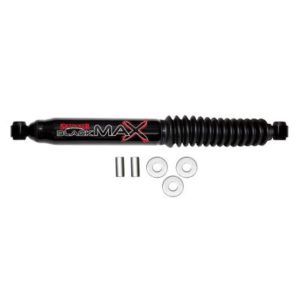
Skyjacker Steering Stabilizer HD OEM Replacement Kit – 8099
- Black steering stabilizer replacement kit for 1999–2005 Ford Super Duty, F-250 and Excursion
- Dampens steering shimmy and harshness, per Skyjacker
- Part number SKY8099, direct fit
- Limited lifetime warranty
SKU: SKY8099 -
Lift Kits, Suspension & Shocks, Steering Stabilizer, Steering Stabilizers
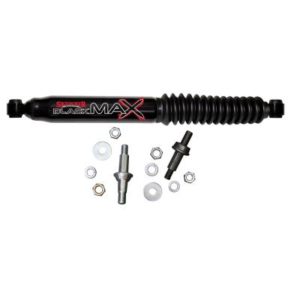
Skyjacker Steering Stabilizer HD OEM Replacement Kit – 8055
 Lift Kits, Suspension & Shocks, Steering Stabilizer, Steering Stabilizers
Skyjacker Steering Stabilizer HD OEM Replacement Kit – 8055
- Black steering stabilizer replacement kit for 1967–1991 Chevrolet and GMC C/K pickups and Blazer, Jimmy and Suburban models
- Dampens steering shimmy from larger tires, per Skyjacker
- Part number SKY8055, direct fit
- Limited lifetime warranty
SKU: SKY8055
What a steering stabilizer does
A steering stabilizer is a shock absorber laid on its side. One end attaches to the axle or frame and the other to the tie rod or drag link, so it resists sudden side-to-side movement of the steering. It does not fix worn parts or bad alignment, but it can reduce bump steer feel, tire-induced wobble, and kickback when a tire hits a rock or rut.
Single, dual, and cylinder types
- Single stabilizers are the usual choice for stock and mildly lifted vehicles.
- Dual stabilizer kits, such as stacked mount designs, add damping for very large tires and heavy-duty use.
- Cylinder-style units and adjustable models, such as Falcon Nexus designs, let you change damping settings for street or trail use.
- Mounting brackets are sold separately in some cases, so check whether the one you want includes them.
Specs to compare
Fitment is driven by length. Product pages may list extended length, collapsed length, and travel, and the stabilizer must fit your steering throw without bottoming out or reaching full extension. Compare body diameter, piston rod diameter, and whether the construction is twin tube or monotube. Check the mount style at each end, such as stem mounts or eyelet mounts, and the finish, which affects corrosion resistance. Some units mention an optional boot sold separately that keeps dirt off the rod.
Installation notes
Installation is typically a bolt-on job with basic tools. Mount the stabilizer with the wheels pointed straight ahead and check for full turning clearance in both directions before driving. Use the specified hardware and torque it to the manufacturer values. Because steering is a safety system, have a professional inspect the installation if you are uncertain.
Before you buy one
If the steering shakes, check the basics first: worn tie rod ends, ball joints, wheel bearings, a loose track bar, tire balance, and alignment. A stabilizer masks those problems rather than curing them. Confirm fitment for your exact year, make, and model, including lift height and axle, and check the manufacturer specifications. Universal units still need measurement to confirm the right length.
Also consider adding a protective boot where one is offered, particularly for vehicles that see mud, sand, or water crossings. Grit on the shaft can wear the seal and lead to leaks, which ends the damping action.
Common mistakes and maintenance
One mistake is mounting the stabilizer so it limits steering travel, which can bend brackets or damage the tie rod. Turn the wheel lock to lock with the engine off to confirm clearance. Another is using a stabilizer to hide a loose track bar or worn ball joints, which leaves the real defect in place. Over time the seals wear, so check for oily residue along the rod and for a loss of resistance when you compress the shaft by hand. Replace it as a pair if you run a dual setup. When the hardware is old, replace the bushings or grommets, since sloppy mounts reduce the damping and can create noise. A dab of anti-seize on exposed threads makes removal easier later.
Popular Steering Stabilizer brands
- Pro Comp Suspension (20)
- Rough Country (15)
- Skyjacker (15)
- Bilstein (5)
- TeraFlex (5)
- Fabtech (3)
- Rubicon Express (2)
- ARB 4x4 Accessories (2)
- FOX (1)
- ICON Vehicle Dynamics (1)
- RockJock 4x4 (1)
- King Shocks (1)
Steering Stabilizer FAQ
Will a steering stabilizer fix death wobble?
Not by itself. Death wobble usually comes from worn or loose parts such as the track bar, tie rod ends, or ball joints, plus alignment issues. A stabilizer can mask symptoms, so fix the root cause first.
Do I need a dual steering stabilizer?
Dual setups are mostly for large tires and heavy use. Many vehicles do well with a single quality unit. Choose dual only if your vehicle and brackets are designed for it.
How long should the stabilizer be?
It needs to extend and collapse through your full steering travel without bottoming out. Compare the extended and collapsed lengths on the product page against the measurements from your vehicle, especially after a lift.
How often should a steering stabilizer be replaced?
There is no set interval. Replace it if it leaks fluid, feels loose, or no longer resists movement when compressed by hand. Inspect it whenever you service the steering.