
Winch Accessory Kit
Showing 25–26 of 26 resultsSorted by popularity
-
Winch Accessory Kit
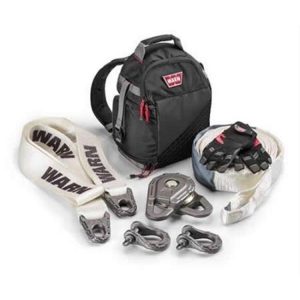
Epic Accessory Kit
- Warn Epic Accessory Kit, heavy duty, UPC 12748975700
- Forged 3/4″ Epic shackles, snatch block and tree trunk protector
- Premium 3″ x 30′ recovery strap rated to 21,600 lbs
- Kevlar-reinforced winching gloves and ballistic backpack carrying case
- Universal fit for winches rated 18,000 lbs and under
SKU: WAR97570



Why accessories matter
A winch alone is not a complete recovery system. You also need ways to attach to anchor points, redirect the line and protect equipment and trees. A kit puts those pieces together so you can start with a useful setup.
Typical kit contents
- Snatch block: a pulley that redirects the line and, in a double-line pull, reduces the load on the winch.
- Shackles: connect the winch line to anchor points and recovery points.
- Tree trunk protector: a wide strap that protects the tree and the line when anchoring to a tree.
- Gloves: protect your hands from wire rope burrs and hot hardware.
- Bag: keeps everything together and organized.
Some kits are light duty and aimed at ATVs and UTVs, while others are heavier for full-size trucks. Contents differ between kits, so read the product page carefully.
Check the ratings
Every component has a rated capacity, and the weakest piece limits the whole system. Compare the working load limit or breaking strength of shackles, straps and blocks with your winch's pulling capacity and the weight of the vehicle. Choose gear that exceeds your winch's rating, not just matches it. Mixing worn or unrated parts into a recovery is dangerous.
Safe winching practices
- Inspect the line, hooks and hardware before each use, and discard damaged parts.
- Wear gloves and keep hands clear of the fairlead and drum.
- Place a damper such as a blanket or jacket over the line to reduce snap-back risk.
- Keep bystanders well back from the line.
- Use rated recovery points, never tow balls or bumpers-bumpers-tire-carriers-winch-mounts-2 not designed for recovery.
Choosing a kit
Match the kit to your winch type and vehicle weight, and check whether it suits steel cable or synthetic rope. Synthetic rope needs extra care to avoid abrasion and heat. Some kits include a branded bag and some are sold as separate pieces, so compare what you will actually receive and confirm that the contents match your needs. Follow the manufacturer's instructions for use.
Storage, inspection and practice
Recovery gear is only useful when it is in good condition and you know how to use it. Store the kit in a dry bag or box within reach, not buried under cargo, so you can reach it quickly. After each use, rinse off mud, let straps and rope dry fully and look for cuts, frays, crushed fibers, bent hooks or damaged shackle threads. Retire any worn pieces. Practice rigging in a safe, level place before you need it, so you know how to attach a snatch block, set up a double-line pull and protect the tree. Consider taking a recovery course or going out with experienced friends. Remember that a winch is for recovering a vehicle and not for towing on the road, and always follow the winch maker's duty-cycle guidance to avoid overheating the motor.
Common mistakes include wrapping a winch cable around a tree and hooking it back to itself, using a tow strap with a metal hook as a recovery point, and putting hardware with unknown ratings in the load path. Use rated shackles and soft shackles in the right orientation, and keep the load in line.
Popular Winch Accessory Kit brands
- Warn (12)
- Rugged Ridge (6)
- Smittybilt (3)
- ARB 4x4 Accessories (3)
- RT Off-Road (2)
- Genuine Packages (1)
- TeraFlex (1)
- Jeep (1)
Winch Accessory Kit FAQ
What is in a winch accessory kit?
Typical items include a snatch block, one or more shackles, a tree trunk protector, gloves and a storage bag. Contents differ by kit, so check each product page for the list and the rated capacities of the components.
What does a snatch block do?
A snatch block is a pulley that changes the direction of the winch line. Used in a double-line pull, it also reduces the load on the winch and lets you pull with extra force. Use a block rated above the load.
Why use a tree trunk protector?
It spreads the load over a wide strap so the winch line does not cut into the tree bark or damage the line. Use it on healthy trees where allowed, and never wrap the winch cable directly around a trunk.
How do I know if the gear is strong enough?
Check the rated working load or breaking strength on each component and compare it with your winch capacity and vehicle weight. The weakest piece limits the system, so use rated parts and replace worn or damaged items.