
Headlights, Housings and Conversions
Showing 85–91 of 91 resultsSorted by popularity
-
-
-
-
Headlights, Housings and Conversions
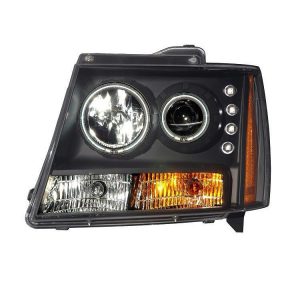
Projector Headlight Set; w/Halo
- Anzo projector headlight pair with halo, part number 111189, black housing
- Clear lens; sold as a pair
- Fits 1999–2002 Chevrolet Silverado 1500 and 2500, 2001–2002 Silverado HD and 3500
- Also fits 2000–2006 Chevrolet Suburban and Tahoe
SKU: ANZ111189 -
Headlights, Housings and Conversions
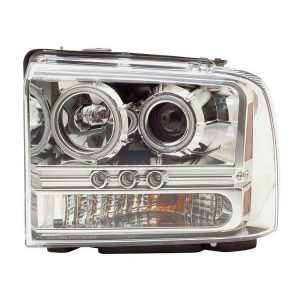
Projector Headlight Set; w/Halo
- Anzo projector headlight pair with halo, part number 111118, chrome housing
- Clear lens
- Covers 2005 Ford Excursion and 2005–2007 F-250 and F-350 Super Duty
- Halo listed with 1 pc. LED
- Not for F-250 Light Duty or sealed beam models
SKU: ANZ111118 -
Headlights, Housings and Conversions
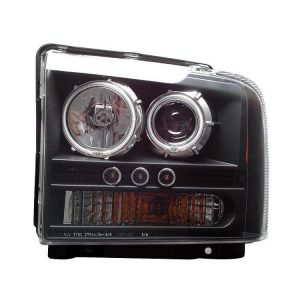
Projector Headlight Set; w/Halo
- Anzo projector headlight set with halo, part number 111117, sold as a pair
- Clear lens and black housing
- Fits 2005 Ford Excursion and 2005–2007 F-250 and F-350 Super Duty
- Halo uses CCFL, with 1 pc. LED strip
- Does not fit F-250 Light Duty or sealed beam models
SKU: ANZ111117 -

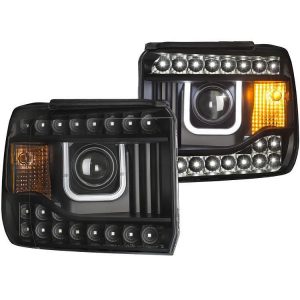
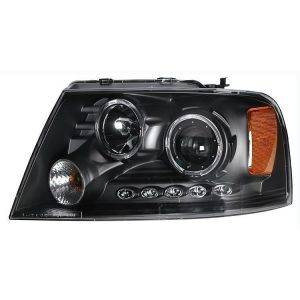
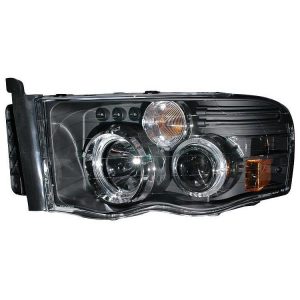
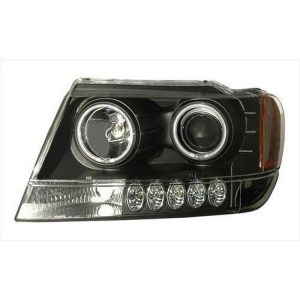
Types of headlight products
Headlight assemblies come in a few broad forms. Direct-fit replacements bolt in where the original unit sat and plug into the factory connector. Upgraded assemblies add projector lenses, LED accent rings or light-bar style signature lighting. Conversion products swap sealed-beam or round units for modern housings or LED modules. Some listings are housings only, and the bulbs, ballasts or drivers are sold separately.
Halogen, HID and LED
The light source matters as much as the housing.
- Halogen: Inexpensive and simple, with a warm color and shorter life.
- HID (xenon): Bright and efficient, but needs ballasts and a compatible reflector or projector.
- LED: Efficient, long-lived and compact, often with built-in drivers and heat sinks.
Dropping an LED or HID bulb into a housing designed for halogen can scatter light and glare oncoming drivers. Beam pattern is controlled by the reflector or projector, so an assembly engineered for the light source is the safer choice.
What to compare
- Fit: year, make, model and trim, plus whether the vehicle has factory halogen, HID or LED lights.
- Housing style: reflector or projector.
- Included parts: bulbs, wiring adapters, ballasts, daytime running light strips.
- Lens material and sealing, which affect fogging and long-term clarity.
- Compliance markings, such as DOT or SAE, for road use.
Installation notes
Many headlights are held by a few bolts behind the grille or bumper cover, and some vehicles require removing the bumper or grille to reach them. Disconnect the battery before touching connectors, and avoid handling halogen bulbs with bare fingers because oils shorten their life. After installation, aim the headlights on a flat surface against a wall, or have a shop do it, since poor aim reduces visibility and blinds others. Vehicles with adaptive lighting or CAN bus monitoring may flag a bulb-out warning with some LED conversions, which a resistor or adapter may address.
Legality and fitment
Lighting laws differ by state, and some conversions are intended for off-road use only. Check local regulations and the product's stated compliance. Confirm fitment for your exact year, make and model, and review the manufacturer's specifications before choosing.
Checking the details before you choose
Look at your existing lamps: note whether they are sealed beam, composite halogen, HID or LED, whether there is a separate turn signal or daytime running light, and how many connectors plug into the back. A mismatch in connector type is a common cause of fit problems, so compare the plug shape and pin layout.
Care and common mistakes
Keep lenses clean, and treat plastic lenses with a UV-protectant if the maker advises it. Do not mix bulb types left to right, because color and brightness will differ. If moisture appears inside a new assembly, check that the vent caps and rubber seals are seated properly. Cheap, uncertified units can give a poor beam pattern, so check for compliance markings. Wiring adapters should be used instead of splicing into factory harnesses whenever possible.
If the vehicle has an automatic leveling or adaptive headlight system, note whether the replacement supports the motors and sensors, because omitted components can trigger dash warnings or fixed beam angles.
Popular Headlights, Housings and Conversions brands
- Anzo (24)
- Spyder Auto Group (21)
- Oracle Lighting (17)
- JW Speaker (10)
- Morimoto (5)
- Recon (5)
- Hella (2)
- In Pro Carwear (2)
- DV8 Offroad (2)
- KC HiLites (1)
- Omix-Ada (1)
- Rampage (1)
Headlights, Housings and Conversions FAQ
Are LED headlight conversions legal?
It depends on the product and your state. Many street-legal assemblies carry DOT or SAE markings, while some conversions are labeled for off-road use. Check the product description and your local regulations before installing.
Can I put LED bulbs in my halogen headlights?
You can, but the reflector was designed for halogen, so the beam may scatter and cause glare. Assemblies designed for LED or projector modules usually give a cleaner, safer pattern.
Why are my headlights foggy or yellow?
Oxidized plastic lenses and failed seals are common causes. Polishing can help a hazy lens, but moisture inside the housing often means the seal has failed and the assembly needs replacement.
Do I need to aim headlights after replacing them?
Yes. New assemblies rarely sit exactly where the old ones did. Aim them against a wall on level ground or have a shop do it, so the beams light the road without blinding oncoming traffic.