
Drop Hitches & Ball Mounts
Drop hitches and ball mounts connect the trailer coupler to your receiver and set the trailer’s height. This category covers fixed and adjustable ball mounts, hitch balls, pins and locks, plus bushings for rattle control. It suits anyone towing a camper, utility trailer or boat behind a truck or SUV. Curt Manufacturing, DrawTite, BOLT Lock and B&W Hitch are listed. Open a product page for rating and shank details, then compare the products below.

The ball mount is the link between your receiver and the trailer, and it decides whether the trailer rides level. A lifted truck or Jeep often needs a deep drop to bring the ball down to coupler height. This category covers the mounts, balls, pins, locks and sleeves that complete that link.
Ball mounts are the biggest group, from fixed 2-inch and 4-inch drops to adjustable and triple-ball designs. Hitch balls are sorted by diameter, shank size and weight rating, so match all three. Pins and locks secure the mount in the receiver and the coupler on the ball. Reducer sleeves and adapter bushings let a ball or mount fit a larger hole than it was made for.
Shop ball mounts and hitch parts


Popular ball mounts and balls
-
Drop Hitches & Ball Mounts
Fastway Flash Adjustable Locking Ball Mount – 47-00-3400
- Dual hitch balls for hooking up to different trailers
- Built-in locks, so separate hitch and adjustment pins are not needed
- 4 Inch Drop with a 2 Inches shank
- Aluminum body with chrome finish and tethered cover
- Part number DTM47-00-3400 from Fastway Trailer Products
SKU: DTM47-00-3400 -
Trailer Hitch Pin Lock
BOLT Lock Off-Vehicle Coupler Lock – 7032489
- Coupler lock for 1-7/8 inch, 2 inch and 2-5/16 inch couplers
- Opens with the vehicle ignition key after first-use learning
- Covers 1997–2009 Chevrolet, GMC, Buick and Cadillac vehicles
- Stainless steel shutter and red powder coat finish
- Limited Lifetime Warranty.
SKU: SSC7032489 -
Trailer Hitch Pin Lock
BOLT Lock Off-Vehicle Coupler Lock – 7032493
- Red coupler lock for 1-7/8 inch, 2 inch and 2-5/16 inch couplers
- Center Cut key compatibility for Chevy, Buick and GMC
- Covers 2021–2026 GM vehicles, plus one 2018 Suburban entry
- Learns the owner’s key on first use
- Limited Lifetime Warranty.
SKU: SSC7032493 -
Drop Hitches & Ball Mounts
DrawTite Class V Forged Ball Mount (Black) – 40330
- DrawTite Class V forged ball mount, part number DRA40330
- 2 inch drop with a 2 inch by 2 inch shank
- 1.250 inch ball hole, black steel finish
- Universal fit; confirm receiver size and weight rating before ordering
SKU: DRA40330 -
-


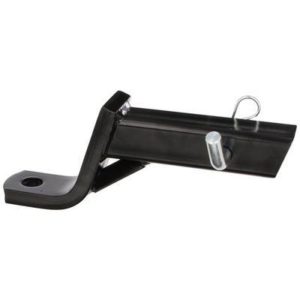


Ball and mount sizing reference
Figures below are taken from the listings in this category. The ball shank must match the ball mount hole, and the ball diameter must match the size stamped on the coupler.
Hitch balls by rating
| Ball | Shank | Rating (lbs) | |
|---|---|---|---|
| Curt 40062 | 1-7/8" | 1" | 3,500 |
| Curt 40018 / 40064 | 2" | 3/4" | 3,500 |
| Curt 40020 | 2" | 1" | 6,000 |
| Curt 40006 | 2-5/16" | 1-1/4" | 10,000 |
| Curt 40030 | 2-5/16" | 1-1/4" | 15,000 |
| Curt 40086 (raw) | 2-5/16" | 1-1/4" | 25,000 |
Locks and pins
- BOLT locks open with your own ignition key (GM, Ford and Toyota key versions)
- BOLT off-vehicle coupler locks fit 1-7/8", 2" and 2-5/16" couplers
- BOLT 1/2" receiver lock suits 1-1/4" receivers
- Curt hitch and coupler lock sets cover both ends of the hitch
- Curt coupler safety pin holds the coupler latch closed
Ball mounts: shank, hole and drop
| Shank | Ball hole | Drop or rise | |
|---|---|---|---|
| Curt 45518 Class I/II | 1-1/4" | 3/4" | 2" drop |
| Curt 45521 Class I/II | 1-1/4" | 3/4" | 3" drop |
| Curt 45040 Class III | 2" | 1" | 2" drop |
| Curt 45060 Class III | 2" | 1" | 4" drop |
| DrawTite 40330 Class V forged | 2" | 1-1/4" | 2" drop |
| B&W BMHD30014 | 6" long | 1-1/4" | 6" drop |
| Curt 45655 triple ball | 2" | Fixed balls | 0.75" rise |
Before you hook up
- Read the rating on every part: ball, mount, receiver and pin
- Check the ball hole: a 1" shank ball will not fit a 3/4" hole
- Use a reducer sleeve only when the listing names your exact sizes
- Switch-ball systems need the matching shank and cover
- Re-measure the drop after a lift, leveling kit or new tires
Your towing limit is set by the lowest-rated part in the chain and by your vehicle's tow rating, whichever is lower.
All Drop Hitches & Ball Mounts 86 parts
-
-
Trailer Hitch Pin Lock
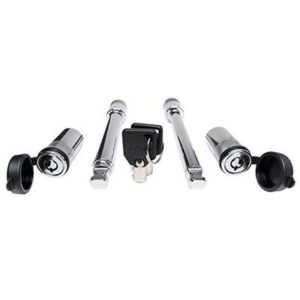
Fastway Flash Solid Steel Dual Lock Pack with 2 Keys – 86-00-4200
- Fastway DTM86-00-4200 solid steel dual lock pack with 2 keys
- Locks the ball holder to the drop bar and the drop bar in the receiver
- Designed for Flash SSBM and Flash SSBM HD ball mounts
- Barrel style lock with tethered dust cap, polished finish
SKU: DTM86-00-4200 -
Drop Hitches & Ball Mounts
Fastway Flash Adjustable Locking Ball Mount – 47-00-3400
- Dual hitch balls for hooking up to different trailers
- Built-in locks, so separate hitch and adjustment pins are not needed
- 4 Inch Drop with a 2 Inches shank
- Aluminum body with chrome finish and tethered cover
- Part number DTM47-00-3400 from Fastway Trailer Products
SKU: DTM47-00-3400 -
Drop Hitches & Ball Mounts
DrawTite Class V Forged Ball Mount (Black) – 40330
- DrawTite Class V forged ball mount, part number DRA40330
- 2 inch drop with a 2 inch by 2 inch shank
- 1.250 inch ball hole, black steel finish
- Universal fit; confirm receiver size and weight rating before ordering
SKU: DRA40330 -
-
-
-

What goes in this category
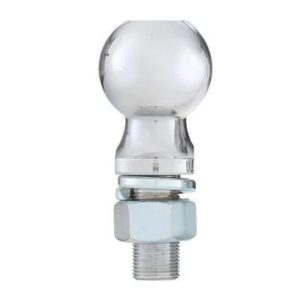
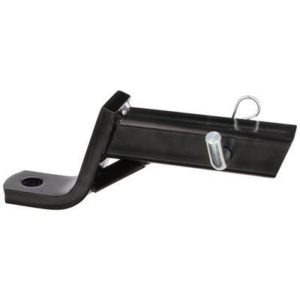
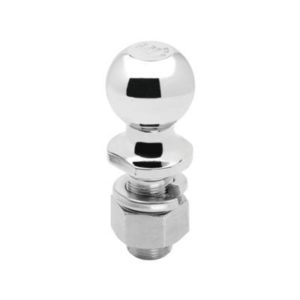
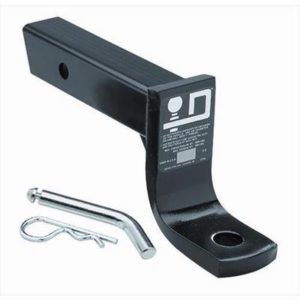
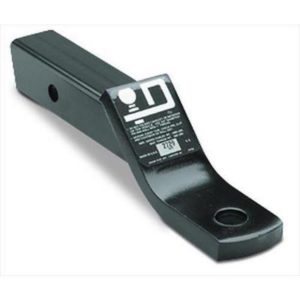
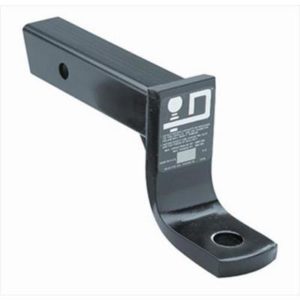
The ball mount is the removable piece that slides into the receiver tube and carries the ball. A drop hitch lowers the ball, a rise hitch lifts it, and both let the trailer sit level. Related items in this category include the hitch ball itself, the pin that locks the mount in the receiver, locking pins for the coupler, and bushings that reduce rattle.
How to choose a ball mount
Start with the receiver size. Common shank sizes are 1-1/4 inch for light-duty classes and 2 inch for heavier classes, and the mount must match your receiver. Then measure the ride height: with the trailer level, measure from the ground to the top of the receiver opening and from the ground to the bottom of the coupler. The difference tells you how much drop or rise you need.
- Fixed mounts: Simple and strong for a single trailer.
- Adjustable mounts: Useful if you tow different trailers or have a height-varying setup.
- Multi-ball mounts: Hold more than one ball size for different couplers.
Ratings and sizes
Every part in the towing chain has a rating, and the lowest one governs. Check the mount's gross trailer weight and tongue weight ratings and compare them to your trailer, your receiver class and the tow rating in your owner's manual. Hitch balls come in different diameters, such as 1-7/8, 2 and 2-5/16 inches, and the ball must match the coupler stamped size. The shank diameter has to fit the hole in the mount, and the ball needs the proper nut and washer torque.
Safety and installation notes
Use a mount rated at or above your loaded trailer's weight. A level trailer tows more stably and puts the weight where it should be. A coupler that rides nose-high or nose-low can affect braking and sway. Torque the ball nut to the manufacturer's specification and check it regularly, and always install the hitch pin and a clip or lock.
Confirm that the mount fits your receiver and vehicle, and check that your vehicle's tow rating and hitch class support the load. If you are unsure about weight distribution or trailer sway control, a professional hitch shop can help. Never exceed the lowest rated component in the setup, and verify ratings in the manufacturer's specifications.
Maintenance and common mistakes
Inspect the ball and mount before each season. Look for cracks in the shank, bent platforms, deep rust, and wear on the ball surface, which should be smooth and round. A ball that is flattened or pitted can cause coupler wear and should be replaced. Keep the ball lightly greased unless your coupler instructions say otherwise, and wipe it clean after each trip.
Rattle in the receiver is common and mostly cosmetic, but it can wear the receiver tube over time. Anti-rattle devices and bushings address this, and they are separate from the load-carrying parts. The hitch pin should be the correct diameter for the receiver, such as 5/8 inch for many class III and IV receivers, and a lock helps deter theft.
Common mistakes include using a mount rated for a lighter class, forgetting the clip on the pin, overtightening the ball nut past its torque, and ignoring tongue weight. As a general guideline, tongue weight is often around 10 to 15 percent of trailer weight for conventional trailers, but follow the trailer maker's recommendation. Store the mount in a dry place when it is not being used.
Popular Drop Hitches & Ball Mounts brands
- Curt Manufacturing (47)
- BOLT Lock (9)
- DrawTite (9)
- Weigh Safe Hitches (8)
- B&W Hitch (5)
- Smittybilt (2)
- Trimax Locks (2)
- Jeep (2)
- Fastway Trailer Products (2)
Drop Hitches & Ball Mounts FAQ
How do I know how much drop I need?
Park on level ground with the trailer level. Measure from the ground to the top of the receiver opening and from the ground to the coupler's bottom. The difference is the drop or rise you need.
What do the hitch classes mean?
Classes group receivers by capacity and size, from Class I for light loads up to Class V for heavy trailers. Class III and IV commonly use 2 inch receivers. Your vehicle's tow rating and the lowest rated part still apply.
How do I choose the right ball size?
Read the size stamped on the trailer coupler, commonly 1-7/8, 2 or 2-5/16 inches. The ball must match that size, fit the mount's hole diameter, and be rated for the trailer's weight.
Is an adjustable ball mount a good idea?
It can be, especially if you tow multiple trailers. It has more moving parts, so check that the rating matches your load and that all locking hardware is secure and torqued before each trip.