
Trail Jacks & Vehicle Recovery Equipment
Recovery ropes, tow hooks, trail jack accessories, and related gear for getting a stuck 4×4 moving again. Brands here include Prothane, Monster Hooks, Safe Jack, and Bubba Rope, covering tow straps, jack mounts, jack pads, and hitch-mounted tow hooks. Recovery gear is rated by load, so compare ratings carefully. Open a product page for details and compare the products below.
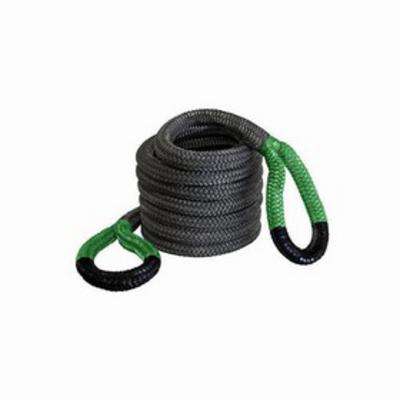
Sooner or later every trail rig sinks to the frame or high-centers on a rock. The gear here gets you lifted, hooked up and pulled out, and gives your jack a secure place to ride until you need it.
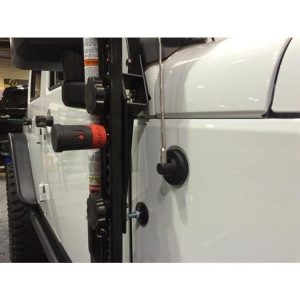
Jack mount kits are the biggest group, with brackets for tire carriers, roll cages, hoods, fenders, roof racks and bumpers. Kinetic ropes, straps, soft shackles and a tree trunk protector cover the pulling side. Tow hooks and receiver-mounted hooks give you a rated place to connect. Pads, stabilizers, jack stands and traction board pins make lifting on dirt and sand steadier.
Shop recovery gear by type


Popular recovery gear
-
Jack Mount Kits, Trail Jacks & Vehicle Recovery Equipment, Winches & Winch Accessories

Garvin Hi Lift Jack Mount – 44007
 Jack Mount Kits, Trail Jacks & Vehicle Recovery Equipment, Winches & Winch Accessories
Garvin Hi Lift Jack Mount – 44007
- Attaches a Hi-Lift jack to Garvin Adventure Racks
- Works with Garvin Adventure Rack part numbers 34088, 44092, 44094, 44099, 20094, 20092 and 20099
- 1/4-inch steel brackets with black powder coat
- All mounting hardware included; drilling not required
- Hi-Lift jack not included
SKU: GRV44007 -
-
Trail Jack Accessories, Trail Jacks & Vehicle Recovery Equipment, Winches & Winch Accessories

Safe Jack Secure Lifter – 51M-SJSL
 Trail Jack Accessories, Trail Jacks & Vehicle Recovery Equipment, Winches & Winch Accessories
Safe Jack Secure Lifter – 51M-SJSL
- Safe Jack Secure Lifter S/J51M-SJSL for Hi-Lift and farm style jacks
- Attaches a load securely and pairs with the Safe Jack Stabilizer
- Keeps the jack essentially parallel to the load being lifted
- Lifts loads that sit forward of the jack base or where the jack cannot go underneath
- Hi-Lift jack not included
- Fitment is universal, with no specific vehicle listed
SKU: S/J51M-SJSL -
Tow Strap, Trail Jacks & Vehicle Recovery Equipment, Winches & Winch Accessories

Rampage Recovery Trail Gear 4-inches x 20-feet Trail Strap – 86689
 Tow Strap, Trail Jacks & Vehicle Recovery Equipment, Winches & Winch Accessories
Rampage Recovery Trail Gear 4-inches x 20-feet Trail Strap – 86689
- Rampage Recovery Trail Gear 4-inch trail strap, part number RPP86689
- 40,000 working load limit
- Listed length 40 feet; title says 20 feet, so confirm first
- Yellow, part of the Recovery Trail Gear line
SKU: RPP86689 -
-
Trail Jack Accessories, Trail Jacks & Vehicle Recovery Equipment, Winches & Winch Accessories

All German Motorsports Milwaukee Battery Charger – AGM-EJA-2025
 Trail Jack Accessories, Trail Jacks & Vehicle Recovery Equipment, Winches & Winch Accessories
All German Motorsports Milwaukee Battery Charger – AGM-EJA-2025
- All German Motorsports Milwaukee battery charger, part number AGMAGM-EJA-2025
- Communicates with the battery pack for full charge and protection
- Intended to extend battery life
- Not vehicle-specific
SKU: AGMAGM-EJA-2025 -
Traction Pad, Trail Jacks & Vehicle Recovery Equipment, Winches & Winch Accessories

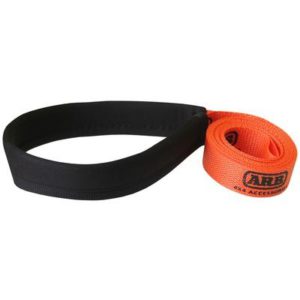
ARB 4×4 Accessories ARB Recovery Leashes (Black) – TLOARB
 Traction Pad, Trail Jacks & Vehicle Recovery Equipment, Winches & Winch Accessories
ARB 4×4 Accessories ARB Recovery Leashes (Black) – TLOARB
- ARB Recovery Leashes in black, part number ARBTLOARB
- Helps locate TRED recovery devices that bury beyond sight after vehicle recovery
- Universal fit, not tied to a specific vehicle
SKU: ARBTLOARB



Recovery gear ratings reference
Ratings and specs taken from gear in this section, plus standard receiver pin sizes and where each jack mount style carries the jack.
Listed rope and strap ratings
| Bubba Rope 7/8", 20 ft or 30 ft | 28,600 lb listed rating |
|---|---|
| Jumbo Bubba Rope 1.5" x 30 ft | 74,000 lb listed rating |
| Bubba Mega Gator Jaw, 5/8" | 76,400 lb breaking strength |
| ARB tree trunk protector 3" x 16 ft | 26,500 lb breaking strength |
| Monster Rope, 30 ft | 1-1/4" to 2" wide |
Hi-Lift style jack facts
- Common lengths: 36", 42", 48" and 60"
- Hi-Lift lists its standard jacks at 4,660 lb rated, tested to 7,000 lb
- The jack needs a flat, solid lift point such as a steel bumper or rock slider
- A base plate or pad keeps the foot from sinking in sand and mud
- Clean and lightly oil the bar and climbing pins after a muddy trip
Where jack mounts carry the jack
| Rear tire carrier | Fab Fours, TeraFlex, Poison Spyder, ARB |
|---|---|
| Factory roll cage | Hi-Lift aluminum mount, TrailTrak system |
| Hood hinge | Hi-Lift HM-800, uses existing hinge holes |
| Front fender, JK | Go Rhino, cowl to lower rocker |
| Roof rack | Garvin Adventure Rack mount |
| Keyed lock | BOLT J-Mount, driver or passenger side |
Receiver pin sizes
| Pin diameter | Typical use | |
|---|---|---|
| 1-1/4" receiver | 1/2" | Class I and II |
| 2" receiver | 5/8" | Class III and IV |
| 2-1/2" receiver | 5/8" or 3/4" | Class V heavy duty |
Some listings give a working load limit and others a breaking strength. Check which one a rating is on the product page before you size a rope.
All Trail Jacks & Vehicle Recovery Equipment 58 parts
-
Trail Jack Storage, Trail Jacks & Vehicle Recovery Equipment, Winches & Winch Accessories

TeraFlex Hi-Lift Jack Mount Bracket Kit – 4838270
 Trail Jack Storage, Trail Jacks & Vehicle Recovery Equipment, Winches & Winch Accessories
TeraFlex Hi-Lift Jack Mount Bracket Kit – 4838270
- Hi-Lift jack mount bracket kit, part number 4838270
- Mounts a Hi-Lift jack to the Alpha HD Hinged Spare Tire Carrier
- Fits 2018–2021 Jeep Wrangler JL, 2-door and Unlimited 4-door
- Built-in CB antenna mount and off-road flag mount
- Not compatible with the Mopar JL Tailgate Reinforcement Kit
SKU: TER4838270 -
Trail Jack Storage, Trail Jacks & Vehicle Recovery Equipment, Winches & Winch Accessories
TeraFlex Alpha Hi-Lift Jack Mount Kit – 4838250
 Trail Jack Storage, Trail Jacks & Vehicle Recovery Equipment, Winches & Winch Accessories
TeraFlex Alpha Hi-Lift Jack Mount Kit – 4838250
- Heavy-duty Hi-Lift jack mount, part number 4838250
- Mounts to the Alpha HD Hinged Spare Tire Carrier
- 3/16 inch thick laser cut steel with powder coated bracket bolts
- Built-in CB antenna mount and off-road flag mount
- Fits 2007–2018 Jeep Wrangler JK, 2-door and Unlimited 4-door
SKU: TER4838250 -
Trail Jack Accessories, Trail Jacks & Vehicle Recovery Equipment, Winches & Winch Accessories
Safe Jack Universal Hi-Lift Stabilizer – 97M-UHS48
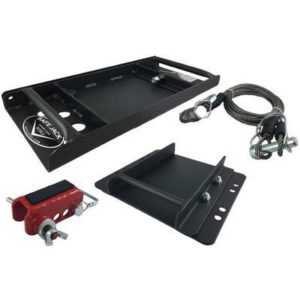 Trail Jack Accessories, Trail Jacks & Vehicle Recovery Equipment, Winches & Winch Accessories
Safe Jack Universal Hi-Lift Stabilizer – 97M-UHS48
- Safe Jack Universal Hi-Lift Stabilizer, part S/J97M-UHS48
- Base plate with interchangeable insert plates
- For bottle jacks and Hi-Lift type farm jacks
- Fitment is universal, not tied to one vehicle
SKU: S/J97M-UHS48 -
Trail Jack Accessories, Trail Jacks & Vehicle Recovery Equipment, Winches & Winch Accessories
Safe Jack Universal Combination Stabilizer – 97M-UCS48
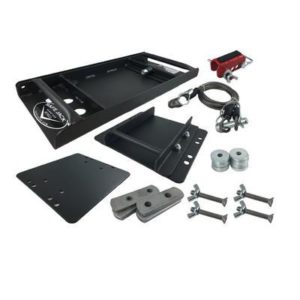 Trail Jack Accessories, Trail Jacks & Vehicle Recovery Equipment, Winches & Winch Accessories
Safe Jack Universal Combination Stabilizer – 97M-UCS48
- Safe Jack Universal Combination Stabilizer, part number S/J97M-UCS48
- Universal base plate with interchangeable insert plates
- Supports bottle jacks and Hi-Lift type farm jacks
- Suited to RV, 4×4, SUV, service truck and farm use
SKU: S/J97M-UCS48 -
Trail Jack Accessories, Trail Jacks & Vehicle Recovery Equipment, Winches & Winch Accessories
Safe Jack Secure Lifter – 51M-SJSL
Trail Jack Accessories, Trail Jacks & Vehicle Recovery Equipment, Winches & Winch AccessoriesSafe Jack Secure Lifter – 51M-SJSL
- Safe Jack Secure Lifter S/J51M-SJSL for Hi-Lift and farm style jacks
- Attaches a load securely and pairs with the Safe Jack Stabilizer
- Keeps the jack essentially parallel to the load being lifted
- Lifts loads that sit forward of the jack base or where the jack cannot go underneath
- Hi-Lift jack not included
- Fitment is universal, with no specific vehicle listed
SKU: S/J51M-SJSL -
Trail Jack Accessories, Trail Jacks & Vehicle Recovery Equipment, Winches & Winch Accessories
Safe Jack Compact Jack Stand – 17M-JS88
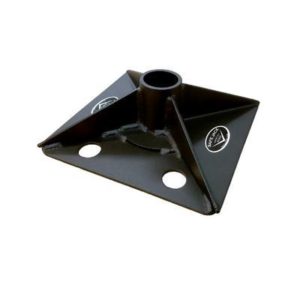 Trail Jack Accessories, Trail Jacks & Vehicle Recovery Equipment, Winches & Winch Accessories
Safe Jack Compact Jack Stand – 17M-JS88
- Safe Jack Compact Jack Stand, part number S/J17M-JS88
- Wide bases for floatation and stability
- Interchangeable, stackable extensions raise the height
- Works with standard Safe Jack Extensions
SKU: S/J17M-JS88 -
Tow Hook, Trail Jacks & Vehicle Recovery Equipment, Winches & Winch Accessories

Rugged Ridge Rear Tow Hook (Chrome) – 11303.02
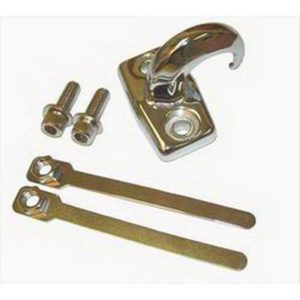 Tow Hook, Trail Jacks & Vehicle Recovery Equipment, Winches & Winch Accessories
Rugged Ridge Rear Tow Hook (Chrome) – 11303.02
- Chrome rear tow hook for Jeep CJ or Wrangler frames, part number RUG11303.02
- Rated for 5,000 lb pulling capacity
- Drilling required; all necessary hardware included
- No model years listed, so confirm fit before ordering
SKU: RUG11303.02 -
Tow Strap, Trail Jacks & Vehicle Recovery Equipment, Winches & Winch Accessories
Rampage Recovery Trail Gear 4-inches x 20-feet Trail Strap – 86689
Tow Strap, Trail Jacks & Vehicle Recovery Equipment, Winches & Winch AccessoriesRampage Recovery Trail Gear 4-inches x 20-feet Trail Strap – 86689
- Rampage Recovery Trail Gear 4-inch trail strap, part number RPP86689
- 40,000 working load limit
- Listed length 40 feet; title says 20 feet, so confirm first
- Yellow, part of the Recovery Trail Gear line
SKU: RPP86689
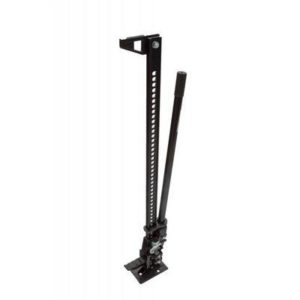

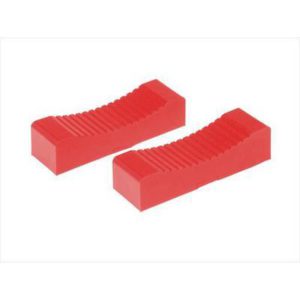
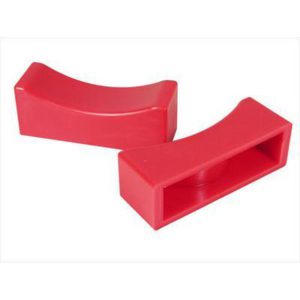
Recovery gear basics
Recovery equipment pulls or lifts a vehicle that cannot move itself. The category covers soft goods like straps and ropes, hard points such as tow hooks and hitch-mounted hooks, and lifting tools like trail jacks with their mounts and pads. Safe recovery depends on matching each piece to the job, because a single weak link can fail suddenly and cause injury or damage.
Ropes and straps
Tow straps and kinetic recovery ropes differ. A basic strap has little stretch and suits a straight tow, while a stretchy rope stores energy and helps pull a stuck vehicle free with less shock. Look at length, width, and the rating published by the maker. A rope should have a breaking strength well above the weight of the vehicle being recovered, and many experts suggest a working load that is a fraction of the break strength. Inspect for cuts, glazing, and sun damage before each use, and retire damaged gear.
Hooks, jacks, and accessories
- Tow hooks: frame-mounted hooks and receiver-mounted hooks give a solid point to attach a strap or shackle. Never attach recovery gear to a tie-down loop or bumper that was not designed for it.
- Trail jacks: high-lift jacks can lift tall vehicles, but they are unstable. Use a base or jack pad on soft ground.
- Jack mounts and pads: mounts store the jack on a rack, bumper, or bar, while pads spread the load over soft terrain.
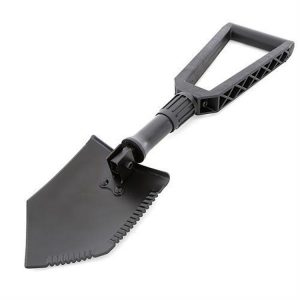
- Other items: hooks, shackles, and tools for specific recovery tasks.
Using it safely
Check the rated capacity on every piece, including shackles and hooks, and use the lowest rating in the system as your limit. Stand clear of the line during a pull, and never let people stand directly between vehicles. Drape a recovery damper or blanket over a strap to reduce flying hardware if it breaks. Do not use a vehicle jack to hold a vehicle while you work underneath, and use jack stands. Keep gear dry, clean, and stored out of sunlight.
Mounting hardware and receiver hooks must be installed correctly and torqued to specification. Check ratings, vehicle weight, and fitment on every product page and with the manufacturer's specifications. Recovery is a skill, and training or practice with experienced drivers is valuable.
Inspection and storage
Look over every piece before and after a trip. On ropes and straps, check for cuts, stiff or glazed sections, melted fibers from friction, and stitching damage near the loops, and retire anything doubtful. Check hooks and mounts for bending, cracks, and corrosion, and verify the mounting bolts are tight and of the proper grade. Rinse sand and mud from soft goods, dry them completely, and store them out of sunlight and away from chemicals, battery acid, and fuel. Keep recovery points free of paint or coatings that hide cracks. Pack a pair of gloves and a rated shackle or two along with your rope, and practice a recovery in a safe setting before you need it on a trail.
Label each rope and strap with its rating and length using a permanent marker or tag, so everyone in the group can pick the correct piece quickly and avoid grabbing one that is rated too low for the vehicle.
Popular Trail Jacks & Vehicle Recovery Equipment brands
- Rugged Ridge (6)
- Bubba Rope (5)
- ARB 4x4 Accessories (5)
- Prothane (5)
- Monster Hooks (4)
- Safe Jack (4)
- Fab Fours (3)
- Hauk Offroad (3)
- Hi-Lift Jack (3)
- Rampage (3)
- Wilco Offroad (2)
- Warrior (2)
Trail Jacks & Vehicle Recovery Equipment FAQ
What is the difference between a tow strap and a recovery rope?
A tow strap has little stretch and suits pulling a vehicle along a road. A recovery rope stretches to store energy and ease a stuck vehicle free with less shock. Check the intended use and rated capacity.
How do I choose a recovery rope rating?
The rating should be well above the weight of the vehicle being recovered, and the working load should be well below the stated breaking strength. Check the maker's numbers and apply a safety margin, since mud and slopes increase load.
Can I attach a strap to my tow ball?
Generally no. A tow ball is not designed for the sharp shock load of a recovery pull and can break or fire. Use a rated frame-mounted hook, a receiver shackle point, or a hook designed for recovery.
Is a high-lift jack safe?
It can be if used carefully, but it is tall and unstable. Use a base on soft ground, lift only what you need, keep your body out of the vehicle's path, and use proper stands rather than relying on the jack.