
Bugshields & Vent Visors
Bugshields and vent visors protect the paint and keep wind and rain out of open windows. This category covers in-channel and tape-on side window visors, hood deflectors, fender deflectors and back glass deflectors, with Auto Ventshade making up most of the listings alongside Rugged Ridge, Lund and Bushwacker. Choose by vehicle and finish on each product page, then compare the listings below.
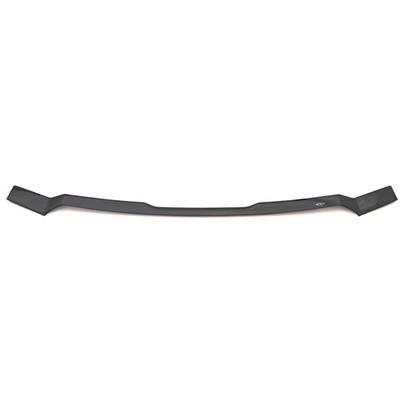
Gravel kicked up on a dirt road chips the leading edge of a hood fast, and a dusty drive gets miserable with the windows shut tight. Hood shields and window visors deal with both, molded to fit one body style.
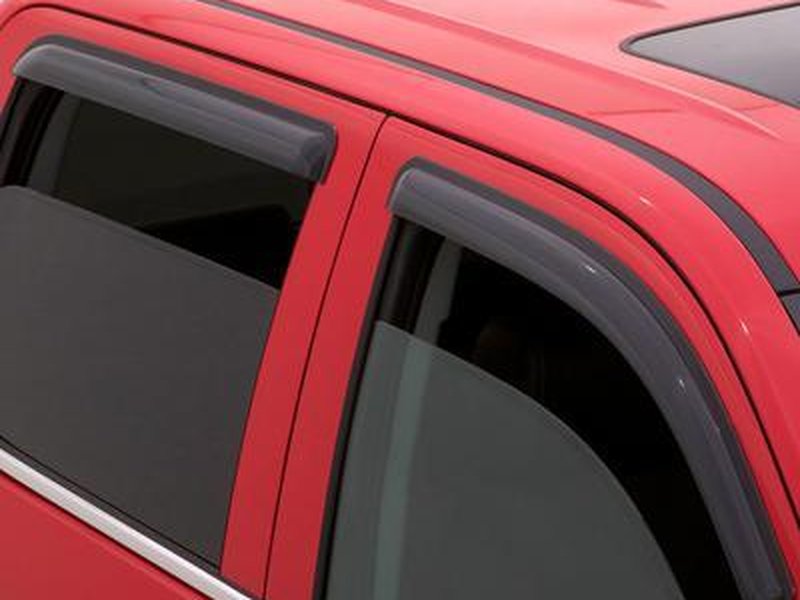
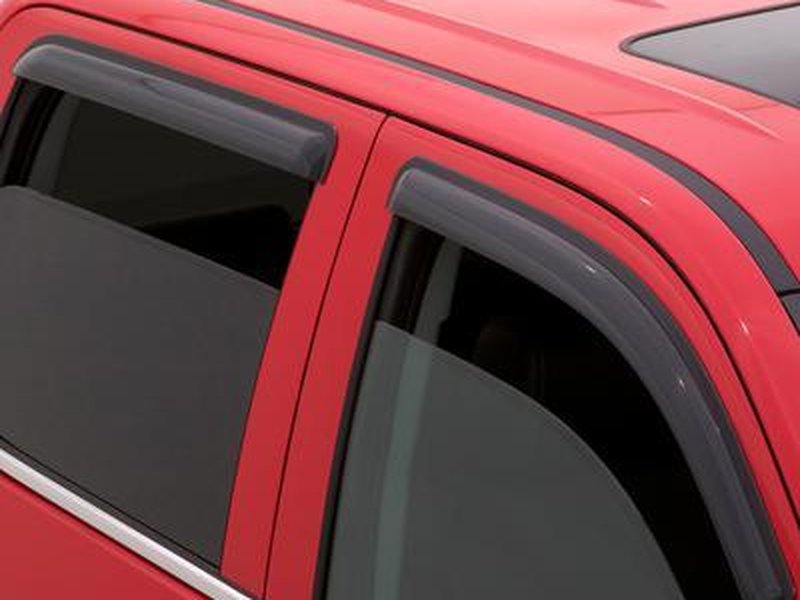
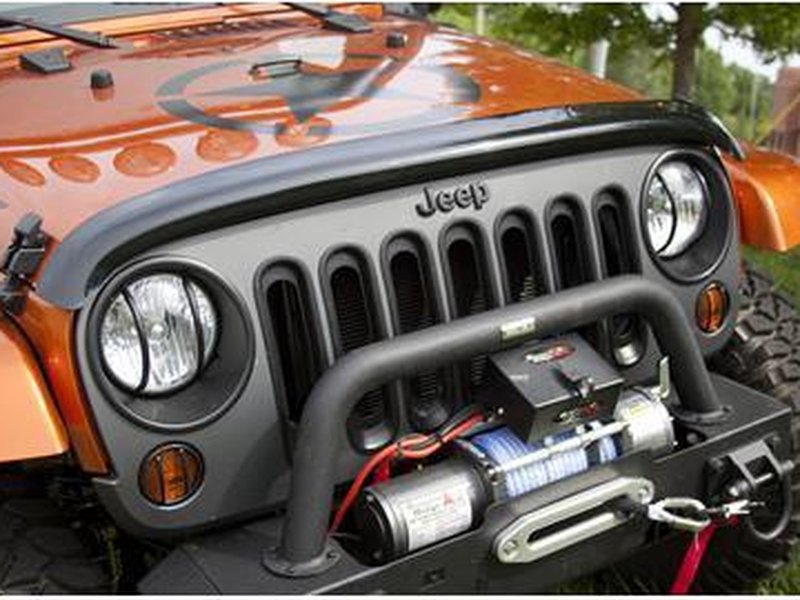
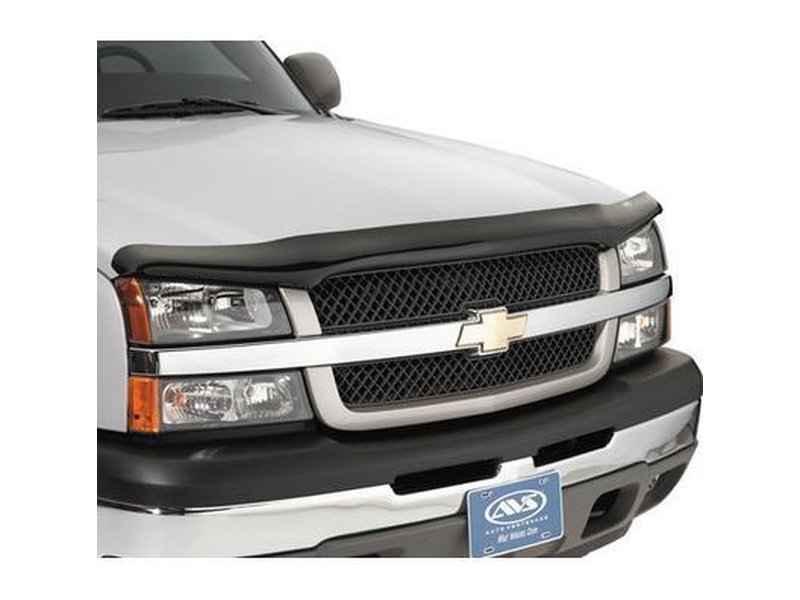
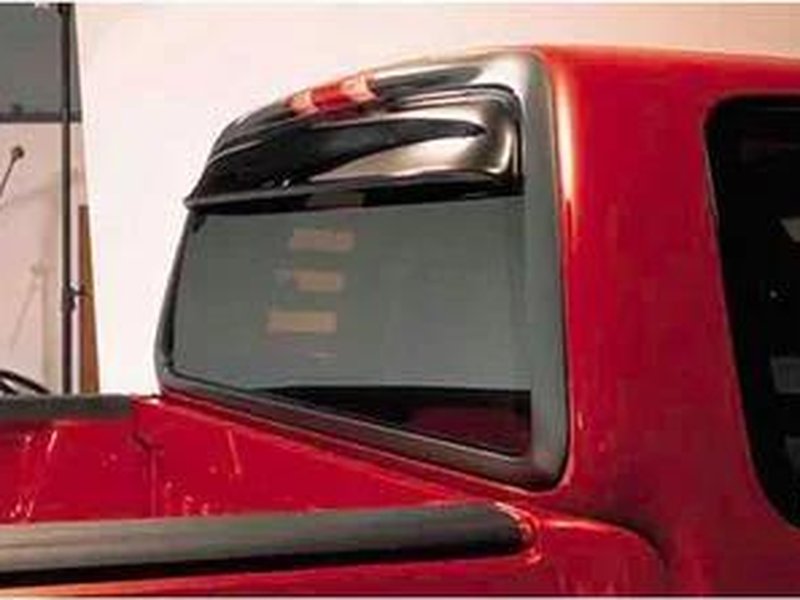
Side window visors are the largest group, sold as two-piece front sets or four-piece sets for four-door cabs, in channel or outside mount. Hood deflectors split into flush, low-profile protectors and taller wrap-around bug shields. A few fender deflectors, cowl guards, a rear window sun deflector and a hood bra fill out the rest. Pick the style first, then the finish that suits your trim.
Shop shields and visors by type
Popular bugshields and visors
-
Bugshields & Vent Visors, Exterior Parts, Hood Deflector

Auto Ventshade Aeroskin LightShield – 753096
 Bugshields & Vent Visors, Exterior Parts, Hood Deflector
Auto Ventshade Aeroskin LightShield – 753096
- Fits 2015–2020 Ford F-150 (King Ranch, Lariat, Limited, Platinum, Police Responder, SSV, XL, XLT)
- Hood protector with five amber LED marker lights on the hood edge
- Powered through the parking light wire connection, included
- Black finish, TPO construction, mounting hardware included
SKU: AVS753096 -
Bugshields & Vent Visors, Exterior Parts, Hood Deflector
Auto Ventshade Ventvisor (Chrome) – 684806
- Auto Ventshade Ventvisor in Chrome, part number AVS684806, a 4-piece set for the 2019–2022 Ram 1500
- Lets fresh air in while keeping rain out; no drilling, mounts with 3M automotive-grade adhesive
- Tinted, reinforced acrylic that is UV-resistant and car-wash safe
- Made in the USA with a Limited Lifetime Warranty
SKU: AVS684806 -
Bugshields & Vent Visors, Exterior Parts, Side Window Vent Visors
Auto Ventshade Low Profile Ventvisor (Smoke) – 894027
 Bugshields & Vent Visors, Exterior Parts, Side Window Vent Visors
Auto Ventshade Low Profile Ventvisor (Smoke) – 894027
- Fits 2010–2022 Toyota 4Runner per the manufacturer fitment list
- Part number AVS894027, smoke low profile ventvisor, 4-piece set
- Fits front and rear doors with a sleek, low profile look
- Easy no-drill installation, car wash safe, made in the USA
SKU: AVS894027 -
Bugshields & Vent Visors, Exterior Parts, Side Window Vent Visors

Rampage Ventvisor Set (Black) – 94101
 Bugshields & Vent Visors, Exterior Parts, Side Window Vent Visors
Rampage Ventvisor Set (Black) – 94101
- Fits 2009–2018 Dodge Ram 1500 trucks in the trims on the manufacturer fitment list
- Black four-piece Ventvisor side window deflector set
- Attaches with 3M automotive grade adhesive; hardware not included
- UV-resistant textured Tri-Flex material, car wash safe
SKU: RPP94101 -
Bugshields & Vent Visors, Exterior Parts, Hood Deflector
Auto Ventshade Aeroskin Acrylic Hood Protector – 322196
 Bugshields & Vent Visors, Exterior Parts, Hood Deflector
Auto Ventshade Aeroskin Acrylic Hood Protector – 322196
- Fits 2021–2022 Ford F-150 King Ranch, Lariat, Limited, Platinum, Police Responder, SSV, XL and XLT
- Part number AVS322196 from Auto Ventshade
- Chrome-finish acrylic hood protector, custom molded for direct fit
- Attaches with 3M automotive-grade tape or mechanical fasteners
- Car-wash safe
SKU: AVS322196 -
Bugshields & Vent Visors, Exterior Parts, Fender Deflector
Auto Ventshade Bugflector II Fender Deflector – 26808
 Bugshields & Vent Visors, Exterior Parts, Fender Deflector
Auto Ventshade Bugflector II Fender Deflector – 26808
- Full-height fender deflector, sold as fender protector only
- Fits 2003–2005 Dodge Ram 1500, 2500 and 3500
- Smoke or paintable clear impact-modified acrylic
- Part number AVS26808, car-wash safe
SKU: AVS26808 -
Bug Deflectors and Shields, Bugshields & Vent Visors, Exterior Parts
Auto Ventshade Bugflector II Stone/Bug Deflector – 25570
 Bug Deflectors and Shields, Bugshields & Vent Visors, Exterior Parts
Auto Ventshade Bugflector II Stone/Bug Deflector – 25570
- Fits 2016–2018 Chevrolet Silverado 1500 and 2019 Chevrolet Silverado 1500 LD trucks per the manufacturer fitment list.
- Part number AVS25570, custom-molded acrylic hood shield in a smoke finish.
- Wrap-around, off-the-hood design deflects stones and bugs and is car-wash-safe.
- No-drill installation with double-sided 3M tape or mechanical fasteners.
- Includes installation instructions, required hardware and rubber hood bumpers.
SKU: AVS25570 -
Bugshields & Vent Visors, Exterior Parts, Fender Deflector
Auto Ventshade Bugflector II Stone/Bug Deflector – 26712
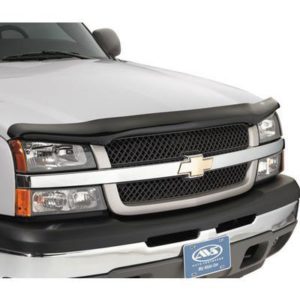 Bugshields & Vent Visors, Exterior Parts, Fender Deflector
Auto Ventshade Bugflector II Stone/Bug Deflector – 26712
- Auto Ventshade Bugflector II, part AVS26712, a full-wrap stone and bug deflector for the 1997–2004 Dodge Dakota.
- Also fits 1998–2003 Dodge Durango, including Base, R/T, SLT and SXT trims.
- Impact-modified acrylic with a dark smoke finish; attaches with 3M automotive-grade adhesive or mechanical fasteners.
- Off-the-hood design for easier cleaning; car-wash safe.
SKU: AVS26712

Shield and visor style guide
How the product lines in this section differ, what each material is used for, and what to check against your vehicle before ordering.
Product lines compared
| Ventvisor, in-channel | Slides into the window channel; 2 or 4 pieces |
|---|---|
| Ventvisor, outside mount | Tapes above the window on the door frame |
| Low Profile Ventvisor | Flat, lowest profile; matte black or color match |
| Aeroskin hood protector | Flush, skin-tight fit along the hood edge |
| Aeroskin LightShield | Adds amber LED markers on parking light wiring |
| Bugflector II | High profile, wraps hood front and fenders |
| Rear Window Sunflector | Shades the back glass |
| Bushwacker Trail Armor cowl guard | Non-wrap pair, tape and clips |
Materials in this section
| Finishes | Traits | |
|---|---|---|
| Acrylic (impact-modified) | Smoke, dark smoke, matte black | Rigid, tinted, UV and scratch resistant |
| ABS | Chrome, color match | Warp resistant, takes plating and paint |
| TPO (thermoplastic olefin) | Black | Flexible; used on LightShield, cowl guards |
Match before ordering
- Door count: front-only sets suit two-door cabs, four-piece sets four-door cabs
- Cab style on trucks: regular, extended and crew cab windows all differ
- Window channel condition if you choose in-channel visors
- Hood-mounted lights, scoops or louvers that a shield must clear
- Factory chrome or black trim if you want the finish to match
- Body generation, since hood shapes change at a redesign
Most of these parts are made for one body style and model year range. Match the part number to your exact vehicle before ordering.
All Bugshields & Vent Visors 108 parts
-
Bug Deflectors and Shields, Bugshields & Vent Visors, Exterior Parts

Rugged Ridge Wraparound Bug Deflector (Smoke) – 11350.01
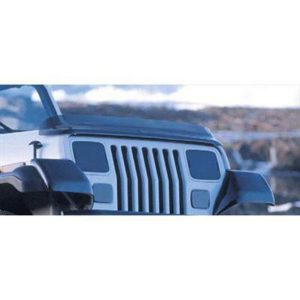 Bug Deflectors and Shields, Bugshields & Vent Visors, Exterior Parts
Rugged Ridge Wraparound Bug Deflector (Smoke) – 11350.01
- Rugged Ridge wrap-around bug deflector in smoke, part number RUG11350.01
- Fits 2004–2006 Jeep Wrangler LJ, 1997–2006 Jeep Wrangler TJ and 1987–1995 Jeep Wrangler YJ models
- Smoked acrylic, shatter resistant, with double-sided tape and screws included
- Drilling required
SKU: RUG11350.01 -
Bug Deflectors and Shields, Bugshields & Vent Visors, Exterior Parts
Rugged Ridge Bug Deflector (Smoke) – 11350.02
 Bug Deflectors and Shields, Bugshields & Vent Visors, Exterior Parts
Rugged Ridge Bug Deflector (Smoke) – 11350.02
- Rugged Ridge bug deflector in smoke, part number RUG11350.02
- Direct fit for 2007–2018 Jeep Wrangler JK models, 2-door and Unlimited 4-door
- Shatter resistant smoked acrylic with double-sided tape and under hood screws
- Minor drilling required during installation
SKU: RUG11350.02 -
Bugshields & Vent Visors, Exterior Parts, Hood Deflector
Rugged Ridge Body Armor Hood Guard (Black) – 11651.17
 Bugshields & Vent Visors, Exterior Parts, Hood Deflector
Rugged Ridge Body Armor Hood Guard (Black) – 11651.17
- Fits 2007–2018 Jeep Wrangler JK 2-door and Unlimited 4-door trims on the manufacturer fitment list
- Black diamond-plate look UV-treated thermoplastic hood guard
- Part number RUG11651.17 from Rugged Ridge
- Attaches with 3M automotive grade tape; front guard may need under-hood drilling
SKU: RUG11651.17 -
Bugshields & Vent Visors, Exterior Parts, Side Window Vent Visors
Rampage Ventvisor Set (Black) – 94101
Bugshields & Vent Visors, Exterior Parts, Side Window Vent VisorsRampage Ventvisor Set (Black) – 94101
- Fits 2009–2018 Dodge Ram 1500 trucks in the trims on the manufacturer fitment list
- Black four-piece Ventvisor side window deflector set
- Attaches with 3M automotive grade adhesive; hardware not included
- UV-resistant textured Tri-Flex material, car wash safe
SKU: RPP94101 -
Bugshields & Vent Visors, Exterior Parts, Side Window Vent Visors

LUND Ventvisor Elite (Smoke) – 184761
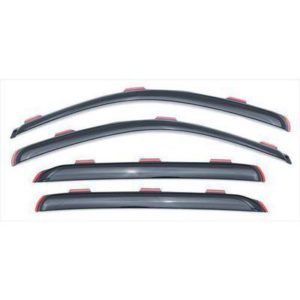 Bugshields & Vent Visors, Exterior Parts, Side Window Vent Visors
LUND Ventvisor Elite (Smoke) – 184761
- Fits 2007–2021 Toyota Tundra Base, Limited, Nightshade, SR5 and TRD Pro trims on the manufacturer fitment list
- LUND Ventvisor Elite smoke in-channel window deflectors, made in the USA
- Part number LII184761; four-piece set
- Scalloped flange and low profile in-channel mounting
SKU: LII184761 -
Bug Deflectors and Shields, Bugshields & Vent Visors, Exterior Parts
LUND Interceptor Wrap Bug Shield (Smoke) – 18829
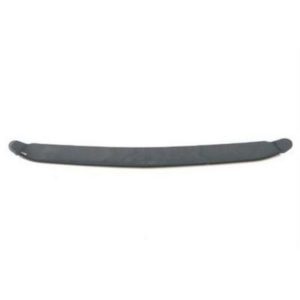 Bug Deflectors and Shields, Bugshields & Vent Visors, Exterior Parts
LUND Interceptor Wrap Bug Shield (Smoke) – 18829
- Fits the 2015–2020 Chevrolet Suburban and Tahoe on the manufacturer fitment list
- Heavy-duty polycarbonate hood shield in smoke with a wrap-around, high-profile design
- Part number LII18829, with mounting hardware included
- Custom-molded to deflect stones and debris away from the hood, fender and windshield
SKU: LII18829 -
Bug Deflectors and Shields, Bugshields & Vent Visors, Exterior Parts

Jeep V-Style Hood Bra (Black) – 82208110
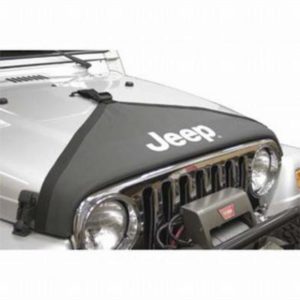 Bug Deflectors and Shields, Bugshields & Vent Visors, Exterior Parts
Jeep V-Style Hood Bra (Black) – 82208110
- Jeep V-Style Hood Bra in Black, part number JEP82208110
- Durable vinyl cover with the Jeep logo and custom fit with turned under, sewn edges
- Listed fitment: 1997–2006 Jeep Wrangler TJ and 2004–2006 Jeep Wrangler LJ
- 22-ounce foam backing helps protect the painted surface
- Hood can be opened and closed with the bra in place
SKU: JEP82208110 -
Bug Deflectors and Shields, Bugshields & Vent Visors, Exterior Parts

Bushwacker Trail Armor Cowl Guard (Black) – 76129
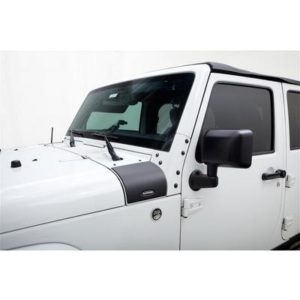 Bug Deflectors and Shields, Bugshields & Vent Visors, Exterior Parts
Bushwacker Trail Armor Cowl Guard (Black) – 76129
- Fits 2018–2022 Jeep Wrangler (JL) and 2020–2022 Jeep Gladiator per the manufacturer fitment list
- Black thermoplastic olefin cowl guard, sold as a pair
- No-drill installation with auto-grade tape and clips
- Mounting hardware included
- Limited lifetime warranty
SKU: B/W76129 -
Bugshields & Vent Visors, Exterior Parts, Side Window Vent Visors
Auto Ventshade, Ventvisor (Smoke) – 194167
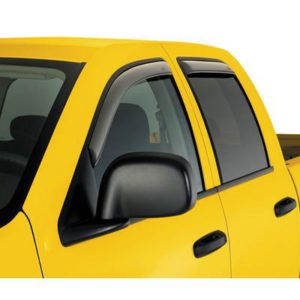 Bugshields & Vent Visors, Exterior Parts, Side Window Vent Visors
Auto Ventshade, Ventvisor (Smoke) – 194167
- Fits 2010–2017 GMC Terrain Denali, SL, SLE and SLT trims on the manufacturer fitment list
- Smoke in-channel Ventvisor deflectors, four-piece set
- No-drill installation with a snug, secure fit
- Part number AVS194167 from Auto Ventshade
SKU: AVS194167 -
Bugshields & Vent Visors, Exterior Parts, Side Window Vent Visors
Auto Ventshade Ventvisor Side Window Deflectors (Dark Smoke) – 94249
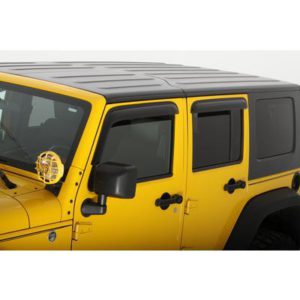 Bugshields & Vent Visors, Exterior Parts, Side Window Vent Visors
Auto Ventshade Ventvisor Side Window Deflectors (Dark Smoke) – 94249
- Fits 2007–2018 Jeep Wrangler JK Unlimited 4-door trims on the manufacturer fitment list
- Smoke acrylic Ventvisor side window deflectors
- Part number AVS94249 from Auto Ventshade
- Applied with 3M tape; keeps fresh air moving when the windows are open
SKU: AVS94249 -
Bugshields & Vent Visors, Exterior Parts, Side Window Vent Visors
Auto Ventshade Ventvisor Side Window Deflector (Dark Smoke) – 94267
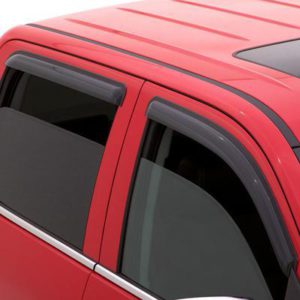 Bugshields & Vent Visors, Exterior Parts, Side Window Vent Visors
Auto Ventshade Ventvisor Side Window Deflector (Dark Smoke) – 94267
- Fits 2011–2022 Dodge Durango in Citadel through Special Service trims, outside mount
- Auto Ventshade part number AVS94267, set of 4 outside-mount side window deflectors
- Modified acrylic in dark smoke finish, no drilling required
- Pre-applied 3M adhesive mounting tape
SKU: AVS94267 -
Bugshields & Vent Visors, Exterior Parts, Side Window Vent Visors
Auto Ventshade Ventvisor In-Channel Deflector (Smoke) – 194812
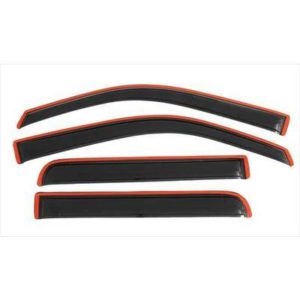 Bugshields & Vent Visors, Exterior Parts, Side Window Vent Visors
Auto Ventshade Ventvisor In-Channel Deflector (Smoke) – 194812
- Fits 2018–2022 GMC Terrain in AT4, Denali, SL, SLE and SLT trims per the manufacturer list
- Part number AVS194812, smoke finish, 4-piece set
- Installs in the window channel; no exterior tape touches the vehicle
- Limited Lifetime Warranty, made in the USA
SKU: AVS194812
What these parts do
Vent visors mount above the side windows and let you crack the glass for fresh air while rain and wind noise stay out. Hood deflectors, often called bug shields, are low-profile shields fitted to the front edge of the hood to redirect insects, gravel and road debris over the windshield. Fender and back glass deflectors follow the same idea for other body panels. All of them are cosmetic and practical accessories, not structural or safety components.
Visor styles
- In-channel visors: slide into the window channel, with no tape on the door, and give a clean look. Some designs include an adhesive strip for added hold.
- Tape-on or outside-mount visors: stick to the door frame with automotive adhesive, and are used where the window channel is not suitable.
- Tint: smoke and dark smoke are common, and the tint choice affects how much of the view through the top of the window is reduced.
Choosing hood and fender shields
Hood deflectors are shaped to the hood line of a particular vehicle, and some are designed to follow the grille and fender contours. Fender deflectors are contoured for each model. Consider whether you use a roof rack, a light bar or aftermarket bumper, since these can change the airflow, and make sure the deflector works with any hood-mounted equipment. Some manufacturers describe lower profile styles for a factory appearance.
Fitment checks
These parts are made vehicle-specific, so confirm that the listing matches the year, make, model and cab or door configuration, such as two-door versus four-door or crew cab. Listings in this category often cover multiple model years, but trim, window shape and body changes can differ. Compare the part number to the manufacturer's application guide.
Installation and care
Clean the mounting surfaces with the prep wipes or isopropyl alcohol and install in mild temperatures, since adhesive works poorly in the cold. Press firmly along the full length and let the adhesive cure before washing the vehicle. Avoid automatic car washes with strong brushes for the first few days. Take care when removing old adhesive so you do not damage the paint, and use a heat gun gently if needed.
Finish and fit details can make the difference between a visor that looks factory and one that rattles. Look at the material first. Most visors are made from acrylic or a similar impact-resistant plastic that is formed to the window shape and tinted, and cheaper plastics can warp in sustained heat. Smoke tint is the usual choice because it blends with factory privacy glass, but check local rules if you plan to alter window visibility.
Maintenance is straightforward. Wash visors with mild soap and water and avoid abrasive cleaners that cloud the surface. If an adhesive-backed visor starts to lift at an edge, clean and re-press it in warm weather rather than adding more tape. For hood deflectors, check the mounting clips after the first few weeks, since vibration can loosen them. Leaves and debris can collect behind a hood shield, so lift and clear them occasionally to keep water from sitting against the paint. If you remove a deflector later, a mild adhesive remover and a plastic scraper take off residue without harming the clear coat.
Popular Bugshields & Vent Visors brands
Bugshields & Vent Visors FAQ
Do vent visors cause wind noise?
They typically reduce noise from open windows and rain, but a poorly seated visor can whistle. Press it fully into the channel or along its adhesive line. Fit and tint choice also affect appearance and view.
What is the difference between in-channel and tape-on visors?
In-channel visors slide into the window track and hold by tension, while tape-on visors use adhesive on the outside of the door frame. The correct style depends on your vehicle, so check the product description.
Will a bug deflector hurt my paint?
A properly fitted deflector should not, but dirt trapped under the edges can scratch paint if left in place. Keep the area clean and wash gently around it. Clean surfaces before applying any adhesive.
Can I use a hood deflector with a light bar or bumper?
Often yes, but check clearances and airflow for your layout. Some deflectors sit tight to the hood and leave room for accessories. Confirm fitment for your exact vehicle and any added equipment.