Tire & Wheel Accessories
This category gathers the small parts around wheels and tires: lug nuts and wrenches, center caps, spare tire covers, jacks, snow chains, TPMS sensors, valve stems, hub spacers and deflators. Listings come from Pro Comp, Gorilla Automotive, Mickey Thompson, SCC Security Chain and others.Check each product page for thread size, count and part numbers, then compare the products below.
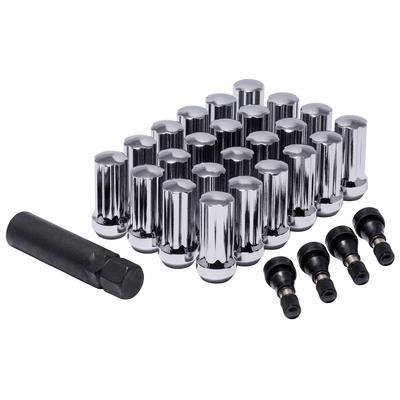
New wheels and bigger tires bring a list of small parts with them: the right lug nuts, center caps, valve stems and a spare cover that fits. This section also holds the trail tools that matter when a tire goes flat far from pavement, such as jacks, lug wrenches, deflators and tire pressure monitors.
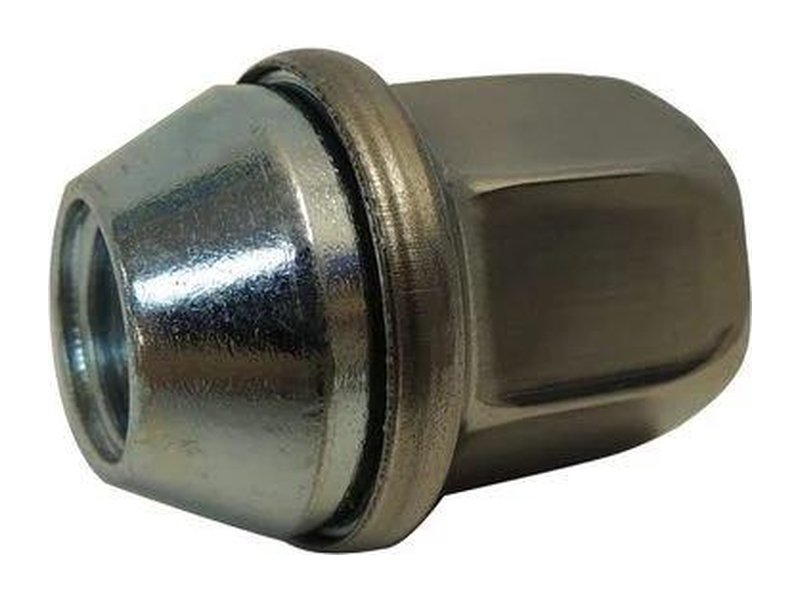
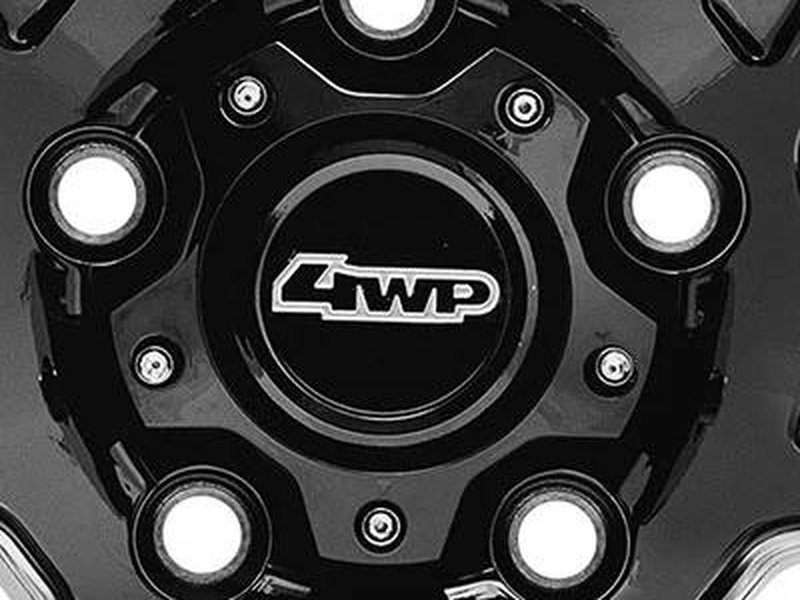
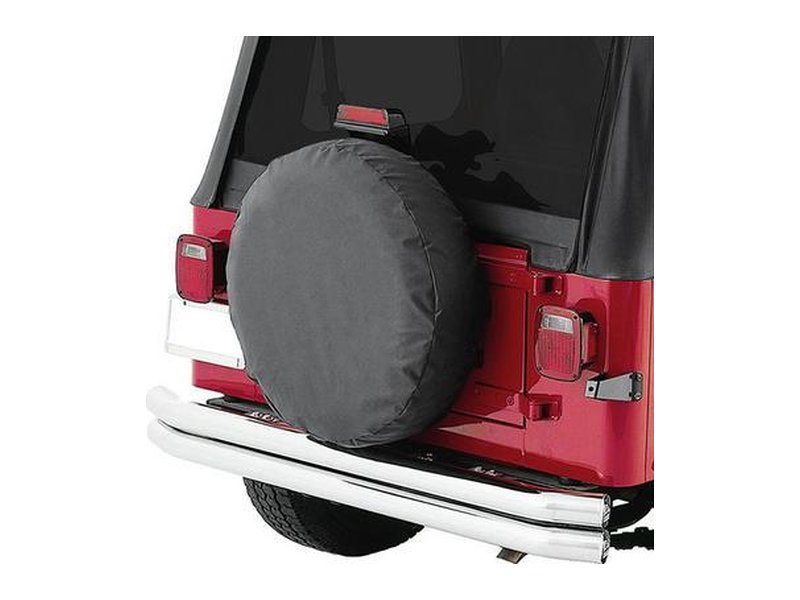
Lug nuts make up most of the listings, sold as kits of 24 to 32 nuts in common metric and SAE threads, with spline-drive and open styles. Center caps are matched by lug count and bolt pattern. Spare tire covers are sized by tire diameter. For the trail, compare jack capacity and lift height, deflator style, and whether a TPMS kit uses internal or external sensors.
Shop wheel and tire accessories
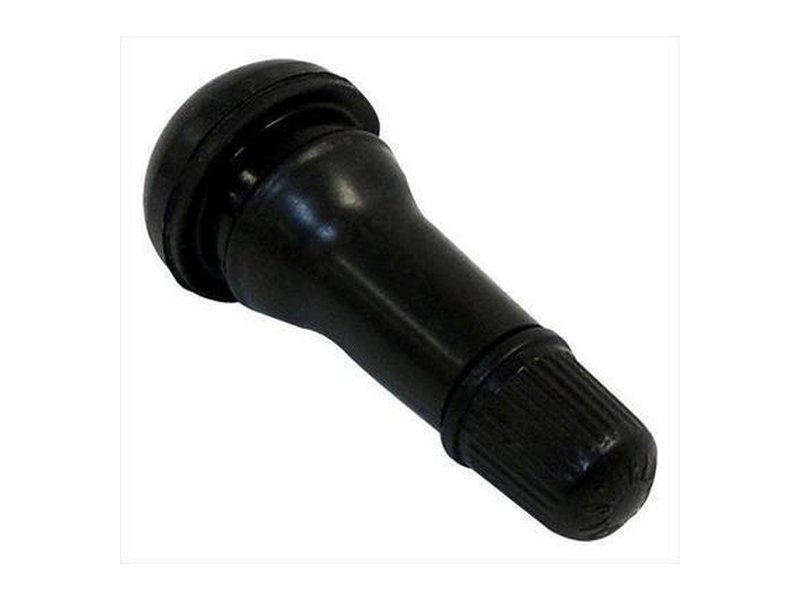
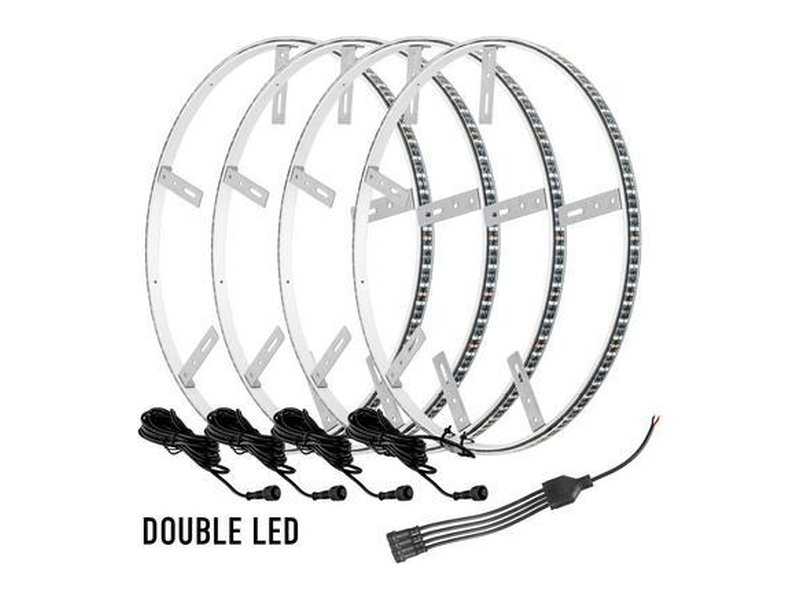

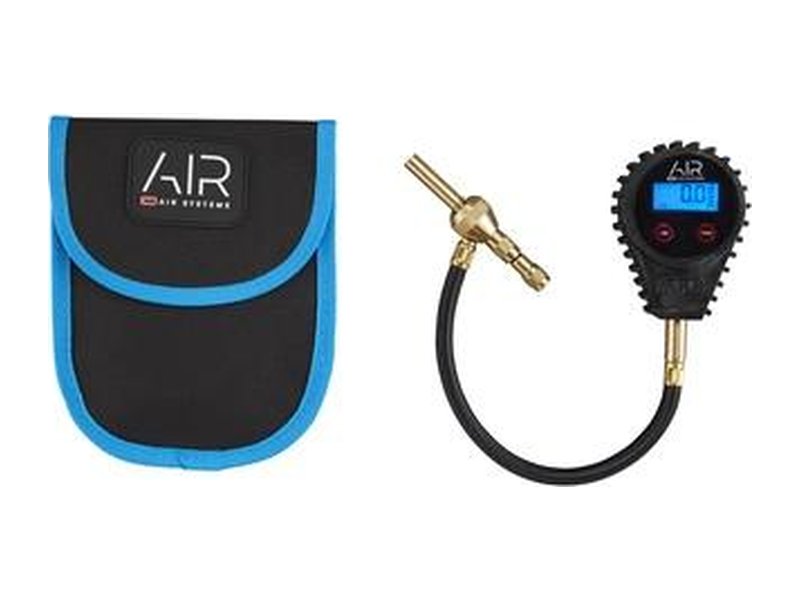
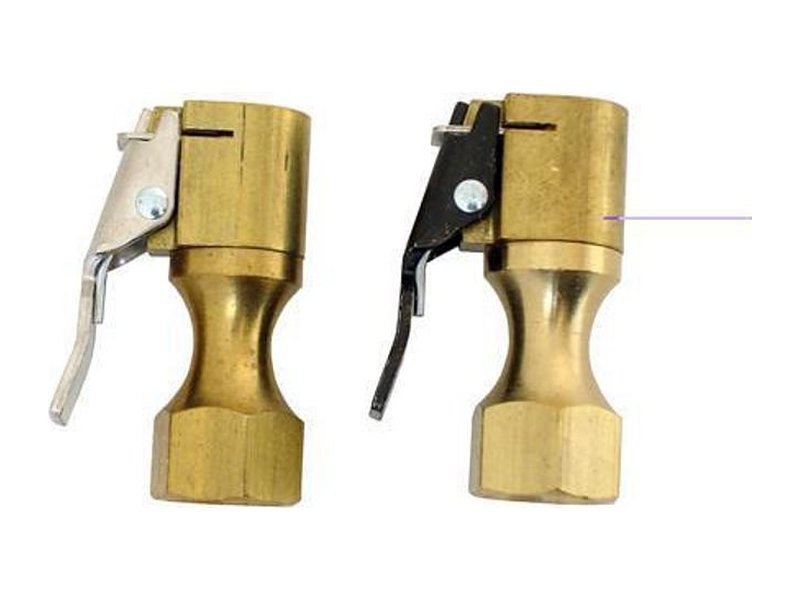
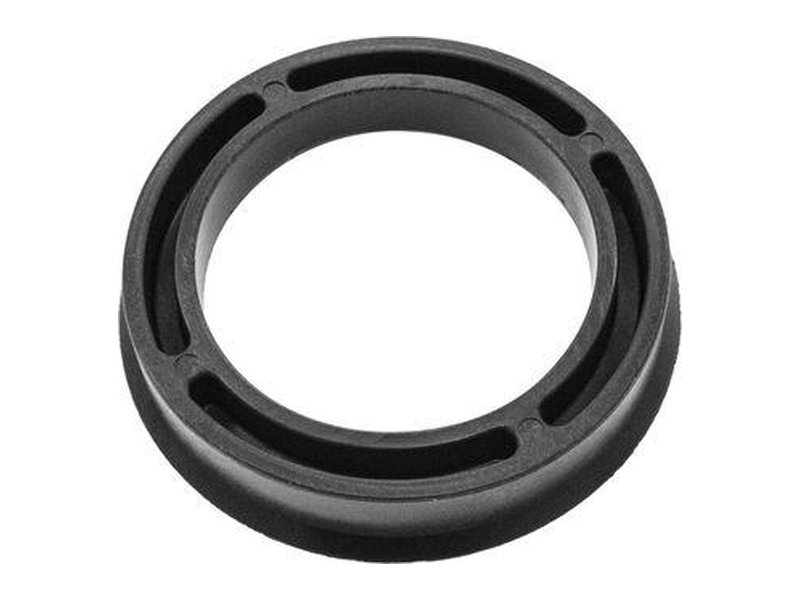
Popular wheel and tire accessories
-
Snow Chains, Tire & Wheel Accessories, Tires & Wheels

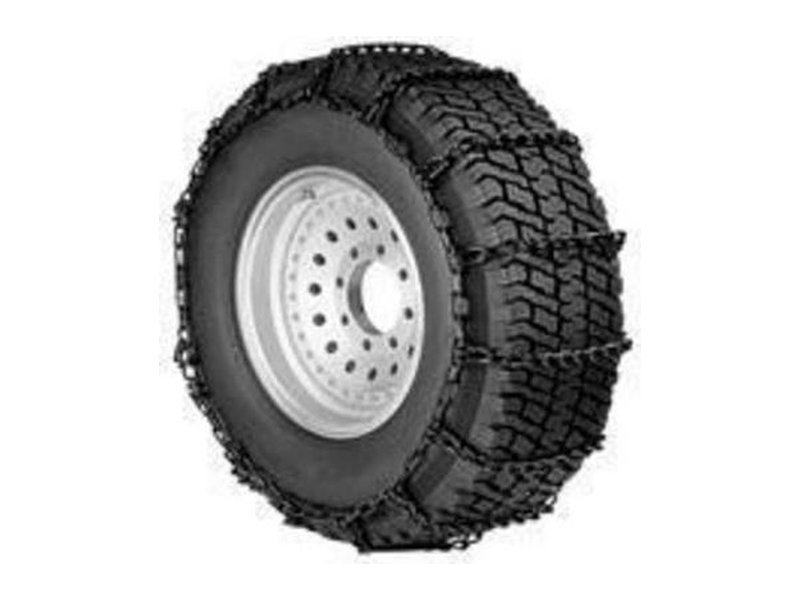
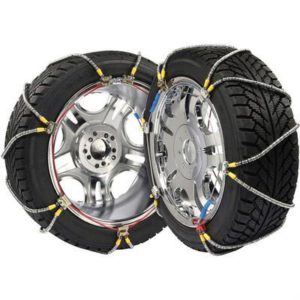
SCC Security Chain Super Z-8 Commercial Snow Chains – SZ492
 Snow Chains, Tire & Wheel Accessories, Tires & Wheels
SCC Security Chain Super Z-8 Commercial Snow Chains – SZ492
- Commercial snow chain sized by tire, not by vehicle
- Tire list runs from 8.25-20 and 9-22.5 to 355/50-22.5, including LT sizes
- Manufacturer label reads universal fit; the tire size is the check
- Part number SZ492
SKU: SCCSZ492 -

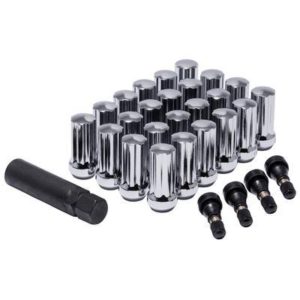
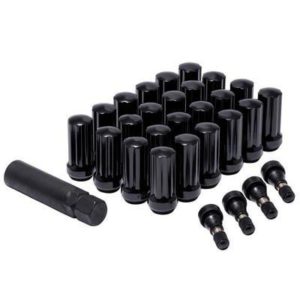
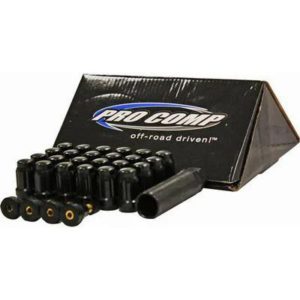


Wheel fitment and accessory reference
Factory lug threads and bolt patterns for common off-road vehicles. Aftermarket studs or wheels can change both, so check what is on your vehicle before ordering.
Lug threads and bolt patterns
| Lug thread | Bolt pattern | |
|---|---|---|
| Jeep Wrangler YJ, TJ / Cherokee XJ | 1/2-20 | 5 x 4.5" |
| Jeep Wrangler JK | 1/2-20 | 5 x 5" |
| Jeep Wrangler JL / Gladiator JT | 14 x 1.5 | 5 x 5" |
| Toyota Tacoma / 4Runner | 12 x 1.5 | 6 x 5.5" |
| Ford F-150 (2004 on) | 14 x 2.0 | 6 x 135 mm |
| Ford Bronco (2021 on) | 14 x 1.5 | 6 x 5.5" |
| Chevy / GMC 1/2-ton (1999 on) | 14 x 1.5 | 6 x 5.5" |
| Ram 1500 (2012 on) | 14 x 1.5 | 5 x 5.5" |
Center caps and spare covers
| Center cap fit | Matched to the wheel series and lug count |
|---|---|
| Patterns covered in caps here | 5 x 4.5 / 5 x 5, 5 x 150, 6 lug and 8 lug |
| Cap style listed | Push-through, closed |
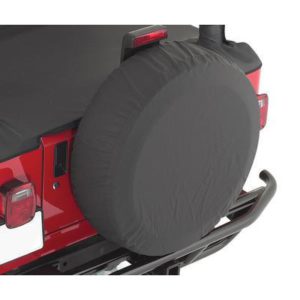
| Spare cover sizing | By overall tire diameter, e.g. 26–29" or 30–32" |
| Measure the spare | Tire height, ground to top, in inches |
| Rear camera | Choose a cover with a camera slot if you have one |
Bolt pattern equivalents
| 5 x 4.5" | 5 x 114.3 mm |
|---|---|
| 5 x 5" | 5 x 127 mm |
| 5 x 5.5" | 5 x 139.7 mm |
| 6 x 5.5" | 6 x 139.7 mm |
| 8 x 6.5" | 8 x 165.1 mm |
| 5 x 150 mm | Toyota Tundra and Land Cruiser |
Lug nut seat and style
| What it is | Where it fits | |
|---|---|---|
| Conical (60 degree) | Tapered seat | Most aftermarket wheels |
| Ball (radius) | Rounded seat | Some factory wheels |
| Flat (mag) with washer | Flat seat, long shank | Some factory alloy wheels |
| Spline drive | Small OD, needs a key | Wheels with small lug holes |
| Extended thread | Longer nut for more thread | Thick wheels, wheel spacers |
Trail tire kit checklist
- Jack rated above the vehicle's corner weight, with a wide base or pad
- Jack extension or lift height enough for a lifted rig and big tire
- Lug wrench or socket that fits your nuts, plus the spline key if used
- Deflator and gauge to air down and check all four tires evenly
- Spare valve stems and cores
- A way to air back up before highway speeds
Use the lug nut torque and seat type your wheel maker specifies. Factory threads and patterns can change by model year, so confirm with your owner's manual or a stud measurement.
All Tire & Wheel Accessories 244 parts
-
Snow Chains, Tire & Wheel Accessories, Tires & Wheels
SCC Security Chain Wide Base Link LT SUV/LT Snow Chains – QG3235
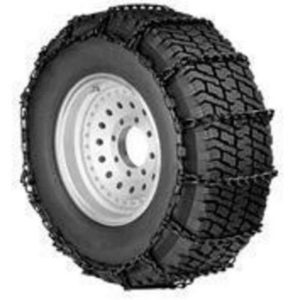 Snow Chains, Tire & Wheel Accessories, Tires & Wheels
SCC Security Chain Wide Base Link LT SUV/LT Snow Chains – QG3235
- SCC wide base link snow chains for LT SUV and LT tires, part SCCQG3235
- Covers large sizes including 35×12.50-15LT and 325/65-18
- Link-style traction chain from SCC Security Chain
- Universal fit by tire size, so measure your tires before fitting
SKU: SCCQG3235 -
Snow Chains, Tire & Wheel Accessories, Tires & Wheels
SCC Security Chain Wide Base Link LT SUV/LT Snow Chains – QG3227
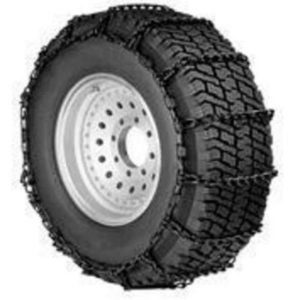 Snow Chains, Tire & Wheel Accessories, Tires & Wheels
SCC Security Chain Wide Base Link LT SUV/LT Snow Chains – QG3227
- SCC wide base link snow chains for LT SUV and LT tires, part SCCQG3227
- Fits sizes including 245/75-18, 265/60-20 and 8.00-16
- Link-style traction chain from SCC Security Chain
- Universal fit by tire size; match your tire size before ordering
SKU: SCCQG3227 -
Snow Chains, Tire & Wheel Accessories, Tires & Wheels
SCC Security Chain Super Z-8 Commercial Snow Chains – SZ492
Snow Chains, Tire & Wheel Accessories, Tires & WheelsSCC Security Chain Super Z-8 Commercial Snow Chains – SZ492
- Commercial snow chain sized by tire, not by vehicle
- Tire list runs from 8.25-20 and 9-22.5 to 355/50-22.5, including LT sizes
- Manufacturer label reads universal fit; the tire size is the check
- Part number SZ492
SKU: SCCSZ492 -
Snow Chains, Tire & Wheel Accessories, Tires & Wheels
SCC Security Chain Radial SUV/LT Snow Chains – TC2111MM
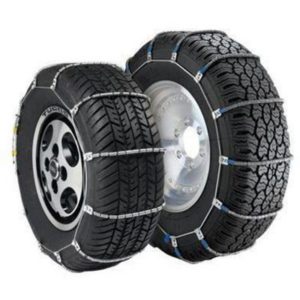 Snow Chains, Tire & Wheel Accessories, Tires & Wheels
SCC Security Chain Radial SUV/LT Snow Chains – TC2111MM
- SCC Security Chain Radial SUV/LT snow chains, part number TC2111MM
- Covers many SUV and LT tire sizes
- Includes LT sizes such as LT225/75-16 and LT235/75-15
- Universal Fit listed; no vehicle named
SKU: SCCTC2111MM -
Snow Chains, Tire & Wheel Accessories, Tires & Wheels
SCC Security Chain Quik Grip Link Chain Rubber Tighteners – QG20074-10
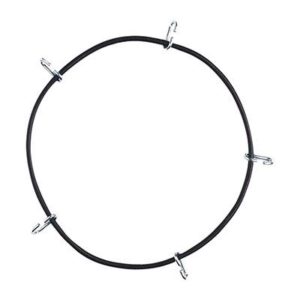 Snow Chains, Tire & Wheel Accessories, Tires & Wheels
SCC Security Chain Quik Grip Link Chain Rubber Tighteners – QG20074-10
- SCC Security Chain Quik Grip link chain rubber tighteners, part number SCCQG20074-10
- Fits rim diameters from 14 to 20
- Universal Fit listed; no vehicle named
- Brand: SCC Security Chain
SKU: SCCQG20074-10 -
Jacks, Tire & Wheel Accessories, Tires & Wheels
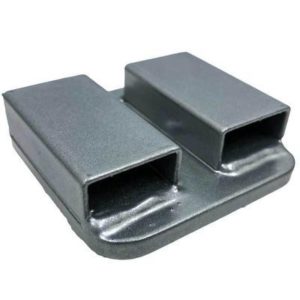
Safe Jack Rennstand Jack Pad – 18M-P12
- Mazda jack pad for the RENNSTAND jack
- Part number S/J18M-P12, sold as a single pad
- Manufacturer list: 2013–2020 CX-5, 2007–2020 CX-9, Tribute 2001–2006 and 2008–2011
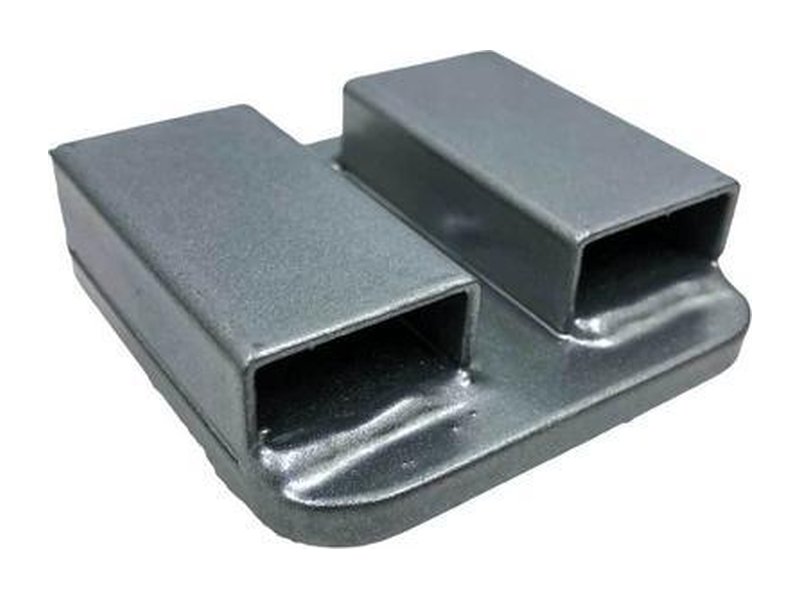
- 21/2-inch base with 1/2-inch rectangular tube
SKU: S/J18M-P12 -
Jacks, Tire & Wheel Accessories, Tires & Wheels

Safe Jack Bottle Jack Recovery Kit without 20 Ton Bottle Jack – 37M-BJRK-20
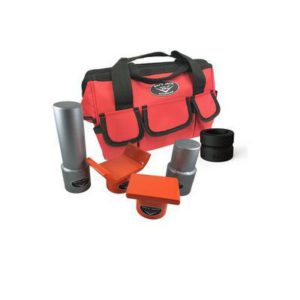 Jacks, Tire & Wheel Accessories, Tires & Wheels
Safe Jack Bottle Jack Recovery Kit without 20 Ton Bottle Jack – 37M-BJRK-20
- Safe Jack Bottle Jack Recovery Kit, part number S/J37M-BJRK-20
- Universal fit lifting kit for use with a 20 ton bottle jack
- The 20 ton bottle jack is not included
- Optional Universal Bottle Jack Base (97M-UBB) and Stabilizer (97M-UBS)
SKU: S/J37M-BJRK-20 -
Jacks, Tire & Wheel Accessories, Tires & Wheels
Safe Jack “The Sergeant” Off Road Kit – 37M-SERGEANT
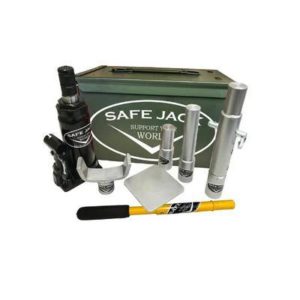 Jacks, Tire & Wheel Accessories, Tires & Wheels
Safe Jack “The Sergeant” Off Road Kit – 37M-SERGEANT
- Fitment: universal fit, not matched to specific vehicles
- Safe Jack S/J37M-SERGEANT: 6 ton off-road jack kit
- Includes jack pads, extensions and an OMEGA brand bottle jack
- Jack height 36 inches
SKU: S/J37M-SERGEANT



What is in this category
Wheel and tire accessories are the supporting parts that make a wheel setup work or keep it safe. The subcategories include lug nuts, wheel center caps, spare tire covers, jacks, snow chains, tire pressure monitor sensors, valve stems, trim rings, lug wrenches, tire valve deflators, hub spacers and tire air chucks.
Many items are universal, but several, like TPMS sensors and lug nuts, still depend on your vehicle and wheel.
Lug nuts and thread size
Lug nuts are the part most worth getting right. Check three things:
- Thread size and pitch, such as 12x1.5, 12x1.25, 14x1.5 or 9/16-18. The wrong thread damages studs.
- Seat type, either conical, ball or flat, which must match your wheel.
- Style and length, including spline drive, open end, or extended shank for thick wheels.
Spline-drive nuts need the matching key, which comes with many kits. Aftermarket wheels often need different nuts than factory wheels, so use what the wheel maker specifies.
Jacks, wrenches and recovery tools
A big-foot off-road jack gives a wider base on soft ground, which is useful on trails. Check the rated capacity against your vehicle's weight, and use jack stands, never the jack alone, when working under a vehicle. Telescoping and fold-down lug wrenches give leverage for large nuts, but do not over-tighten with a cheater bar. Use a torque wrench for final tightening and recheck after the first drive.
TPMS, chains and spacers
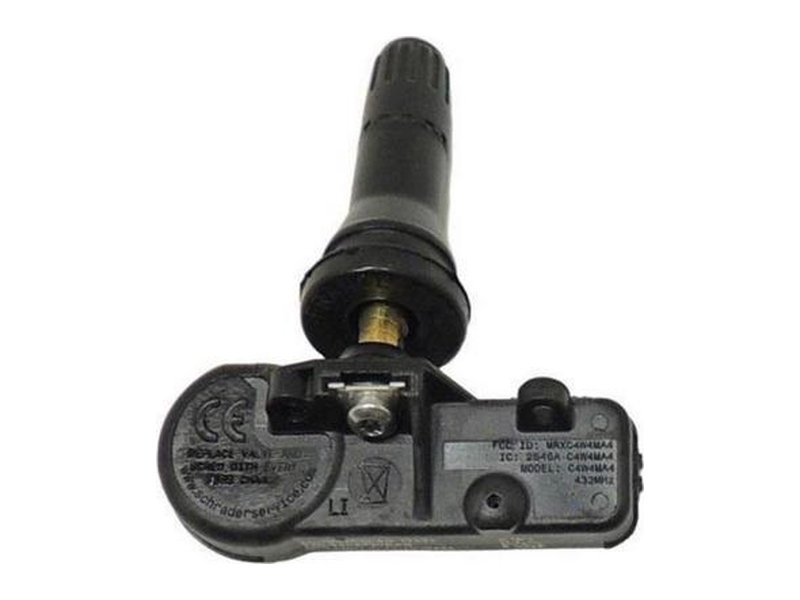
Programmable TPMS sensors cover multiple vehicles but need to be programmed and relearned. Frequency, such as 315 or 433 MHz, must suit the system. Snow chains must fit the tire size and your vehicle's clearance, and chain use rules vary by state. Wheel hub spacers change offset and affect steering and bearing load, so choose hub-centric parts, use proper studs, and have a professional install if unsure.
Confirm fitment for your exact year, make and model, and check the manufacturer's specifications for wheel and tire size.
Keep a small kit of the basics in the vehicle, such as a lug wrench that fits your nuts, a rated jack, and a tire gauge or deflator. Having the right tool before a flat on the trail is far easier than improvising with the wrong one.
Choosing sensibly and avoiding mistakes
Because this category is so varied, start with the job. If a wheel will not come off, you need a correct socket and a torque wrench, not a longer bar. If the tires lose air slowly, valve stems and TPMS sensors are the first place to look. If you drive in snow or sand, a deflator and a way to reinflate are worth carrying.
- Replace valve stems whenever tires are replaced, since rubber ages.
- Keep a note of your lug nut size, key and torque value in the glove box.
- Do not reuse a center cap that does not match the wheel's bore, since it can loosen and fall off.
- Check that a spare tire cover fits the actual tire diameter, not only the wheel size.
Popular Tire & Wheel Accessories brands
- Gorilla Automotive (113)
- Pro Comp Alloy Wheels (59)
- Mickey Thompson (11)
- Lrg Rims (10)
- 4 Wheel Parts (8)
- Rampage (6)
- SCC Security Chain (6)
- ARB 4x4 Accessories (5)
- Pro Eagle (4)
- Oro-Tek (4)
- Crown Automotive (4)
- Oracle Lighting (3)
Tire & Wheel Accessories FAQ
How do I know which lug nuts fit my vehicle?
Check the thread size and pitch, seat type and wheel style. Your owner's manual lists the factory thread size, and aftermarket wheel makers specify the nut type. A mismatch in seat type can cause the wheel to loosen.
How tight should lug nuts be?
Tighten them to the torque specification for your vehicle, using a torque wrench in a star pattern. Recheck after 50 to 100 miles. Specs vary by vehicle and wheel, so consult the manufacturer.
Do I need to reprogram TPMS sensors after replacing them?
Usually yes. Sensors must be programmed or learned by the vehicle, and the method varies by make. Some programmable sensors can copy an existing ID, but a scan tool or relearn procedure may still be needed.
Are spline-drive lug nuts safer?
They are harder to remove without the key, which deters theft, and they fit tight-clearance wheels. They are not stronger on their own. Keep the key in the vehicle and confirm thread size and seat.